
Key Takeaways
Sunscreen stains can be oily, discolored, or both, so check the mark and the garment before choosing a treatment. A patient, label-led approach gives you the best chance of removing it without damaging the fabric.
- Blot fresh sunscreen instead of rubbing it into the fibers.
- Check the care label before pretreating or washing.
- Use a suitable detergent or dish soap on oily residue, and treat rust-like marks cautiously.
- Wash at the warmest temperature allowed by the label, then inspect before drying.
- Repeat a safe pretreatment if a mark remains, and avoid heat until it is gone.
Identify the stain and check the care label
Before reaching for a cleaner, look closely at the mark and the garment. Sunscreen can leave a greasy patch, a yellow or orange discoloration, or a mix of the two. The difference can help guide your first step, but it is not always possible to identify the cause by appearance alone.
Tell oily residue from yellow or rust-colored marks
An oily stain may look darker or feel slick compared with the surrounding fabric. Yellow, orange, or rust-colored marks can have a different cause and may not respond to grease-cutting treatments in the same way. A sunscreen ingredient interacting with minerals in water is one possible explanation for some rust-like discoloration, so avoid assuming every mark is ordinary oil.
Check the garment’s fabric and washing instructions
Read the care label before applying any treatment: fabric, finish, and washing instructions all matter. A washable cotton shirt may tolerate a different approach from a delicate synthetic top, and a garment labeled for dry cleaning should not be treated like routine laundry. The label is the guide here; other material-specific advice, such as care for wooden salad bowls, gold-filled jewelry, solar panels, and protected amino acids, addresses different materials and risks. Clothing also appears in discussions of school uniform policies, though those concern policy rather than stain removal.
For washable garments, use the label to narrow down your options before applying detergent or a stain treatment. These common label cues can help you decide what to do next:
| Label or fabric clue | What it suggests | Practical next step |
|---|---|---|
| Machine washable | Home laundering is allowed | Pretreat gently, then follow the listed wash settings |
| Delicate or hand-wash | The fabric needs a lighter touch | Use a mild approach and avoid vigorous scrubbing |
| Dry clean only | Home washing may damage the garment | Take it to a cleaner and point out the stain |
| No bleach symbol or bleach warning | Some bleach products may be unsuitable | Skip bleach unless the label clearly permits it |
Treat those cues as limits, not a reason to use the strongest available cleaner. When the label is unclear, test a small, hidden area first or ask a professional cleaner.
Avoid heat until the stain is gone
Heat from a dryer or iron can make a remaining stain harder to remove. After washing, check the garment in good light while it is still damp or air-dried. If you can still see discoloration, pause before using the dryer and choose another label-safe treatment.
Treat a fresh sunscreen stain
Fresh stains are often easier to work on before the sunscreen has had time to settle into the fabric. Keep the first steps simple: lift off what you can, rinse carefully, and apply a suitable detergent. Avoid spreading the stain while you handle the garment.
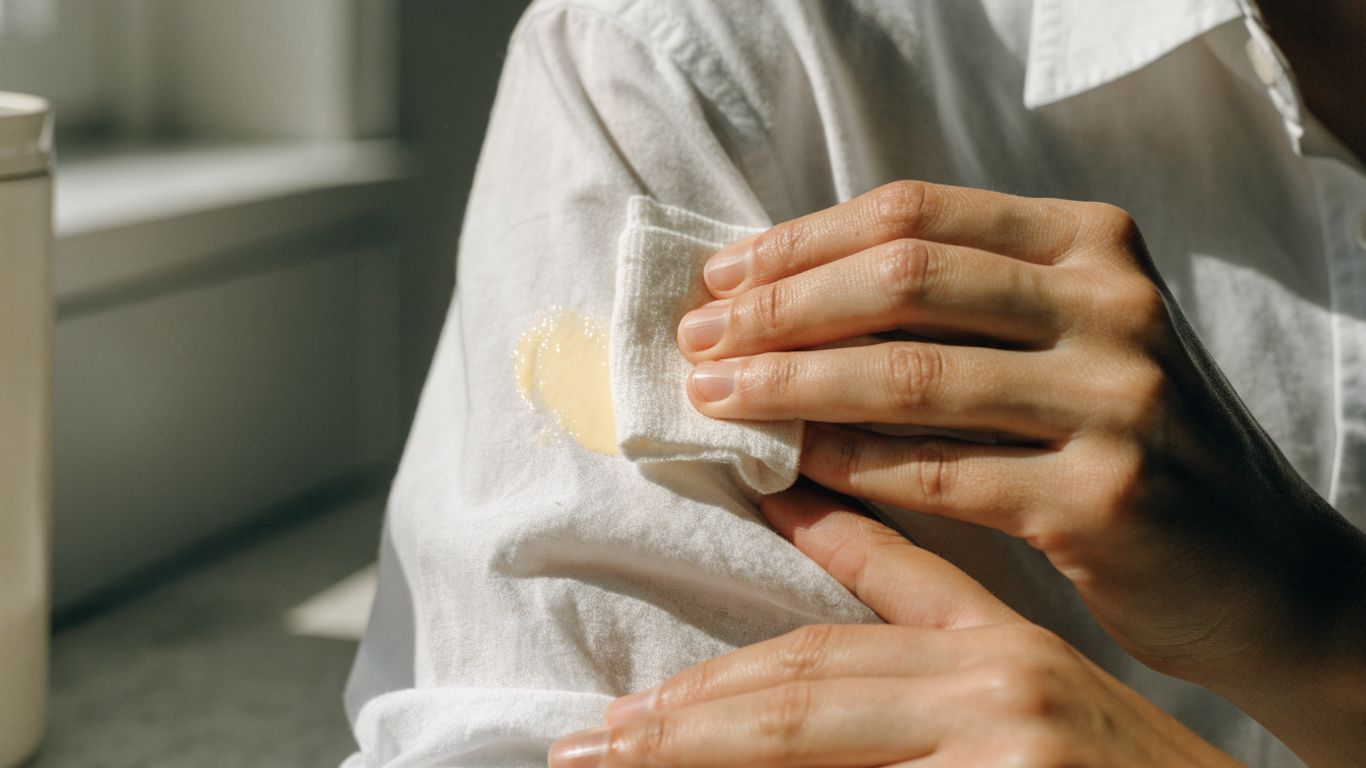
Blot away excess sunscreen without rubbing
Use a clean cloth or the edge of a spoon to lift off any sunscreen sitting on the surface. Press or scrape gently rather than rubbing, which can push residue deeper into the fibers or enlarge the mark. If the stain is on a textured fabric, work patiently so you do not snag the threads.
Rinse the stained area from the back with cool water
Hold the stained part under cool running water with the reverse side facing the stream. Rinsing from the back can help move residue out through the fabric instead of driving it farther in. Keep the water focused on the mark and avoid hot water until you have checked the care label and treated the stain.
Apply liquid laundry detergent to the mark
Work a small amount of liquid laundry detergent into the stain with your fingertips, using light pressure. Let it sit for the time recommended on the detergent label, then rinse or proceed to washing as directed. For general sunscreen formula and application guidance, Mixed Nature’s guide to sunscreen for darker skin tones covers choosing formulas and applying SPF effectively; clothing care is a separate step after sunscreen transfers.
Choose a pretreatment for the stain
If rinsing and detergent do not lift the mark, match the pretreatment to what you see. Greasy residue calls for a different approach from a yellow or rust-like stain, and the care label still sets the boundaries. Test any treatment on a hidden spot first, especially on delicate or colored fabric.
Use dish soap to break down oily residue
For a washable garment with an oily mark, a small amount of dish soap may help loosen grease. Apply it sparingly, work it in gently, and rinse it out before putting the garment in the washer; too much soap can create excess suds. The aim is to treat the stained fibers, not to soak the whole garment in a concentrated cleaner.
Try an enzyme-based detergent on washable fabrics
An enzyme-based laundry detergent can be another pretreatment option when the fabric is washable and its label allows it. Follow the product directions rather than letting detergent dry on the material. A short, careful sequence helps keep the process controlled:
- Check the garment label and detergent directions.
- Apply a small amount directly to the mark.
- Wait only as long as the product label recommends.
- Rinse or wash as directed, then inspect before drying.
This keeps the treatment focused and makes it easier to tell whether the stain is improving. If it does not change, do not simply increase the amount or duration; reconsider whether the mark looks oily or rust-like.
Take extra care with mineral sunscreen and rust-like marks
Mineral sunscreen and other formulas can leave visible residue, while yellow-orange or rust-toned marks may have a different cause. For those marks, avoid layering several cleaners or using an untested household remedy. Follow the directions on any stain remover, confirm it is safe for the garment, and ask a professional cleaner if the fabric is delicate or the discoloration persists.
Wash the garment safely
Once you have pretreated the stain, wash the garment according to its care label. Washing is not a guarantee that every mark will disappear on the first try, so make inspection part of the process. Keep the garment out of the dryer until you are satisfied the stain is gone.

Select the warmest water allowed by the care label
Use the warmest water temperature permitted by the garment’s instructions, not an assumed setting based on the stain. Some washable items allow warmer water, while others need cool or cold cycles to protect their fibers or finish. When in doubt, choose the more cautious setting and follow the detergent label as well.
Use bleach only when the fabric and label allow it
Bleach is not a universal stain treatment, and some fabrics or finishes can be damaged by it. Check the garment label and the bleach product directions before using any bleach, and do not mix cleaning products. If a mark looks rust-like, avoid chlorine bleach; it may not be appropriate for that type of discoloration.
Keep the garment separate from stained laundry
Wash a sunscreen-marked white garment separately from items that might release color or transfer soil. That simple precaution helps prevent a second problem while you are treating the first. If the garment can be washed with similar whites, use the load size and detergent amount recommended on the product label.
Remove a stain that remains after washing
A stain that survives one wash may need another round of treatment, but it is worth checking the fabric before repeating anything. Look at the mark in natural light and consider whether it is still oily or has turned yellow-orange. That distinction can help you avoid using a mismatched cleaner.
Inspect the fabric before putting it in the dryer
Check the garment after washing and before applying heat. If a faint mark remains, air-dry the item while you decide on the next step; heat can make some stains more difficult to remove. Look from more than one angle, since wet fabric can make discoloration harder to judge.
Repeat pretreatment and washing if discoloration persists
If the garment is washable and the stain still appears to be oily, repeat the same label-safe pretreatment and wash once more. Change only one part of the process at a time, so you can tell whether the treatment is helping. For related guidance on removing sunscreen stains from clothes, see the broader stain overview; it also discusses oily residue and rust-like marks.
Avoid chlorine bleach on marks that may be rust-related
A rust-colored mark may not behave like an oil stain, so chlorine bleach is not a good default choice. Check any stain remover’s label for fabric compatibility and instructions for rust-like discoloration. If the garment is valuable, delicate, or still stained after a cautious attempt, a professional cleaner can assess it without repeated home treatments.
Prevent sunscreen stains on white clothes
A few small habits can reduce transfers without changing how you protect your skin. Let sunscreen settle before dressing, take care around fabric during application, and deal with any visible transfer promptly. The best prevention routine is one you can follow consistently.
Let sunscreen dry before getting dressed
Apply sunscreen and give it time to dry before pulling on a white shirt or dress. Follow the sunscreen label for application and reapplication, since timing and coverage still matter for sun protection. A practical guide to portable sunscreen sticks discusses touch-ups and applying sunscreen generously; when using any format, take care around clothing.
Dab away transfers as soon as possible
If sunscreen transfers onto a garment, lift off excess with a clean cloth instead of wiping it across the fabric. Treating the mark while it is fresh can make it easier to manage later. Readers comparing mineral options can also explore tinted mineral sunscreen choices, with guidance on tint, finish, and even application.
Rinse and wash stained garments promptly
Rinse a fresh mark when practical, then wash the item according to its care label rather than leaving it in a hamper for days. Check the fabric before drying, and repeat a suitable treatment if you can still see the stain. Prompt attention is helpful, but patience matters too: avoid aggressive scrubbing or a hotter wash than the label allows.
Conclusion
Removing sunscreen from white clothes is mostly a matter of identifying the mark, respecting the care label, and treating the garment before heat can set any remaining discoloration. Start gently, choose a pretreatment that fits the stain, and check the fabric after washing; if the mark persists or the garment is delicate, get professional advice rather than risking damage.
Frequently Asked Questions
Can sunscreen stains come out of white clothes?
Many sunscreen marks can be improved with prompt blotting, suitable pretreatment, and careful washing. Results depend on the fabric, the type of mark, and whether heat has already been applied.
Should I use hot or cold water on a sunscreen stain?
Start with cool water to rinse a fresh stain, then wash at the warmest temperature the care label allows. Do not use a hotter setting than the garment permits.
Does dish soap remove sunscreen stains?
A small amount of dish soap may help with oily residue on washable fabric. Apply it sparingly, follow the garment and product directions, and rinse it out before machine washing.
Why did sunscreen leave a yellow or orange mark?
Yellow or orange discoloration may have a different cause from a simple oily stain. In some cases, sunscreen ingredients and minerals in water may be involved, so avoid treating every mark as grease.
Can I put a sunscreen-stained shirt in the dryer?
Wait until the stain is gone before machine-drying the garment. Check it after washing and air-dry it if discoloration remains, since heat can make some stains harder to remove.
Is bleach safe for sunscreen stains on white clothes?
Only use bleach if both the garment label and the bleach product directions allow it. Avoid chlorine bleach on marks that may be rust-related, and never mix cleaning products.
What should I do if the stain remains after washing?
Inspect the mark and fabric, then repeat a suitable label-safe pretreatment if the garment is washable. If the stain persists or the item is delicate, ask a professional cleaner for help.