Key Takeaways
The best makeup for acne prone brown skin should support your desired coverage while respecting texture, tone, and comfort. A thoughtful routine is less about hiding every trace and more about choosing formulas and techniques that let you feel like yourself.
- Start with a clean, moisturized base and give skincare time to settle.
- Choose coverage according to your comfort, from sheer tint to targeted concealer.
- Match foundation to your face and neck, paying attention to undertones.
- Use color correction sparingly on dark marks, redness, or uneven areas.
- Remove makeup gently and thoroughly at the end of the day.
1. Best non-comedogenic primer for acne-prone brown skin
A good primer can smooth the way for makeup without making active breakouts feel heavier. For acne-prone skin, look for a lightweight, non-comedogenic formula and avoid applying a thick layer over every part of the face. The goal is a more even surface, not a sealed-off mask.
Prep matters just as much as the primer itself. Cleanse gently, apply a moisturizer that suits your skin, and allow it to absorb before pressing primer onto areas that become oily or where makeup tends to separate. If your skin is irritated, a smaller amount is usually more comfortable than trying to create a perfectly smooth base.
Pay attention to finish as well as ingredients. A soft-matte primer may help around the nose and forehead, while a hydrating texture can sit more comfortably over dry patches or post-acne marks. Test a new product on a small area first, particularly when your skin is reactive.
2. Best foundation for acne-prone brown skin
Foundation works best when it matches the level of coverage you actually want to wear. A sheer layer can even out tone while leaving natural skin visible, whereas a medium or fuller formula may be useful for discoloration that affects your confidence. Build gradually instead of starting with a heavy coat.
Shade matching is especially important across brown skin tones because undertones can lean golden, red, olive, neutral, or a combination. Test along the jawline and give the formula a few minutes to settle before deciding. Helpful advice on foundations for acne-prone skin can add another perspective, but your own skin’s comfort still matters most.

Use a clean sponge or brush and press foundation into the skin rather than rubbing across active spots. Thin, even layers tend to look more natural on raised texture, and you can add coverage only where it is needed. Remove the product fully at night, wash reusable tools regularly, and pause if a formula consistently causes irritation.
3. Best skin tint for a natural makeup look
A skin tint is a useful choice when you want your complexion to look more even without covering every mark. It usually gives a lighter visual finish than foundation, so freckles, texture, and some discoloration may remain visible. That can be a welcome option on days when you want makeup to feel almost weightless.
Choose a tint by considering both shade and undertone, not just how light or deep the bottle appears. On brown skin, an overly pale or gray base can make the complexion look flat, while a warm formula may appear orange. Apply a small amount at the center of the face and blend outward so the edges stay sheer.
A tint does not need to do every job. You can leave it alone for a fresh finish, or pair it with a little concealer on dark marks and blemishes. If the product contains sunscreen, treat that as a helpful addition rather than a replacement for your dedicated sun protection.
4. Best concealer for acne, dark spots, and hyperpigmentation
Concealer is often more practical than adding another layer of foundation across the entire face. Use a shade close to your skin tone for blemishes and hyperpigmentation, then press it into place with a small brush or fingertip. The less you disturb the area underneath, the more even the result tends to look.
For a natural routine, organize your application around the concern rather than the product label. A small amount can cover a dark spot, soften the look of post-acne discoloration, or add brightness beneath the eyes, but these areas may need different shades and finishes. A useful concealer application guide can help with placement, especially when redness and uneven tone overlap.
A simple sequence keeps the base from becoming crowded:
- Apply foundation or tint first if you are wearing one.
- Dot concealer directly onto the mark rather than spreading it widely.
- Let it sit briefly, then tap around the edges to blend.
- Set only the areas that crease or become noticeably oily.
This approach preserves skin-like dimension while giving you control over coverage. If a raised blemish remains visible, that is often a texture issue rather than a color issue, and adding more product may only make it stand out.
5. Best color corrector for dark marks and uneven tone
Color correction can reduce the amount of concealer you need, particularly when a dark mark or red blemish shows through several layers of base makeup. On brown skin, the right corrector depends on the color and depth of the discoloration, so there is no single shade that works for everyone. Use a light hand and keep the product close to the area you want to balance.
Peach, orange, red, or terracotta tones may help with different depths of brown or blue-leaning discoloration, while a muted green can soften visible redness. These are starting points rather than strict rules. Check the corrected area in natural light, because a corrector that is too bright can become visible beneath your foundation.
Let the corrector settle before layering complexion product over it. Press foundation or concealer on top instead of dragging it across the mark, and choose a formula with enough pigment that you do not need repeated passes. The finished skin should look balanced, not noticeably layered with several contrasting colors.
6. Best setting powder for oily, acne-prone skin
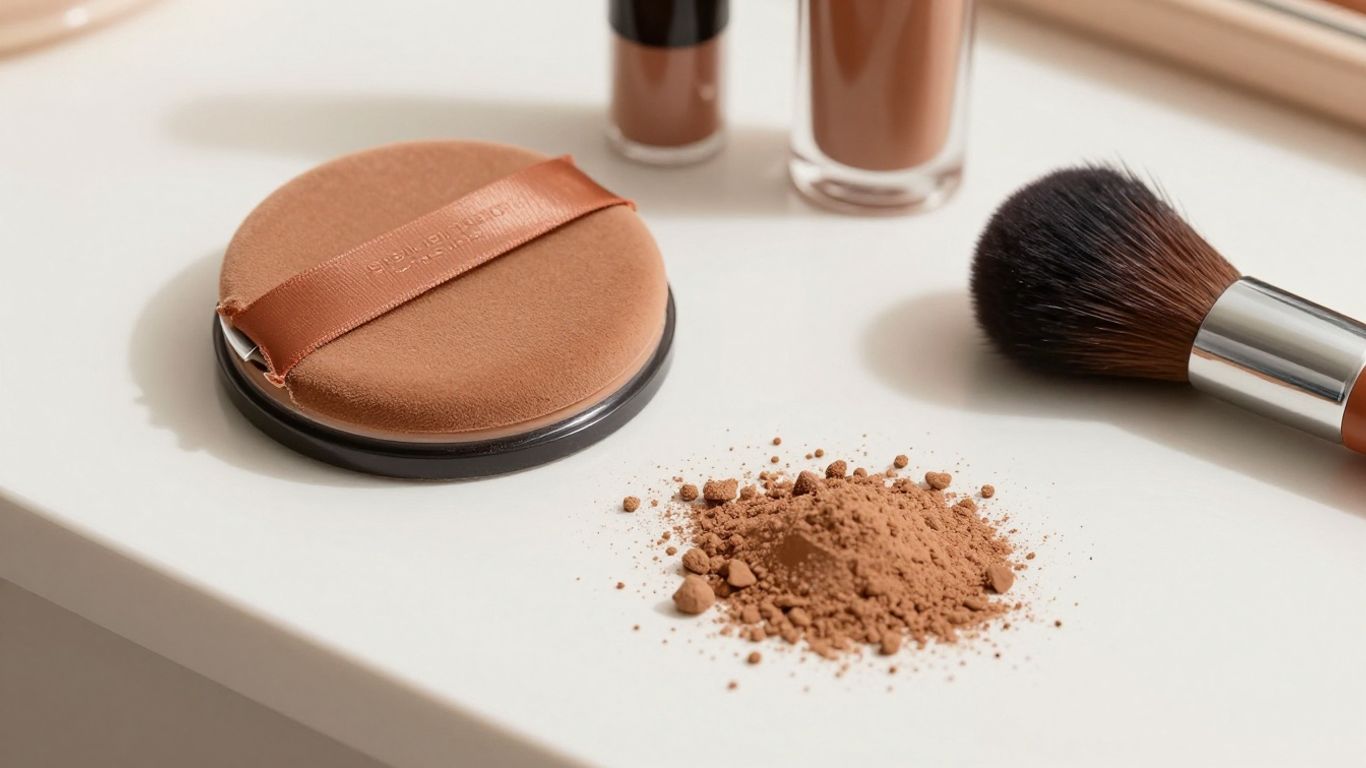
Setting powder can reduce shine and help concealer stay in place, but applying it everywhere may make textured areas look dry or emphasized. Focus first on the T-zone, around the nostrils, or wherever makeup tends to move. A finely milled translucent or tinted powder can work, provided its color does not leave a pale cast on your complexion.
Brown skin often benefits from checking powder in daylight before committing to a full face. A shade that looks invisible in a compact may appear ashy after application, especially when layered over a richer base. Press a small amount into the skin with a puff or soft brush, then remove excess rather than adding more automatically.
The finish you want should guide the amount you use. This quick comparison can help you choose a method that keeps skin comfortable:
| Makeup goal | Powder placement | Application approach | Result to expect |
|---|---|---|---|
| Control forehead shine | Forehead and hairline | Press lightly with a puff | Less surface shine |
| Keep concealer from creasing | Beneath the eyes | Use a small brush | More stable coverage |
| Set a spot-concealed blemish | Directly over the mark | Tap, do not sweep | Better local wear |
| Preserve natural radiance | Only oily areas | Use a minimal veil | Skin still looks fresh |
Powder should support the makeup rather than dominate it. If a blemish looks more noticeable after setting, gently tap over the area with a clean sponge or a trace of complexion product to soften the edge.
7. Best blush for brown skin with acne concerns
Blush can bring life back to a complexion after foundation, and deeper skin tones can carry rich berry, terracotta, plum, coral, and warm rose shades beautifully. The best color is the one that remains visible without looking separate from the rest of your makeup. Cream, liquid, and powder formulas can all work; choose based on the finish and wear you prefer.
If you have active acne on the cheeks, place blush slightly higher or farther outward rather than directly over raised areas. This keeps attention on the overall shape of the face and avoids repeatedly touching sensitive spots. A sheer first layer is easier to adjust than a strong stripe.
For oily or easily congested skin, clean tools and restrained application matter more than chasing a particular texture. Tap cream blush on with a clean fingertip or sponge, and wash brushes used with powder products on a regular schedule. If a blush causes stinging, itching, or persistent bumps, stop using it and reassess the formula.
8. Best bronzer and contour for deeper skin tones
Bronzer and contour serve different purposes, even though they are often grouped together. Bronzer adds warmth and can make the complexion look sun-kissed, while contour creates the impression of more defined shadows. On deeper skin tones, both need enough pigment to show without turning gray, muddy, or overly red.
For bronzer, look for a shade that is visibly warmer than your complexion but still believable. Sweep it across areas where light naturally reaches, such as the temples, upper cheeks, and bridge of the nose. Contour usually works better in a neutral or subtly cool tone, applied sparingly beneath the cheekbones or along the jaw.
Texture deserves consideration when acne is active. Matte or softly satin finishes tend to be easier to control on raised areas, while shimmer can draw attention to uneven texture. Blend the edges carefully, but do not keep buffing over a blemish until the surrounding base disappears.
9. Best highlighter for textured or active acne
Highlighter is beautiful when it catches light on the high points of the face, but the same light can make raised texture more visible. If you are covering active acne or uneven scars, place glow on the upper cheekbone, brow bone, or inner corner rather than directly over the area you want to minimize. A fine sheen is generally easier to wear than chunky sparkle.
Cream and liquid highlighters can blend naturally, though they may disturb the base underneath if rubbed in. Powder highlighter can offer more targeted placement, especially with a small brush. Whichever texture you choose, press and release rather than sweeping back and forth across complexion products.
There is no requirement to highlight every traditional high point. A satin finish on one carefully chosen area can give the face dimension while allowing skin texture to remain understated. If your skin is irritated, skip highlighter altogether until it feels calm.
10. Best setting spray for long-lasting, acne-friendly makeup
Setting spray can bring the layers of a makeup routine together and may help the finish look less powdery. Hold it at a comfortable distance and mist lightly rather than saturating the face. Avoid spraying onto broken or irritated skin, and check the ingredient list if your complexion is particularly sensitive.
Long wear also depends on the steps before the spray. Thin base layers, targeted concealer, strategic powder, and clean tools usually make more difference than adding repeated coats of finishing product. A spray can support that structure, but it cannot replace removing makeup thoroughly or caring for the skin underneath.
Let the mist dry without touching your face, then check the finish in natural light. If your skin feels tight, hot, or uncomfortable, wash the product off and simplify the routine next time. Makeup should be adaptable: on some days, a tint and spot concealer may be the most skin-friendly choice, while on others you may prefer fuller coverage.
Conclusion
Finding the best makeup for acne prone brown skin is a process of matching coverage, undertone, finish, and comfort rather than following one universal formula. Start with a light hand, use color strategically, and give your skin room to remain visible. You can enjoy makeup as self-expression while still making choices that feel considerate of active breakouts and changing skin.
Frequently Asked Questions
Is makeup safe for acne-prone skin?
Makeup can be comfortable for acne-prone skin when products suit your needs, tools are kept clean, and makeup is removed gently. A non-comedogenic label may be useful, but it does not guarantee that every formula will work for every person.
Should I wear foundation over active acne?
You can, if wearing foundation helps you feel comfortable. Apply a thin layer, avoid rubbing irritated areas, and consider spot concealing instead of building heavy coverage across the entire face.
What foundation shade works best for brown skin?
Choose a shade that matches your face and blends naturally into your jaw and neck. Pay close attention to undertone, since a shade can be deep enough yet still look too pink, yellow, orange, or gray.
How can I cover dark acne marks without looking cakey?
Use a small amount of corrector if needed, followed by targeted concealer in a close skin match. Press the products into place and keep the surrounding foundation layer thin.
Is powder good for oily, acne-prone skin?
Powder can help reduce shine and stabilize makeup, especially when applied only to oily areas. Too much powder may emphasize dryness or texture, so begin with a small amount and build only where necessary.
How do I stop makeup from emphasizing acne texture?
Use lighter layers, avoid excessive buffing, and choose soft-matte or natural finishes when shimmer makes texture more visible. Remember that makeup can adjust color, but it cannot completely change the skin’s surface.
How should I remove makeup after wearing it all day?
Use a gentle makeup remover or cleanser, followed by a second cleanse if needed, without scrubbing. Rinse thoroughly, pat dry, and return to a simple skincare routine that your skin already tolerates.