Key Takeaways
Winter care works best when it responds to how your hair and scalp feel, rather than following a rigid schedule.
- Wash when your scalp needs it, and condition your hair to make detangling gentler.
- Start with water or a water-based leave-in, then add richer products only if they suit your hair.
- Use low-manipulation styles and cover your hair outdoors to limit friction and weather exposure.
- Protect your hair at night and refresh dry areas without repeatedly layering onto buildup.
- If dryness or breakage persists, adjust your routine and consider professional advice for ongoing scalp concerns.
Why winter can leave 4C hair dry and fragile
Cold days, indoor heating, and the friction of winter clothing can make hair feel less comfortable and harder to manage. A 4C hair winter moisture routine is not about keeping every strand coated; it is about noticing what changes with the season and responding gently. Needs vary from person to person, even among people with a similar curl pattern. Mixed Nature’s inclusive hair-care guides offer practical advice for different textures without assuming one routine suits everyone.
How cold air and indoor heating affect moisture
Cold outdoor air and heated indoor spaces can both feel drying, so hair may seem to lose softness faster as you move between them. Wind and clothing can add tangles or friction, while dry indoor air may leave strands feeling rough. These conditions do not mean you need to add product every time you come inside. Start by checking whether your hair feels dry, coated, or simply in need of a gentler style.
Why tightly coiled strands are prone to dryness
The bends and curves of tightly coiled hair can make it harder for scalp oils to travel along each strand. That can leave lengths and ends feeling drier than the roots, though individual hair and scalp needs differ. Focus on how your own hair responds rather than treating curl type as a full description of its needs. For more perspective on seasonal care across curl patterns, see this seasonal Type 4 hair guide.
How to tell dryness from product buildup
Dry hair may feel rough, stiff, or more prone to tangling, while buildup can leave it feeling coated, heavy, or dull even after you apply moisturizer. These signs can overlap, so treat them as clues rather than a diagnosis. A small check-in before reaching for another product can help you decide what to do next. The table below compares common signs with a gentle first response.
| What you notice | Possible clue | A gentle first step |
|---|---|---|
| Rough, stiff lengths | Hair may need moisture | Dampen a small section and assess it again |
| Coated or heavy feel | Products may be accumulating | Cleanse the scalp and lengths as needed |
| Dry ends, comfortable roots | Ends may need extra care | Apply a small amount of leave-in to the ends |
| Itchy or uncomfortable scalp | Scalp may need attention | Adjust cleansing; seek advice if it persists |
Use the comparison as a starting point, not a verdict. If the same issue continues despite reasonable adjustments, consider a qualified hair or scalp professional rather than adding products indefinitely.
Build a moisture routine around wash day
A steady wash-day routine can make winter care feel simpler because it gives you a chance to cleanse, condition, and reset before dryness or tangles build up. There is no single correct schedule: scalp comfort, styling choices, and day-to-day life all matter. Mixed Nature publishes practical hair-care guidance for readers with different textures and routines. Think of wash day as a flexible anchor, not a strict calendar rule.
Cleanse the scalp without stripping your hair
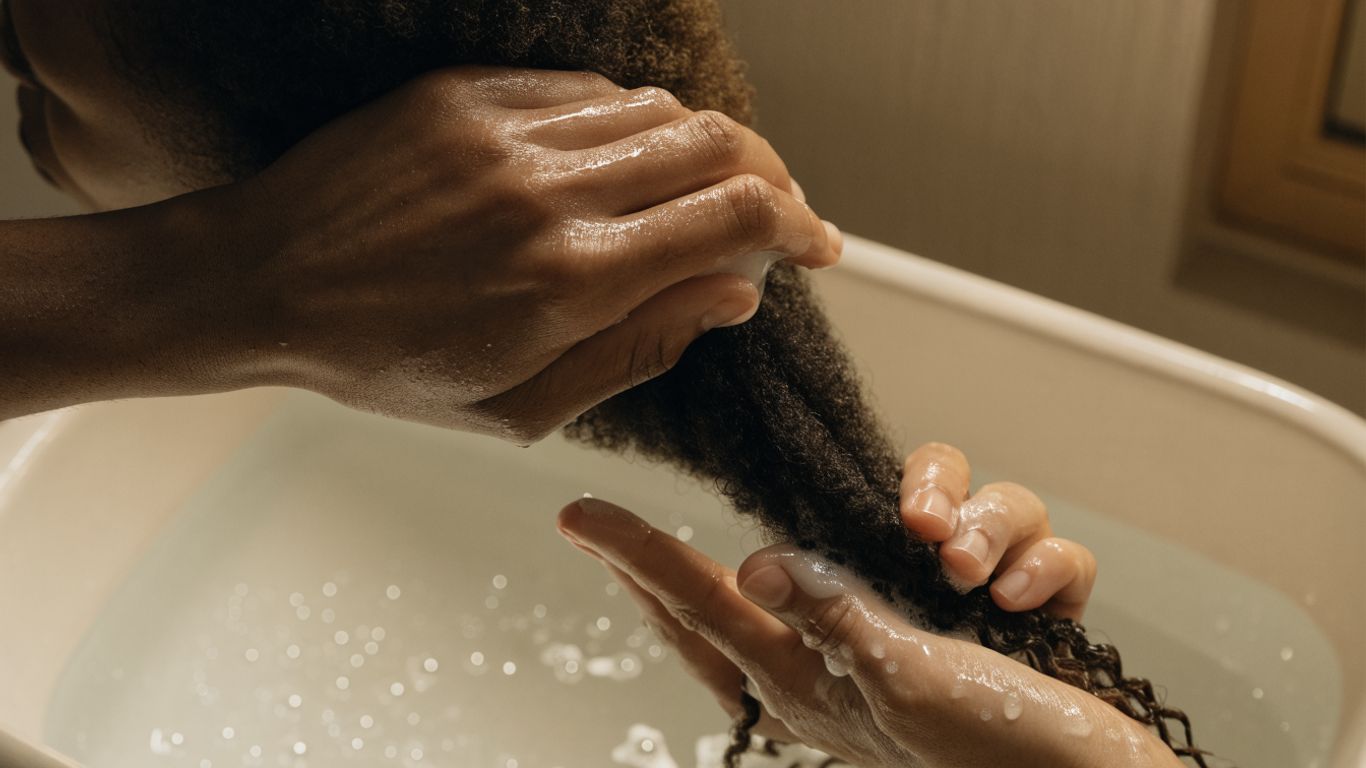
Work cleanser mainly into the scalp, using your fingertips rather than scratching with your nails. Let the lather rinse through the lengths instead of rubbing the hair together, which can encourage tangles. If your scalp feels comfortable and your hair is not coated, there may be no need to wash more often simply because it is winter. A practical routine is planned around real needs, much like an international moving checklist helps organize a complex task around its own timeline; the two subjects are different, but both benefit from planning ahead.
Use conditioner to soften and detangle in sections
Conditioning can add slip, making it easier to work through knots without pulling. Divide your hair into manageable sections, apply conditioner where it helps, and detangle slowly from the ends upward with fingers or a suitable wide-tooth comb. Pause if you meet resistance instead of forcing the knot. Small sections may take a little longer, but they make it easier to notice which areas need extra patience.
Deep-condition based on your hair’s needs
A deep conditioner can be part of wash day when your hair benefits from the added conditioning, but more time or more product is not automatically better. Follow the product directions and pay attention to the result: softness, manageability, and how your hair feels after rinsing. If your hair feels limp or coated, simplify rather than adding another rich layer. Adjust the frequency according to your own response.
Adjust wash frequency for your scalp and lifestyle
Choose a washing rhythm that keeps your scalp comfortable and works with your styling routine. A very active week, product use, or a scalp that feels uncomfortable may change what makes sense; the calendar alone cannot decide. If you need help deciding, track how your scalp and hair feel between washes for a few weeks. That simple record can make it easier to adjust without making abrupt changes.
Layer moisture to help reduce dryness
Layering is a way to apply moisture and conditioning in manageable amounts, not a requirement to use every product category. Begin with what your hair responds to and add one step at a time, so you can tell what is helping. Some readers prefer a light leave-in, while others like a cream or a small amount of oil on the ends. Mixed Nature’s hair guides discuss moisture and product choices as practical options, not universal prescriptions.
Start with water or a water-based leave-in
Water can rehydrate dry-feeling sections temporarily, and a water-based leave-in may help with softness and manageability. Apply to damp or lightly misted hair in small amounts, then see how the section feels once it settles. If your hair becomes sticky or coated, use less or pause and cleanse before layering more. For another perspective on building a routine for tightly coiled hair, read this 4C moisturizing routine.
Seal in moisture with a cream or oil when it suits your hair
A cream or oil may help reduce the dry feel of hair for some people, but it does not replace water or a water-based leave-in. Begin with a small amount, especially on the ends, and judge the result after your hair has had time to settle. If you are curious about one specific oil, this guide to olive oil for dry hair covers its use and care considerations. Hair responses vary, so a small trial is more useful than assuming a particular oil will suit everyone.
Choose lighter or richer products based on how your hair responds
The right amount depends on your hair, styling preferences, and how often you cleanse. A lighter product may feel more comfortable if richer layers leave your hair weighed down; a richer option may suit ends that remain dry with a lighter leave-in. Keep the routine simple enough to notice the difference. When comparing options, remember that hair porosity and other individual factors can influence how products feel.
Apply products in small sections for even coverage
Sectioning helps you apply a modest amount more evenly and notice areas that need extra attention. It is especially useful when your hair is dense or when you are refreshing a style without fully redoing it. Try a simple sequence and adjust it to your own results:
- Mist or dampen one section lightly.
- Smooth in a small amount of leave-in, if needed.
- Add a little cream or oil to the ends only if they still feel dry.
- Pause and assess before repeating on another section.
This gradual approach makes it easier to avoid coating the whole head when only a few areas need attention. If your hair feels heavy afterward, reduce the amount next time rather than adding another product to counteract it.
Protect your hair from cold, wind, and friction
A style that keeps ends tucked away can reduce daily handling, while a soft covering can help limit contact with rough winter fabrics. There is no need to hide your hair or choose a style you dislike; protection should still feel comfortable and express your personal style. Mixed Nature shares cold-weather hair-care inspiration alongside practical advice for textured hair. Think about the weather you actually face, including windy days or indoor commutes, and make adjustments that feel manageable.

Cover your hair outdoors with a satin-lined hat or scarf
A satin-lined hat or scarf can reduce direct rubbing between your hair and coarser fabric. Check that the covering fits comfortably and does not pull at your hairline. If you wear a scarf, arrange it so your ends are covered without tying it tightly. The goal is less friction, not a snug fit that creates tension.
Limit exposure to harsh weather when possible
When wind or cold feels especially drying, covering your hair and limiting unnecessary exposure may help reduce tangling and roughness. You do not need to avoid outdoor plans; just consider a practical covering and a style that stays secure without being tight. For readers planning a coastal outing, these Carolinensiel area ideas are an unrelated travel read, not hair-care guidance. Keep your hair choices based on the weather and activities you expect.
Choose low-manipulation styles that protect your ends
Styles that keep ends tucked or gathered can reduce the need to restyle throughout the week. Choose an option that you can maintain comfortably and still cleanse and moisturize as needed. A protective style is not a reason to ignore dryness or scalp discomfort. Give your hair a break from repeated handling, but keep checking how it feels.
Avoid styles that pull tightly on your hairline
A style should feel secure without causing pain or persistent tension. If your hairline feels sore, tender, or pulled, loosen the style or choose a lower-tension option. Avoiding repeated strain is a useful part of caring for fragile edges, and it does not require a complicated styling routine. Comfort is a better guide than how tightly a style is fixed in place.
Protect moisture overnight and between wash days
Small habits between wash days can help reduce friction without turning every evening into another full styling session. Keep the routine light: protect your hair while you sleep, refresh only the sections that need it, and avoid layering products out of habit. A simple overnight moisture routine offers additional ideas for using a light refresh and satin protection. Use those ideas as options, then adapt them to how your hair feels.
Sleep on satin or use a satin bonnet
A satin pillowcase or bonnet can reduce rubbing compared with rougher fabric. Choose whichever option stays comfortable through the night and does not pull on your edges. If a bonnet slips off, a satin pillowcase can be a simple alternative. These small changes may reduce friction, though they cannot replace gentle handling during the day.
Refresh dry sections with water and leave-in
If only a few areas feel dry, lightly mist those sections and smooth in a small amount of leave-in if needed. There is no need to reapply product everywhere when the rest of your hair feels fine. Give the section a moment to settle before deciding whether it needs anything more. A targeted refresh keeps the routine easy to adjust.
Reduce friction from collars, scarves, and bedding
High collars and rough scarves can rub against hair around the nape and sides, especially when hair is worn loose. Tuck ends into a comfortable style or place a smooth layer between your hair and the fabric when practical. If a section repeatedly catches on clothing, notice that pattern and change the contact point. Often, a small adjustment to clothing or styling is enough.
Avoid repeatedly layering products onto buildup
When hair feels dry, adding another layer can seem like the quickest fix, but buildup may leave strands feeling coated and dull. If products are no longer absorbing or your hair feels heavy, consider cleansing rather than applying more. One useful check is whether a small damp section feels softer after refreshing or remains coated. That response can help you decide whether to moisturize or reset.
Prevent breakage and troubleshoot your routine
Breakage prevention is usually a matter of reducing repeated stress rather than finding one perfect product. Pay attention to detangling, styling tension, friction, and whether your routine leaves your hair manageable. A different technique may help more than another layer of product. For additional gentle-care ideas, explore this guide to preventing hair breakage; persistent scalp discomfort deserves professional attention rather than guesswork.
Detangle gently from ends to roots
Start at the ends and work upward in small sections, easing apart knots before moving closer to the scalp. Conditioner or leave-in can help provide slip, but stop if the hair catches or the process feels painful. Detangling slowly while the hair is supported can reduce unnecessary pulling. The best tool is the one you can use gently on your own hair.
Trim or protect ends that snag and split
Ends that repeatedly snag may need extra care, a lower-friction style, or a trim if they are split. A trim does not change the way hair grows from the scalp; it can remove damaged ends that continue to catch. If you are unsure what you are seeing, ask a trusted professional for an assessment. In the meantime, handle the ends gently and avoid forcing tangles apart.
Look for signs of over-moisturizing or product buildup
Hair that feels unusually limp, gummy, or coated may be telling you that the current combination or amount of products is not working well. Dryness can also persist when products build up, so more moisturizing layers may not solve the problem. Change one part of your routine at a time and observe the result. That gives you a clearer idea of what your hair prefers.
Adjust your routine when hair stays dry despite regular care
If your hair remains dry, review the basics: whether you are cleansing as needed, applying conditioner thoroughly, refreshing only where necessary, and protecting ends from friction. Consider whether a product is leaving a coating or a style is making care difficult. For ongoing scalp concerns or continued breakage, seek guidance from a dermatologist or qualified hair professional. Online booking systems for clinics are a separate topic, but this clinic appointment booking guide explains that process if you need to arrange a visit. A change in routine can be gradual; you do not have to overhaul everything at once.
Conclusion
A helpful winter routine for 4C hair is gentle, flexible, and built around what your scalp and strands actually need. Cleanse and condition thoughtfully, layer products in modest amounts, reduce friction, and protect your ends through the week. When something is not working, simplify and adjust one step at a time; consistent care is more useful than chasing a perfect routine.
Frequently Asked Questions
How often should I wash 4C hair in winter?
Wash according to your scalp’s comfort, product use, and lifestyle rather than following a fixed winter schedule. If your scalp feels uncomfortable or your hair is coated, consider whether cleansing is due.
Does 4C hair need oil to stay moisturized?
Not necessarily. Some people like a small amount of oil over damp hair or on the ends, while others find it too heavy. Start with a little and judge by how your hair feels.
How can I refresh dry 4C hair between wash days?
Lightly mist the dry sections with water and add a small amount of leave-in if that suits your hair. Refresh only the areas that need it, and avoid repeatedly layering over buildup.
What is a good way to protect 4C hair from winter friction?
A satin-lined covering, satin pillowcase, or comfortable low-manipulation style can reduce rubbing. Pay attention to the nape and hairline, where clothing or tight styles may cause extra friction or tension.
Can protective styles cause breakage?
They can contribute to breakage if they are too tight, uncomfortable, or difficult to maintain gently. Choose a style that does not pull and keep checking your scalp and hair while it is in place.
How can I tell whether my hair is dry or has product buildup?
Dry hair may feel rough or stiff, while buildup can feel coated, heavy, or dull. The signs can overlap, so consider cleansing when hair feels coated and use a small, targeted refresh when it feels dry.
When should I ask a professional about hair or scalp concerns?
Consider a dermatologist or qualified hair professional if scalp discomfort persists, breakage continues despite gentle care, or you are unsure how to adjust your routine. They can help assess concerns that general hair-care advice cannot diagnose.