Key Takeaways
Chlorine can leave curls dry, rough, and more prone to tangling, but a gentle routine can help limit further stress. Focus first on rinsing, then adjust cleansing and conditioning to what your hair and scalp need.
- Rinse your hair with clean, lukewarm water as soon as you can after swimming.
- Use a swimmer’s shampoo when a thorough rinse does not remove the residue.
- Condition and detangle gently to reduce friction on fragile strands.
- Add moisture and strengthening treatments gradually, watching how your curls respond.
- Wet and condition your hair before swimming, and use a swim cap when practical.
What chlorine does to curly hair
Pool water can leave curls feeling different after a swim, especially when exposure is frequent. The change may be temporary dryness, or it may build into roughness and breakage when hair is repeatedly stressed. Understanding what you notice helps you choose a response without over-treating your hair.
How pool chemicals strip moisture and affect the hair cuticle
Chlorinated water can remove some of the oils that help keep hair feeling smooth and supple. When the hair’s outer cuticle is roughened or raised, strands may catch on one another more easily and lose moisture faster. Curly hair can be especially vulnerable to that friction because bends and coils make strands more likely to tangle; curl pattern alone, however, does not tell you exactly how your hair will respond.
Signs of chlorine-related dryness, tangling, and breakage
After a swim, you may notice that your hair feels rougher than usual, takes more effort to detangle, or seems less defined. Persistent exposure can contribute to dryness and snapping, but these signs can also come from handling, heat, color services, or product buildup. Look for a pattern rather than treating one bad hair day as proof of damage.
These changes can help you compare what you feel and see with what may be going on:
| What you notice | Possible explanation | A gentle first response |
|---|---|---|
| Hair feels rough after swimming | Residue or dryness | Rinse thoroughly and condition |
| Curls tangle more than usual | Increased friction or dryness | Detangle slowly with conditioner |
| Ends look frayed or split | Wear that has accumulated over time | Reduce friction and consider a trim |
| Curl shape changes across the head | Several possible causes | Review recent care and styling habits |
The table is a starting point, not a diagnosis. If the change continues even after you adjust your swim and wash routine, consider other influences such as heat or hard water; heat damage on mixed hair textures can affect curl definition too.
How to distinguish chlorine damage from other causes of curl changes
Notice when the change began and whether it follows pool days, a new styling habit, or a different water source. If your hair feels coated or unusually dull even when swimming is not part of your routine, buildup or hard water may be worth considering; clarifying curly hair can help you think through a gentle cleansing approach. Mixed Nature also offers curly hair care guidance for readers comparing routine changes across different textures.
A persistent shift in curl pattern, significant breakage, or scalp discomfort deserves more than guesswork. Try changing one part of your routine at a time so you can tell whether it helps, and seek advice from a dermatologist or trichologist if scalp or hair concerns continue.
What to do right after swimming
A prompt, uncomplicated rinse is a useful first step after pool time. You do not need to scrub hard or use several treatments at once; start by removing pool water and then decide whether your hair needs a cleanser. The best response may vary with how often you swim and how your scalp feels.
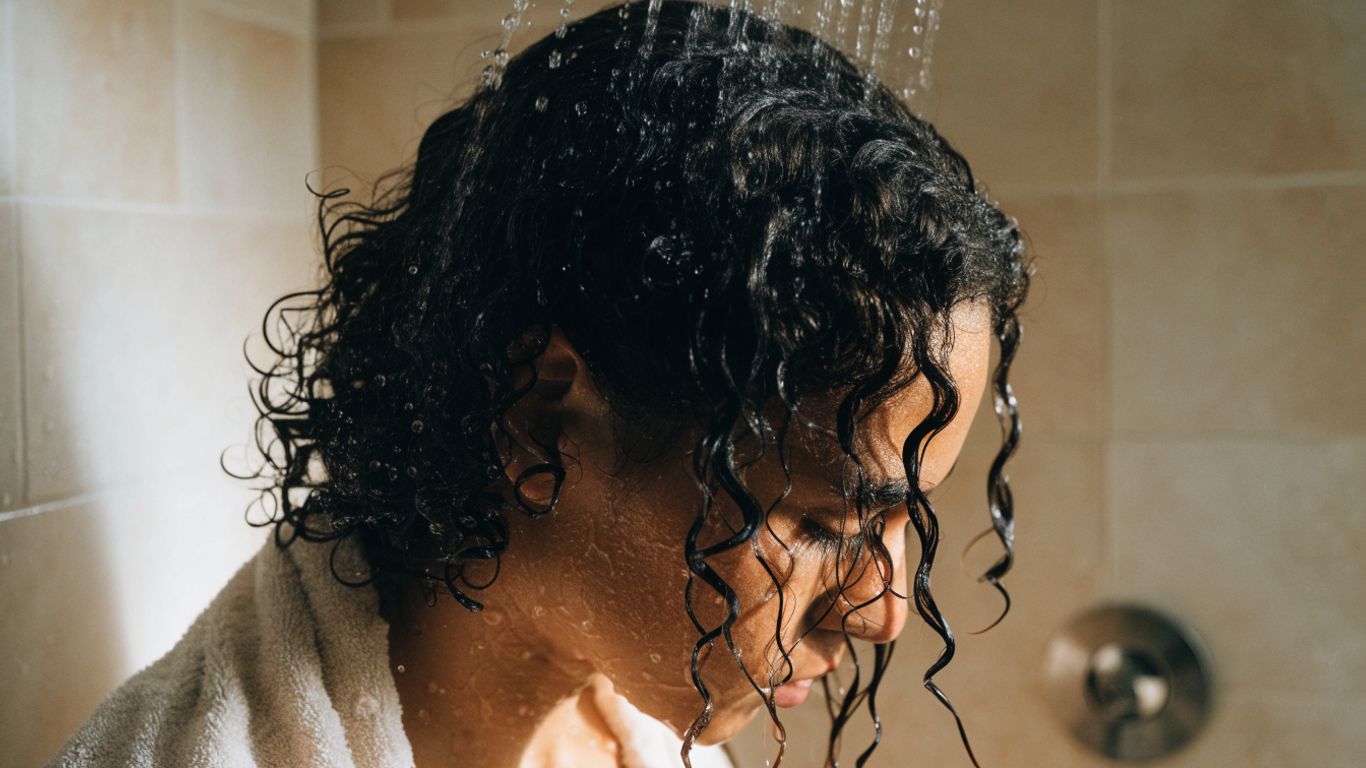
Rinse curls thoroughly with clean, lukewarm water
Rinse your hair as soon as practical, letting clean, lukewarm water run through the lengths and around the scalp. Use your fingers to gently separate dense sections so water reaches underneath, but avoid rough rubbing that can increase tangles. If a shower is not available immediately, rinse when you get home rather than leaving pool water in your hair for longer than necessary.
Use a swimmer’s shampoo when chlorine residue remains
If rinsing alone leaves your hair feeling coated or smelling strongly of pool water, use a shampoo made for swimmers or a gentle cleanser that suits your scalp. Work it into the scalp and let the suds pass through the lengths as you rinse, rather than piling and scrubbing the curls. Clarifying shampoos can be useful for some kinds of residue, but frequent or harsh cleansing may make dry hair feel worse; choose the strength and frequency based on how your hair responds.
Detangle gently while hair is slippery with conditioner
Apply conditioner and give it a moment to add slip before you start detangling. Work in sections, beginning at the ends and moving upward with your fingers or a wide-tooth comb; pause if you meet resistance instead of pulling through a knot. This takes patience, but less pulling means less stress on strands that may already feel dry after a swim.
Once the tangles loosen, rinse according to the conditioner’s directions and squeeze water out gently. Mixed Nature’s curly hair routine inspiration also encourages readers to build care around their own texture and preferences, rather than force every curl into one routine.
Restore moisture without weighing curls down
The aim is to make hair easier to handle while keeping its natural movement. A rich product is not automatically the right choice: fine strands or looser curls may feel weighed down, while denser or drier hair may benefit from more conditioning. Start with a modest amount, apply it where needed, and adjust after you see how your hair dries.
Choose a rinse-out conditioner suited to your curl pattern
Look for a rinse-out conditioner that leaves your hair soft and easy to detangle without a heavy coating. Apply it mainly through the lengths and ends, where dryness and knots are often most noticeable, and add more only if the hair still feels rough. The amount that works can vary with strand thickness, density, porosity, and personal preference, so curl type is a useful guide but not a strict formula.
Apply a deep-conditioning mask to dry, brittle lengths
If your lengths remain brittle after ordinary conditioning, try a deep-conditioning mask periodically rather than stacking it on every wash day. Follow the label’s directions, focus on the driest areas, and rinse thoroughly. If your hair feels limp or coated afterward, use less product or space treatments farther apart; moisture care should make curls more manageable, not leave them heavy.
Use leave-in conditioner to reduce friction and tangles
A small amount of leave-in conditioner can help curls glide against one another during styling and reduce the need for repeated combing. Apply it to damp hair, concentrating on the areas that tangle, then style as usual. Mixed Nature’s curly and wavy hair inspiration offers additional ideas for adapting a routine to your own preferences and texture.
If your hair is easily weighed down, try a lighter formula and use less than you think you need at first. You can add a little more to a dry section later, but removing too much product buildup may require another wash.
Strengthen damaged strands carefully
When hair feels fragile, it is tempting to reach for several repair treatments at once. A measured approach is easier to evaluate and less likely to leave curls stiff or coated. Keep in mind that products can improve how hair feels and handles, but they cannot permanently mend a split strand.
When a bond-building or protein treatment may help
A bond-building treatment or a protein-containing product may be worth considering if your hair has become weak or overly stretchy, particularly after repeated chemical or styling stress. These products are not interchangeable, and results depend on the formula and the condition of your hair. Follow the instructions and introduce one treatment at a time; a guide to protein treatments for curly hair can help explain how protein and moisture fit into a routine.
How to balance strengthening treatments with moisture
Pay attention to how your hair feels after each treatment. If it seems brittle or stiff, pause strengthening products and return to gentle cleansing and conditioning; if it remains overly soft and difficult to manage, a strengthening treatment used as directed may be worth trying. There is no single schedule that works for every head of curls, so let your hair’s response guide the next step.
Why to avoid overlapping treatments or excessive heat
Using multiple intensive treatments close together can make it difficult to tell what is helping, and repeated heat can add stress to already fragile hair. Give your hair time to respond before adding another treatment. If you use a heated tool, keep the temperature moderate and limit how often you use it; the focus should be on reducing additional stress, not trying to force curls into shape.
Adjust your wash and styling routine
A workable routine should fit your swim schedule, scalp, and the way your curls respond between washes. Swimmers do not all need the same cleansing frequency: some may rinse and condition after each swim, while others may need shampoo more often to keep the scalp comfortable. Adjust gradually, and avoid letting a rigid schedule override what your hair is telling you.
Set a wash schedule based on swim frequency and scalp needs
If you swim often, rinsing after each session is a sensible starting point, while shampoo frequency can depend on residue, scalp oil, and discomfort. If your scalp feels itchy or coated, cleanse gently; if your lengths feel dry, keep shampoo focused near the scalp and condition the ends. For readers considering other sources of dullness or residue, guidance on hard-water buildup in curly hair may help separate water-related concerns from pool exposure.
A few habits can make the routine easier to adjust without adding too many steps:
- Notice whether roughness or tangling appears after swim days.
- Change one product or step at a time.
- Use a gentle cleanser when your scalp or hair needs it.
- Reduce heat and rough towel-drying while strands feel fragile.
After a couple of wash cycles, review what changed and keep the steps that genuinely help. Mixed Nature is a beauty publication with practical hair-care guidance, and its curly hair care tips offer a broader starting point for shaping a routine.
Use low-tension styling techniques to limit breakage
Choose styles that do not pull tightly at the roots, and use soft ties or other gentle accessories when gathering your hair. Blot or squeeze out water with a soft towel or T-shirt instead of rubbing the lengths. If you need to detangle again, add slip and work in sections rather than repeatedly brushing dry curls.
Trim split ends that cannot be repaired with products
Conditioners and masks may help split ends feel smoother temporarily, but they cannot fuse the strand back together. If ends continue to snag or split, a small trim can remove the most damaged portion and make detangling easier. Ask for a trim that suits your preferred shape and length, especially if you are growing your hair out.
If you visit a salon, the QR and NFC review cards described in a separate salon-focused guide are one way salons can collect client feedback; they are unrelated to hair repair itself. For swimming plans, a guide to family-friendly swimming beaches may help with choosing a destination, while the same rinse-and-care principles apply after a pool swim.
Prevent more chlorine damage during future swims
Prevention is mostly about reducing how much pool water stays in contact with your hair and how much friction follows. Small steps before and after a swim can help make post-pool care simpler, though no cap or product blocks every bit of exposure. Choose the measures you can repeat comfortably.
Wet and condition hair before entering the pool
Before swimming, wet your hair with clean water so it is less dry when you enter the pool. A small amount of conditioner through the lengths may add slip, but avoid applying so much that hair feels coated or bothersome. Rinse after swimming as soon as practical, especially if you will not wash your hair until later.
Wear a well-fitting swim cap and rinse as soon as possible
A swim cap can help reduce direct contact with pool water, although it may not keep every strand completely dry. Choose a comfortable fit that does not pull at your hairline, and tuck curls in gently rather than forcing them into a tight space. A guide to swim caps for kids with curly hair shares fit considerations for curls and other textured styles; rinse hair promptly after taking the cap off.
Protect curls from sun, friction, and repeated chemical exposure
When swimming outdoors, cover your hair where practical and limit friction from tight styles or rough fabrics. If you swim frequently, keep a simple post-swim rinse and conditioning routine ready so care does not become a rushed, rough detangling session. The wider web also has advice on post-swim hair care, which you can compare with your own hair’s response.
Planning has different meanings in different parts of life: other guides discuss asset protection after a car accident, health travel options, and field-service modernization. Those topics are separate from hair care, but the practical point here is simple: make a routine you can follow consistently, rather than relying on a complicated rescue after every swim.
Conclusion
Chlorine-related dryness does not call for an aggressive fix. Rinse promptly, cleanse when residue remains, condition before detangling, and introduce strengthening care only when it seems useful. With a little prevention before the next swim and a routine that responds to your own curls, you can reduce friction and help hair feel more manageable over time.
Frequently Asked Questions
Can chlorine damage curly hair after one swim?
One swim may leave curls feeling dry or rough, but a lasting change is not inevitable. Rinsing soon afterward and conditioning gently can help reduce residue and friction.
Should I shampoo every time I swim?
It depends on your scalp, swim frequency, and whether rinsing removes the residue. If your hair or scalp still feels coated, use a suitable gentle or swimmer’s shampoo; avoid cleansing more aggressively than needed.
Is conditioner enough to remove chlorine?
Conditioner helps with slip and manageability, but it does not replace rinsing. Rinse thoroughly first, and use shampoo if residue remains or your scalp needs cleansing.
Can chlorine permanently change my curl pattern?
A temporary change in definition can happen when hair is dry, tangled, or weighed down by residue. If a change persists, consider other possible causes such as heat, chemical services, or buildup rather than assuming chlorine is the only reason.
How often should I use a deep-conditioning mask?
Follow the product directions and start with occasional use, adjusting based on how your hair feels. If curls become limp or coated, use less or space treatments farther apart.
Do swim caps keep all chlorine out of my hair?
No cap can guarantee that every strand stays dry. A comfortable cap may reduce exposure, and rinsing promptly after swimming remains useful.
Can products repair split ends?
Products can smooth the feel of split ends temporarily, but they cannot permanently join a split strand. A trim is the practical option when splitting continues or ends keep catching and tangling.