Key Takeaways
A useful clarifying schedule is guided by how your curls and scalp respond, not by a calendar alone. Start gently, then adjust based on what you notice.
- Try clarifying every four to eight weeks as a starting point.
- Consider a clarifying wash when curls feel dull, weighed down, or coated with residue.
- Product use, water quality, swimming, and scalp needs can affect how often you clarify.
- Choose a cleanser suited to your hair, and follow its directions.
- Condition afterward and use the results to guide your next wash.
Start with a practical clarifying schedule
There isn’t one clarifying schedule that fits every curl routine. A sensible starting interval gives you room to notice how your scalp and strands respond before making a change. If you’re wondering how often should you clarify curly hair, begin with occasional use and let your own results guide the next step.
Use once every four to eight weeks as a starting point
For many routines, trying a clarifying wash every four to eight weeks is a reasonable place to begin. Treat that range as an experiment, not a rule: your products, wash habits, and hair’s condition all play a part. If you already have a routine that leaves your curls comfortable and defined, there may be no reason to clarify more often.
Clarify more often if buildup returns quickly
If your curls repeatedly feel coated or heavy well before the next planned clarifying wash, consider whether residue is accumulating quickly. A small change in styling habits may help, but so might a modest adjustment to your schedule. The goal is to address a recurring pattern without turning a deeper cleanse into a frequent default.
Clarify less often if your curls feel dry or rough
Dryness or a rough feel after clarifying can be a sign that your current interval or shampoo is too much for your routine. Wait longer before the next session and notice whether softness returns with your usual conditioning steps. If the discomfort persists, don’t assume another clarifying wash is the answer; the cause may be something else.
Treat your routine as a starting point, not a strict rule
A schedule is most useful when it helps you notice patterns over time. Keep a simple record of when you clarify and how your curls feel afterward, especially if you’re trying a new product or changing your wash routine. For a broader set of safe clarifying routine tips, consider how product choice, buildup, and moisture fit together rather than following a fixed date.
Recognize when your curls need clarifying
Curls can change in appearance and feel for several reasons, so one frustrating wash day doesn’t automatically mean you need a deeper cleanse. Look for signs that repeat, and compare them with how your hair usually behaves. These observations can help you decide whether clarifying makes sense or whether another part of your routine needs attention.

Look for dullness, limpness, or reduced curl definition
When residue builds up, curls may appear less lively or feel heavier than they normally do. You might notice less spring, a flatter shape, or definition that fades soon after styling. Those changes can be useful clues, particularly when they show up alongside a coated feel or a change in how your usual products behave.
Notice when products stop absorbing or styling as usual
If conditioner or styling products seem to sit on the surface, or your normal routine suddenly gives a different result, buildup could be one possible explanation. Pay attention to whether the change happens repeatedly rather than after a single product application. A clarifying frequency guide can help you think through buildup signs and frequency without treating every change as proof that your hair needs a stronger wash.
Check for residue, an itchy scalp, or a waxy feel
A waxy coating, visible residue, or a scalp that feels uncomfortable may be worth noticing alongside changes in curl definition. These signs do not identify a specific cause by themselves, so consider recent product use and how long the feeling lasts. If scalp irritation is persistent or concerning, seek advice from a qualified clinician rather than relying on repeated clarifying washes.
Rule out dryness or damage before clarifying again
Hair that feels rough, brittle, or unusually tangly may need more moisture or gentler handling, not another deep cleanse. Think about recent heat, chemical services, friction, and whether your conditioning routine has changed. When the signs point toward dryness or damage, give your curls a chance to recover before deciding that buildup is the issue.
Adjust frequency to your hair and routine
A clarifying schedule depends on the life your hair actually has between wash days. Styling products, water, swimming, and the needs of your scalp can all change what feels comfortable. Rather than assuming a particular curl pattern requires a set frequency, watch how your own hair responds and make one adjustment at a time.
Consider how much styling product you use
Frequent use of gels, creams, oils, or other styling products can leave more residue to wash away over time. That doesn’t mean you need to stop using products that work for you; it simply makes your own buildup signals worth tracking. If your hair feels coated sooner when you layer several stylers, consider a slightly shorter interval and evaluate the result.
Factor in hard water, swimming, and environmental exposure
Water quality and time spent swimming may affect how your hair feels, while dust and other environmental exposure can add to the sense of residue. Clarifying products vary, so a standard clarifying shampoo may not address every kind of deposit in the same way. If you suspect mineral residue, look for a product specifically intended for that concern and follow its directions.
Account for curl pattern, porosity, and scalp needs
Curl pattern alone cannot tell you how often to clarify. Porosity, strand condition, scalp comfort, and the products you prefer may all shape the answer, and people with similar-looking curls can have different needs. Use those details as context, then let changes in softness, definition, and comfort guide your choices.
Reassess frequency after changing your products or habits
A new styling product, different wash-day routine, or change in swimming habits can shift how often your hair seems to need a deeper cleanse. To keep that decision practical, compare the pattern before and after a change instead of adjusting several things at once. These examples can help you think about the direction of a possible adjustment:
| What has changed | What to observe | Possible response |
|---|---|---|
| More frequent product layering | Whether hair feels coated sooner | Reassess the interval if the pattern repeats |
| Less styling product | Whether curls stay light for longer | Consider waiting longer between clarifying washes |
| Swimming more often | Whether residue or dryness appears | Review product directions and condition afterward |
Use the table as a way to organize observations, not as a prescription. Give each adjustment a little time, and return to your previous routine if your curls become uncomfortably dry.
Choose a clarifying shampoo that suits your curls
Clarifying shampoos are intended for a deeper cleanse than a routine wash, but formulas and directions differ. Check the product label for the kind of residue it is designed to remove and how often it recommends use. A little ingredient and label awareness can help you choose a product that suits both your hair and your comfort level.
Look for a formula designed to remove buildup
Start by looking for a shampoo that clearly describes itself as clarifying or says it is intended to remove buildup. Labels can help distinguish a deeper-cleansing product from one meant primarily for routine cleansing. If you are unsure whether a formula suits your hair, follow the directions and pay close attention to how your curls feel afterward.
Consider gentler options for dry, color-treated, or fragile hair
If your hair is dry, color-treated, fragile, or prone to feeling rough, choose with care and avoid assuming that a stronger-feeling cleanse is better. Check the label for use instructions and any cautions relevant to your hair. If a product leaves your curls persistently uncomfortable, discontinue it and consider asking a qualified hair professional for guidance.
Understand the difference between clarifying and chelating
Clarifying generally refers to cleansing intended to remove buildup, while chelating products are formulated to target mineral deposits. The terms and claims on labels can vary, so read the product description rather than assuming every clarifying shampoo handles hard-water minerals in the same way. If you suspect mineral buildup, choose a product that explicitly addresses it and use it as directed.
Avoid relying on harsh household ingredients
Household mixtures can be unpredictable, and a DIY approach may not give you the controlled directions provided by a hair-care product. Avoid treating harsh ingredients as a shortcut to a deeper cleanse, particularly when your curls are already dry or fragile. A purpose-made cleanser used according to its label is a more measured way to test whether clarifying helps.
Clarify without over-stripping your hair
A careful wash can make clarifying feel more manageable, especially if your hair is prone to dryness or tangling. Work methodically, and let the product do the cleansing rather than scrubbing aggressively. When in doubt, the shampoo’s own directions take priority over a one-size-fits-all technique.
Saturate curls thoroughly before applying shampoo
Wet your hair thoroughly before you begin so the curls are evenly saturated. This helps you spread shampoo more easily and avoid concentrating too much product in one small area. Take a moment to make sure the water reaches your scalp and the lengths beneath your curls.
Focus the cleanser on your scalp and roots
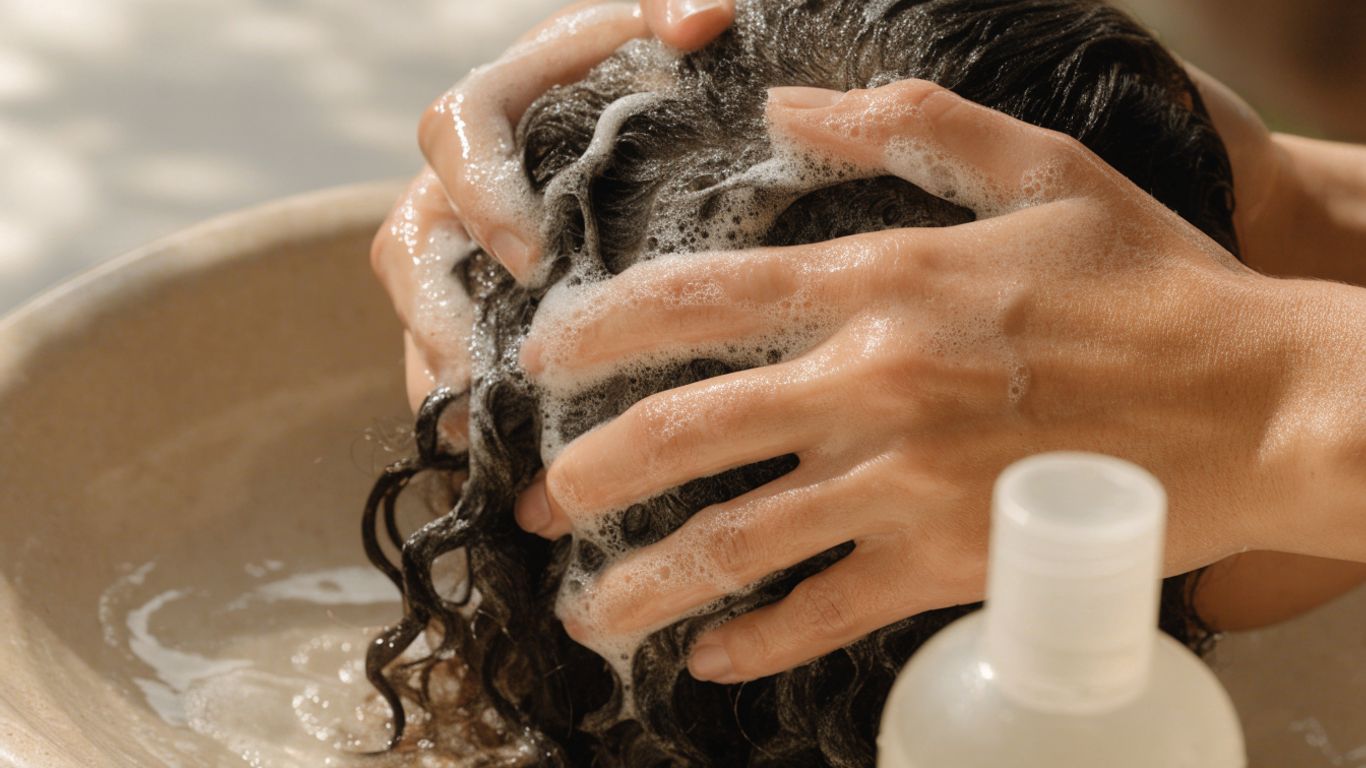
Apply the shampoo primarily where oil and residue tend to collect: the scalp and roots. Use your fingertips to work it in gently, moving across the scalp rather than scratching with your nails. A careful scalp cleanse can help keep the process focused without rough handling.
Work the lather through your lengths without rough scrubbing
Let the lather move through the lengths as you rinse instead of scrubbing each section back and forth. Curly hair can tangle with friction, so keep your touch gentle and use your hands to guide the cleanser where it needs to go. The aim is a thorough wash, not a forceful one.
Follow product directions and rinse thoroughly
Use the amount and timing listed on the shampoo label, and rinse until the product is gone. Don’t leave a cleanser on longer just because your hair feels coated; the directions are a better guide. Once you’ve rinsed, move on to conditioning rather than repeating the wash automatically.
Restore moisture and evaluate the results
Clarifying is only one part of wash day; the care that follows helps you judge whether the session suited your hair. Take note of how your curls feel once they are dry, not just while they are wet. That fuller picture can guide whether to keep your interval, adjust it, or reconsider the shampoo.
Condition or deep-condition after clarifying
Follow a clarifying wash with conditioner to restore softness and make detangling easier. If your hair usually benefits from a deep conditioner, use one according to its directions and your normal routine. Focus on how your hair responds rather than assuming every clarifying session requires the same treatment.
Add leave-in products based on how your curls feel
Once you’ve rinsed out your conditioner, decide whether your curls need a leave-in product based on their feel and your usual styling needs. A light touch may be enough if your hair already feels soft; drier curls may call for more moisture from products you know work for you. There’s no need to layer several products automatically after every wash.
Observe curl definition, softness, and scalp comfort
After styling, notice whether your curl definition returns and whether your hair feels soft rather than coated or rough. Check in on scalp comfort, too, since a clean-feeling length doesn’t tell the whole story. If irritation continues, or the condition of your scalp worries you, consult a qualified professional.
Adjust your next clarifying session based on the outcome
Use the outcome of this wash to decide what to do next. If your curls feel refreshed and comfortable, your current approach may be working; if they feel dry, consider extending the interval or choosing a gentler option. Change one factor at a time so you can tell which adjustment made a difference.
Conclusion
Clarifying curly hair is less about keeping a strict calendar and more about responding to recurring signs of buildup while protecting your hair’s comfort. Start with a manageable interval, choose a cleanser suited to the concern, and let your curls’ softness, definition, and scalp comfort guide what comes next.
Frequently Asked Questions
How often should you clarify curly hair?
A four-to-eight-week interval can be a starting point, but your products, scalp, water, and hair condition may call for a different schedule. Adjust gradually based on how your curls respond.
Can I clarify curly hair every week?
Weekly clarifying may be too frequent for some curls and can leave hair feeling dry or rough. Follow the product directions and consider whether a routine wash would meet your needs instead.
What are common signs of product buildup?
Curls may feel coated or heavy, look dull or limp, or respond differently to products you use regularly. Look for patterns rather than relying on one sign alone.
Does clarifying shampoo remove hard-water minerals?
Some products are made to target mineral deposits, but not every clarifying shampoo does so. Check the label for an explicit claim about mineral buildup.
Should I condition after clarifying my hair?
Conditioning after a clarifying wash can help your hair feel softer and make detangling easier. Choose a conditioner and follow-up routine that suit your curls.
Is clarifying shampoo suitable for color-treated curls?
It may be, but formulas and directions differ. Check the label and consider a gentler option if your hair is dry, fragile, or feels rough after cleansing.
What if my scalp still feels itchy after clarifying?
Persistent itching may have causes that a clarifying wash won’t address. Avoid repeating the wash in an attempt to solve it, and seek advice from a qualified clinician if the concern continues.