Key Takeaways
A clean-feeling wash day usually comes down to thorough cleansing, light conditioning, and paying attention to how your own hair responds. Small adjustments can help you remove residue without making your routine feel harsh.
- Saturate your hair fully before shampooing, then focus cleanser on your scalp.
- Choose a regular shampoo for routine washing and clarify when residue persists.
- Keep conditioner and styling products focused and use modest amounts.
- Consider hard water, product layers, and wash frequency when buildup returns.
- Change one routine step at a time so you can tell what is helping.
Understand what causes buildup on low porosity hair
Low porosity describes hair that tends to take up water and products slowly; it does not mean every product will automatically build up. When formulas remain on the surface, though, repeated layers can leave hair feeling coated or dull. The aim is to notice patterns and adjust your routine, rather than assume that every sign of dryness has the same cause.
How product residue accumulates on the hair and scalp
Residue can come from styling products, conditioner, sebum, and environmental particles that remain between washes. Applying more product over a coated feel may add another layer instead of solving the problem. Pay attention to both your scalp and lengths, since they can have different needs.
Why heavy oils, butters, and layered products can feel coating
Oils and butters can be useful in some routines, but rich formulas or several layers may feel heavy when your hair does not need that much product. The same product can also feel different depending on how much you use and how often you cleanse. This simple comparison can help you spot a pattern without treating any ingredient as universally wrong.
| What you notice | Possible routine factor | A reasonable first adjustment |
|---|---|---|
| Hair feels waxy soon after styling | Several rich products layered together | Use fewer layers or reduce the amount |
| Roots feel coated between washes | Product applied close to the scalp | Keep conditioner and stylers farther from roots |
| Hair looks dull after repeated use | Residue may be accumulating | Wash thoroughly and reassess product amounts |
If the coated feeling eases after a thorough wash, product layering may be part of the picture. If it does not, look at your cleanser, water, and scalp comfort before adding another treatment.
How hard water and infrequent cleansing may contribute
Minerals in hard water can interact with cleansing and leave hair feeling less fresh, while long gaps between washes may allow oil and product residue to accumulate. Neither factor affects everyone in the same way. If you suspect water is part of the issue, note whether the feeling persists despite a careful wash and whether it changes when you travel or use a different water source.
Signs that buildup—not dryness—is affecting your hair
Hair that feels coated, limp, or difficult to rinse clean may be carrying residue, especially if the feeling follows several styling layers. Dryness can feel rough or brittle, and the two can happen together, so avoid diagnosing from a single sign. A gradual change in your routine is more useful than piling on moisture products when hair already feels covered.
Prepare your hair and choose the right cleanser
A little preparation makes washing easier and helps you choose a cleanser based on what your scalp and hair actually need. Consider the products you have used since your last wash, how your scalp feels, and whether your hair is tangled. Keep the process simple at first; you can adjust once you know how your hair responds.

Detangle gently before washing
Gently detangling before you get into the shower can make it easier to distribute shampoo and rinse your hair evenly. Work in sections if that feels more manageable, and use your fingers or a tool that suits your texture. Avoid tugging through knots; ease them apart from the ends upward.
Choose a shampoo based on your scalp and product use
For routine washing, choose a shampoo that leaves your scalp feeling clean and comfortable rather than tight. If you have used little styling product, a regular wash may be enough; heavier or more frequent layering can call for a more thorough cleanse. Guides to lightweight product choices can help you think about how product weight fits into your overall routine.
A few practical questions can narrow down what to use without making wash day complicated:
- Does your scalp feel oily or coated before washing?
- Have you used several leave-in or styling products since your last wash?
- Does your usual shampoo leave your scalp comfortable and your hair clean?
Use your answers to choose a cleanser and amount, then judge the result after rinsing and drying. A product that cleans well without leaving your scalp uncomfortable is a useful starting point.
Decide when a clarifying or chelating shampoo may help
Clarifying shampoos are generally used when regular cleansing does not seem to remove product residue. Chelating shampoos are formulated to address mineral deposits, which may be relevant if hard water is a concern. These are different reasons to choose a stronger cleansing option, so check the product directions and avoid using one automatically at every wash.
Avoid relying on co-washing to remove stubborn residue
Conditioner washing may leave a light, clean feel for some people, but it may not remove stubborn styling residue as effectively as shampoo. If your scalp or hair still feels coated after co-washing, return to a shampoo suited to your needs. The goal is not to avoid conditioner washing entirely; it is to notice when it is not doing the cleansing job you need.
Cleanse thoroughly without stripping your hair
A careful wash does not require rough scrubbing or repeated shampooing by default. Give water and cleanser enough time to reach your scalp, then rinse patiently. Thorough, gentle cleansing is often more useful than adding extra products to hair that already feels coated.
Saturate your hair with comfortably warm water
Before applying shampoo, let comfortably warm water run over your hair until it is thoroughly wet. Low porosity hair may take a little patience to saturate, particularly when it is dense or tightly curled. Move the hair gently so water reaches the scalp and inner sections, rather than wetting only the surface.
Focus shampoo on the scalp and massage with your fingertips
Apply shampoo to the scalp and use your fingertips to massage it across the areas that need cleansing. Fingertips offer control; avoid scratching with nails or bunching the lengths into a knot. If your hair is very dense, working in sections can help you reach the scalp without using excess shampoo.
Let the rinse carry cleanser through your lengths
As you rinse, let the suds move through the lengths rather than rubbing them together. This helps clean the hair without adding unnecessary friction to the ends. Keep rinsing until the water runs clear of visible suds and your hair no longer feels slippery with cleanser.
Repeat only when your hair or scalp still feels coated
A second shampoo may be useful when the first wash does not remove a heavy layer of product or oil. It is not a required step for every wash, and repeated cleansing can leave some hair or scalps feeling uncomfortable. Check how your scalp and lengths feel after the first rinse, then decide whether another round is warranted.
Condition without leaving a heavy residue
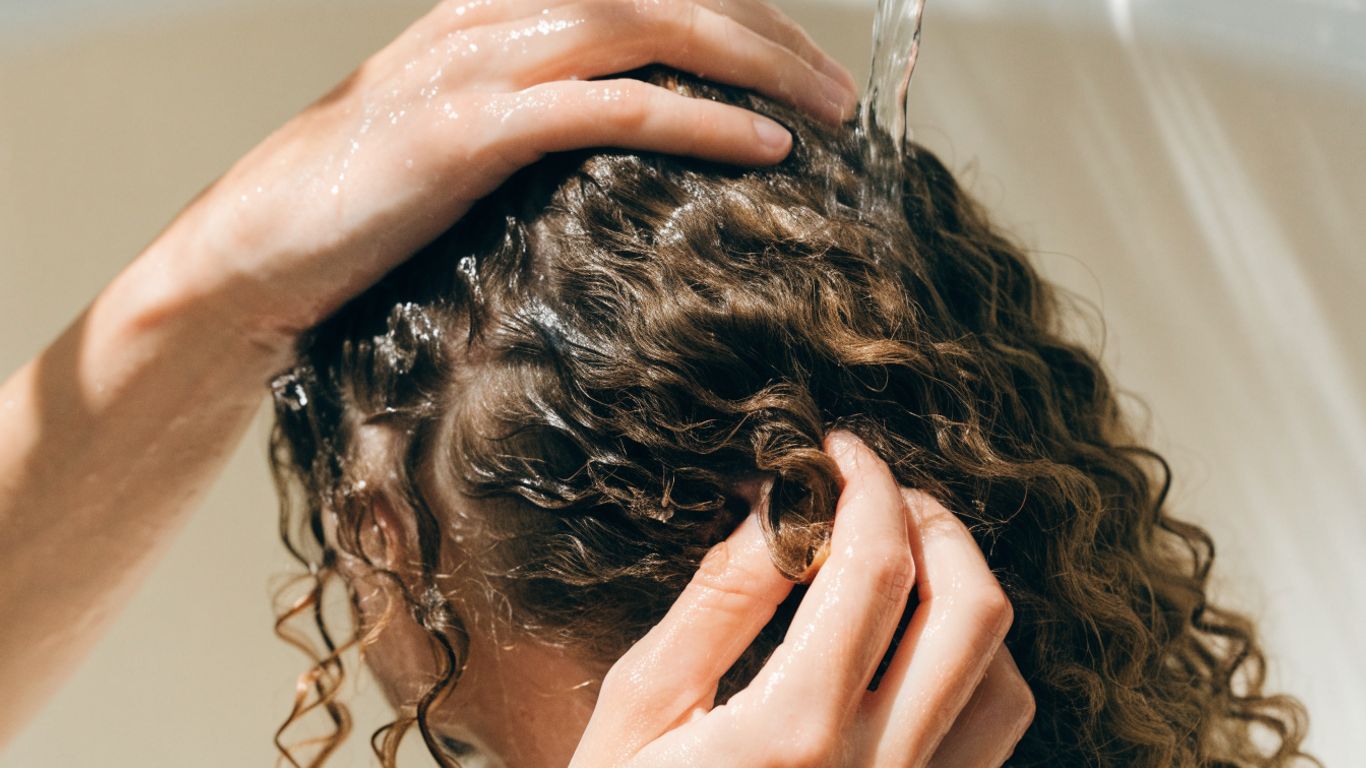
Conditioning can make hair easier to detangle and style, but the amount and placement matter. Apply it where your hair needs softness or slip, and give it time according to the product directions. A thorough rinse is part of conditioning, not an optional finishing step.
Apply conditioner mainly where your hair needs it
For many people, the lengths and ends need more conditioner than the scalp. Smooth it through the areas that feel dry or tangled, using a small amount first. If your roots are prone to feeling coated, keep conditioner away from them and see whether that changes the result.
Choose formulas that rinse clean and suit your hair’s needs
Choose conditioner for the result you want—such as easier detangling or softer-feeling lengths—and notice whether it rinses away comfortably. A rich formula is not inherently unsuitable, but it may be more than your routine needs if hair often feels weighed down. Adjust the amount or frequency before deciding that you need to replace everything.
Use a deep conditioner when needed, not automatically every wash
A deep conditioner can be useful when your hair feels especially dry or needs extra conditioning, but it does not have to be part of every wash. Follow the product directions and assess how your hair feels afterward. If your hair repeatedly feels coated rather than soft, try spacing out deep treatments or using less.
Rinse thoroughly, especially at the roots and nape
The roots, nape, and areas beneath thicker sections can be easy to miss during rinsing. Separate the hair gently and let water reach those spots until no conditioner remains. If your hair feels slick or heavy once dry, take note of where product was applied and whether rinsing was thorough.
Style with lightweight products and controlled amounts
Styling does not need to mean applying several products in sequence. Start with the result you want, then choose only the products that help you get there. If residue is a recurring concern, a low-porosity hydration routine can offer another perspective on keeping product use measured.
Start with a small amount and add more only if needed
Begin with less than you think you need, spread it across your hands, and apply it evenly. You can add a little more to sections that need it, but removing excess later is harder. This approach also makes it easier to learn how much of a product works for your hair.
Limit layers of leave-in, cream, oil, and gel
Each layer adds another formula to wash out later. You might choose a leave-in for softness and a styler for hold, rather than automatically using a leave-in, cream, oil, and gel together. Keep the routine that gives you the finish you like, and remove products that do not make a clear difference.
Apply styling products evenly to damp hair
Applying products to damp hair can help you distribute them more evenly, though the ideal dampness depends on your texture and styling method. Work in sections if needed, smoothing product through rather than concentrating it in one spot. Even distribution can reduce the temptation to keep adding more to areas that were missed.
Check whether a product leaves your hair coated after drying
Notice how your hair feels once it is fully dry and again before the next wash. If it regularly feels tacky, limp, or coated after using a particular product, try a smaller amount or pause that product for a wash cycle. One change at a time makes the result easier to interpret.
Set a wash schedule and troubleshoot persistent buildup
There is no single wash schedule that works for everyone. Scalp oil, exercise, weather, protective styles, and the amount of product you use can all affect when your next wash feels necessary. Begin with how your scalp feels, then adjust as you notice what happens between wash days.
Adjust wash frequency to your scalp, activity, and product use
Wash when your scalp feels ready for cleansing, rather than following a calendar that does not fit your life. Frequent workouts or more styling product may mean you prefer to wash more often, while a simpler routine may allow a longer interval. Practical wash-frequency guidance can help you think through a schedule without treating a suggested interval as a rule.
Use clarifying shampoo when regular cleansing is not enough
If a regular wash leaves a persistent coated feel, an occasional clarifying shampoo may help remove product residue. Follow the label and pay attention to how your scalp and hair feel afterward. If your hair feels uncomfortable or overly dry, return to gentler cleansing and reassess how often you clarify.
Consider a chelating shampoo if hard water may be a factor
When hard water seems like a possible contributor, a chelating shampoo may be worth considering because it is intended to address mineral deposits. Use it according to its directions, rather than treating it as an everyday cleanser. If you are unsure whether water quality is contributing, avoid making several major routine changes at once.
Change one product or routine step at a time
Persistent buildup can be frustrating, but changing shampoo, conditioner, and styling products all at once makes it difficult to learn what helped. Try adjusting one step, then give the routine enough washes to judge the difference. If scalp discomfort or a persistent concern continues, consider asking a dermatologist or trichologist for individual guidance.
Conclusion
Washing low porosity hair without buildup is less about finding one perfect product and more about using enough water, cleansing the scalp thoroughly, rinsing well, and keeping conditioning and styling products in proportion. Let your hair’s response guide small changes, and give each adjustment time to show whether it belongs in your routine.
Frequently Asked Questions
How often should I wash low porosity hair?
Wash according to your scalp, activity, and product use rather than a fixed schedule. If your scalp feels oily or coated, you may prefer to wash sooner; if it stays comfortable, you may not need to.
Should I shampoo low porosity hair twice?
Not automatically. A second shampoo may help when the first wash has not removed a heavy layer of product or oil, but one thorough wash may be enough for a simpler routine.
How can I tell if my hair has buildup or is dry?
Buildup can leave hair feeling coated, limp, or difficult to rinse clean, while dryness may feel rough or brittle. These can overlap, so use the pattern over time and your response to a careful wash as clues rather than relying on one sign.
Is clarifying shampoo safe to use every wash?
Clarifying shampoos are generally intended for occasional use when regular cleansing is not enough. Follow the product directions and adjust if your hair or scalp feels uncomfortable afterward.
What is the difference between clarifying and chelating shampoo?
Clarifying shampoo is commonly used to remove product residue, while chelating shampoo is formulated to address mineral deposits that may come from hard water. Check labels to understand what a specific formula is intended to do.
Can conditioner cause buildup on low porosity hair?
Conditioner can contribute to a coated feeling if too much is used, it is applied where it is not needed, or it is not rinsed thoroughly. Try adjusting the amount and placement before changing your whole routine.
Does low porosity hair need oil after every wash?
No single finishing product is necessary for everyone. If oil makes your hair feel heavy, use less or skip it; let the finish and feel of your hair guide your choice.