Key Takeaways
Scalp psoriasis and seborrheic dermatitis can look alike, and curls may make flakes harder to see. A clinician can assess the pattern and help match treatment to the cause.
- Psoriasis often forms thicker, more sharply defined plaques; seborrheic dermatitis more often causes flaky, sometimes greasy scale.
- Either condition can itch, and symptoms can overlap or occur together.
- Curls and coils may hold loose flakes close to the scalp, so parting the hair can help you observe changes.
- A clinician considers the scalp, other affected skin, symptom history, and hair-care routine before making a diagnosis.
- Gentle washing and careful application of prescribed treatments can help protect curls while caring for the scalp.
How scalp psoriasis and seborrheic dermatitis differ
Both conditions can cause an itchy, flaky scalp, but they have different underlying processes and may need different treatment. Their appearance can offer clues, though neither a photo nor a description can establish a diagnosis. For readers comparing the two, symptom differences can be a useful starting point, not a substitute for an exam.
What causes each condition
Scalp psoriasis is an immune-mediated condition in which skin cells build up more quickly than usual, forming inflamed areas. Seborrheic dermatitis is also inflammatory and commonly affects oil-rich areas of the skin; its exact cause is complex and may involve a response to naturally occurring skin yeast. Neither condition is a sign of poor hygiene, and neither is contagious.
How the scales and patches typically look
Psoriasis may produce thicker, dry scale over raised patches, while seborrheic dermatitis often produces thinner flakes that can look white or yellowish and sometimes feel oily. These are patterns, not rules: both conditions vary in color and severity, and lighting, hair products, and recent washing can change what you see. A seborrheic dermatitis overview can help explain the range of symptoms associated with that condition.
Where symptoms tend to appear
Psoriasis can affect the scalp broadly or form patches that reach beyond the hairline, including around the ears or the back of the neck. Seborrheic dermatitis commonly affects the scalp and may also show up around the eyebrows, sides of the nose, or ears. The location is useful context, but it cannot identify the condition by itself.
Why the conditions can overlap
Some people have features of both conditions, and the scalp can also be affected by other problems such as contact irritation or infection. This overlap can blur familiar differences in scale and redness. Patterns are clues, not proof, so a clinician may need to consider the full history and examine more than one area of skin.
How symptoms may show up in curly hair
Curls and coils do not cause either condition, but the shape and density of the hair can make the scalp less visible during everyday grooming. Flakes may stay caught between strands, and a person may notice them only when parting or styling. Pay attention to changes over time rather than trying to judge the scalp from a few loose flakes.
Signs to look for along the hairline and part
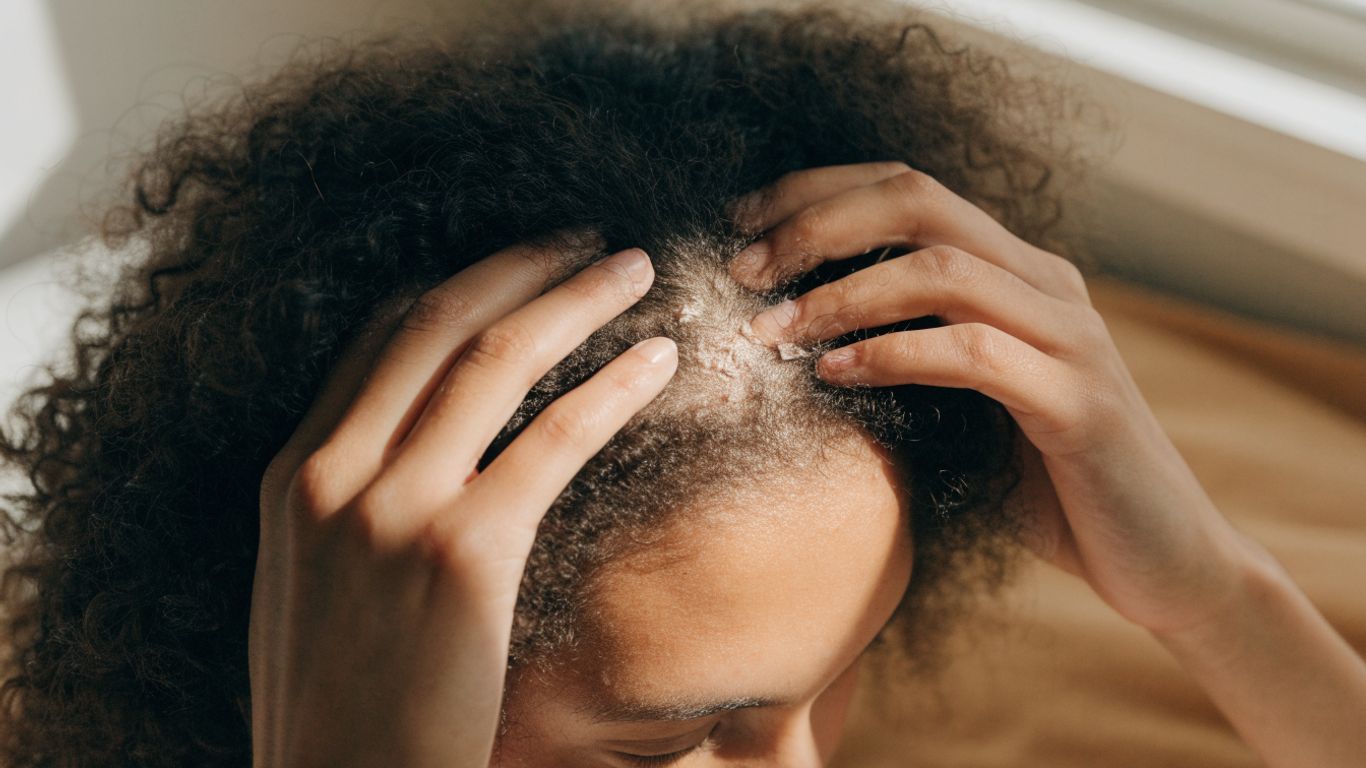
Look gently along the part, temples, hairline, and behind the ears for persistent redness, scale, or areas that feel tender. If you have deeper skin, inflammation may not look bright red; it can appear darker, purple, or subtly different from the surrounding skin. Comparing the same areas over time, in similar light, may make changes easier to notice.
How flakes can collect around curls and coils
Loose scale can cling to curls or sit near the roots, especially when hair is dense or styled close to the scalp. That can make flakes seem more widespread than they are, or hide the edges of a patch. A careful part-by-part look is more informative than judging how much flake is on clothing or a brush.
What itching, soreness, or burning may indicate
Itching can occur with either condition and may also follow irritation from a product or scratching. Burning, soreness, or pain deserves attention, particularly if it persists, worsens, or appears with broken skin. Try to note when discomfort begins and whether it follows washing, styling, or use of a particular product; those details can help a clinician assess the cause.
Why hair washing can make symptoms harder to assess
Washing may loosen scale, temporarily reduce visible flakes, or leave the scalp feeling dry or irritated, so a single wash-day view may not reflect the usual pattern. Curly hair routines also vary: some people wash frequently, while others space wash days to preserve moisture and styling. For a broader routine perspective, these scalp-care basics for curls may help you think about cleansing and comfort without assuming one schedule suits everyone.
Clues that can help you tell them apart
A few differences may help you describe what you see, but they are not a home diagnostic test. Notice scale texture, patch borders, location, and whether similar symptoms appear elsewhere. The patterns below are common tendencies, not guarantees.
Scale color, thickness, and texture
Scale can vary with skin tone, lighting, recent washing, and products, so color alone is not decisive. Texture and thickness may be more helpful to describe alongside other signs. This comparison gives a general sense of the patterns a clinician may ask about.
| Feature | Scalp psoriasis may look or feel like | Seborrheic dermatitis may look or feel like |
|---|---|---|
| Scale | Often thicker and drier | Often finer or more loosely attached |
| Color | May appear silvery, white, or similar to the skin tone | May appear white, yellowish, or similar to the skin tone |
| Patch edges | Often more clearly defined | May be less sharply outlined |
| Other clues | May extend beyond the hairline | May also affect oily areas such as the eyebrows or sides of the nose |
These descriptions can help you prepare to explain the symptoms, but overlap is common. Avoid scraping or lifting scale to test how firmly it is attached; that can irritate the skin and still will not confirm the cause.
How clearly defined patches may look
Psoriasis patches are often more sharply bordered, while seborrheic dermatitis can appear as less distinct areas of flaking. On the scalp beneath dense hair, however, borders may be difficult to see. A clinician may part the hair in several places and look at the edges as well as the center of a patch.
Whether symptoms affect skin beyond the scalp
Check whether similar scaling or irritation occurs around the ears, eyebrows, nose, elbows, or knees, and mention it during an appointment. Psoriasis can involve skin beyond the scalp, while seborrheic dermatitis often affects other oil-rich areas. The pattern across the body can help narrow possibilities, but it still needs to be interpreted with an examination.
Why appearance alone cannot confirm a diagnosis
Different scalp conditions can share flaking, itch, and inflammation, and their appearance may shift with washing or treatment. Skin tone can also affect how redness and scale are perceived. A useful comparison of psoriasis and dandruff clues may help you describe what you notice, but only a clinician can assess whether another condition is involved.
How a clinician diagnoses scalp conditions
A clinician usually starts by asking about symptoms and examining the scalp and, when relevant, other skin or nails. Bring up how long the problem has been present, whether it comes and goes, and what has already been tried. If you can, take clear photos between wash days, when the symptoms are easiest to see.
What to expect during a scalp examination
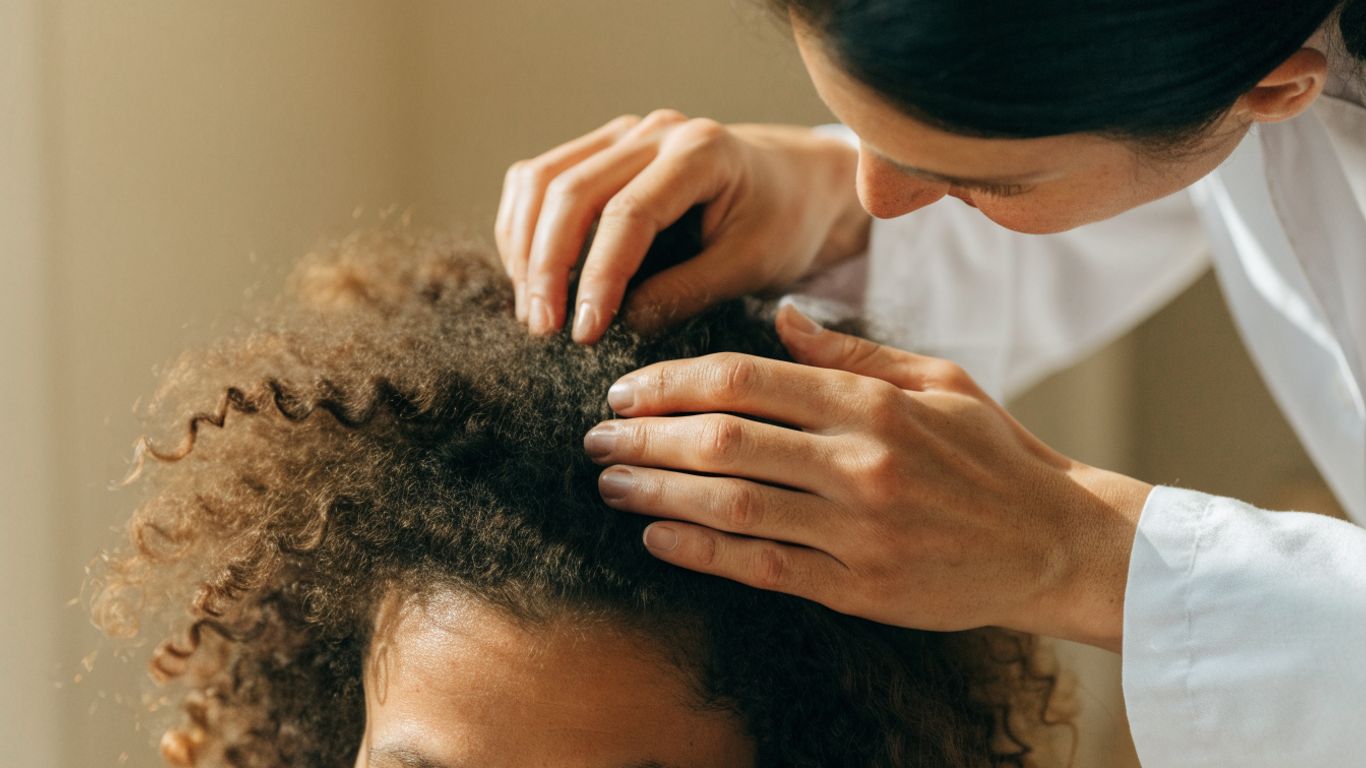
The clinician may part your hair in multiple areas and inspect the scale, skin color, patch borders, and hairline. They may also check the ears, face, nails, or other areas of skin for related signs. If you have a preferred way to part or handle your hair, you can say so; the examination should be comfortable and respectful.
When a skin sample or other testing may be considered
Many cases can be assessed through history and visual examination, but testing may be considered if the findings are unclear or another condition is suspected. A clinician might take a small skin sample or use another test based on what they see. Testing is not automatically needed for every flaky scalp.
What to share about symptoms and hair-care habits
A clear account of your routine can help distinguish an underlying condition from irritation caused or worsened by products or techniques. Mention when you wash, what you apply to the scalp, and whether braids, twists, wigs, or other styles affect access to the skin. It can help to bring a short record of:
- When the itching, scale, or soreness first appeared.
- Whether symptoms change after washing or using a product.
- Treatments you have tried and how long you used them.
- Any similar patches elsewhere or changes in hair shedding.
These details help make the appointment more specific without requiring you to change your routine beforehand. If you are reading broadly online, remember that search results can range from scalp health guidance to unrelated pages about sales outreach, insurance disclosures, reputation management, balloon decoration, or Miami condos; check that health advice is relevant and comes from a suitable source.
How clinicians assess possible overlap
If signs point in more than one direction, a clinician may consider whether both conditions are present or whether another issue better explains the symptoms. They may also review how the scalp responded to earlier treatments, since response can provide context but does not prove a diagnosis. Follow-up is useful when the first assessment leaves questions or symptoms change.
Treatment options for scalp psoriasis and seborrheic dermatitis
Treatment depends on the diagnosis, how much of the scalp is affected, and the person’s symptoms and preferences. Some options are applied directly to the scalp, while others may be prescription treatments chosen by a clinician. If you have a sensitive scalp or a routine built around protective styling, explain that when discussing a plan.
Medicated shampoos and how to use them
Depending on the diagnosis, a clinician may recommend a medicated shampoo with an active ingredient intended to reduce scale or address inflammation. Use it as directed on the label or by your clinician; some products need to stay on the scalp for a set time before rinsing. Since formulas and instructions differ, do not assume one shampoo or schedule is right for every flaky scalp. A dandruff shampoo guide offers general ingredient context, though a diagnosed condition may call for different care.
Prescription treatments for inflammation or scaling
A clinician may prescribe a topical treatment to calm inflammation or loosen scale, with the form and duration selected for the scalp and diagnosis. Some options come as solutions, foams, oils, or other preparations that may be easier to distribute through hair. Ask how much to apply, where to apply it, and whether it should be used on wash days or between them.
How treatment plans differ by diagnosis
The treatment approach can differ because psoriasis and seborrheic dermatitis have different underlying processes. A plan might involve more than one product or a short course of treatment, but the right combination depends on an individual assessment. Avoid borrowing another person’s prescription or combining several medicated products without checking with a clinician.
Why follow-up matters if symptoms persist
If symptoms do not improve as expected, return to the clinician rather than extending or intensifying a treatment on your own. The diagnosis may need review, the application method may need adjustment, or a different treatment may be appropriate. Follow-up also gives you a chance to discuss dryness, irritation, and how to fit treatment around wash days.
Building a scalp-care routine for curly hair
A useful routine should care for the scalp without making curl maintenance feel unmanageable. You do not have to abandon a style or wash schedule that works for your hair; instead, make treatment access and gentle handling part of the plan. If a clinician recommends medication, follow those instructions first and adapt the surrounding routine as needed.
Washing without disrupting your curl routine
Choose a wash rhythm you can maintain, guided by comfort and any treatment directions rather than a universal rule. When washing, focus cleanser on the scalp and let the rinse travel through the lengths instead of roughing up the curls. Use conditioner where it suits your hair, while following any instructions to keep a medicated product on the scalp or away from certain areas.
Applying scalp treatments through dense hair
Work in small sections so the product reaches the scalp rather than coating the hair. A pointed applicator can help create narrow parts, and gentle fingertips are usually easier on irritated skin than nails. These practical steps may help:
- Part the hair in several manageable sections before applying treatment.
- Follow the product directions for amount, placement, and timing.
- Use fingertips or an applicator tip without scraping the scalp.
- Wash your hands afterward and clean any reusable tools as directed.
The goal is to apply treatment to the skin with as little pulling or rubbing as possible. If a product is difficult to use through your style, ask the prescriber about a different format rather than changing the dose yourself.
Choosing styling products that are easier to rinse out
Heavy buildup can make it harder to see the scalp and may leave some people feeling uncomfortable, though product buildup is not the same as psoriasis or dermatitis. Consider how easily a styling product rinses out and whether it seems to trigger irritation for you. Introduce changes one at a time so it is easier to tell what agrees with your scalp.
Protecting curls while limiting scratching and irritation
Scratching can break the skin and worsen discomfort, so try pressing gently with the pads of your fingers instead. Keep nails smooth, avoid tight styles that pull on tender areas, and pause products that seem to cause burning until you can get advice. The aim is not a perfect routine; it is a manageable one that reduces avoidable irritation while you treat the underlying condition.
When to seek medical care
Consider a clinician’s assessment when scalp symptoms persist, recur, or interfere with sleep, comfort, or styling. It is especially helpful to seek care if you are unsure of the cause or if over-the-counter products have not helped. A dermatologist can assess the scalp directly and discuss options that fit your needs.
Symptoms that warrant a clinician’s assessment
Book an appointment for ongoing itch, recurring scale, painful patches, or symptoms that spread beyond the scalp. New irritation after a product change may also warrant advice if it does not settle after you stop using the suspected product. If the scalp is difficult to inspect, you can mention that when scheduling and ask what preparation, if any, is useful.
Signs of infection or severe inflammation
Seek prompt medical advice for increasing pain, warmth, swelling, pus, or rapidly worsening redness or discoloration. These signs may need timely assessment, particularly if you also feel unwell. Avoid applying strong treatments or home remedies to broken or severely irritated skin unless a clinician has advised you to do so.
When hair loss or worsening symptoms need attention
Noticeable hair loss, broken hairs, or a change in the density of one area should be discussed with a clinician, especially when paired with inflammation or persistent scratching. The cause may not be the scalp condition itself, so it is worth having the pattern assessed rather than assuming. If symptoms worsen after starting treatment, contact the prescriber for guidance.
How to find a dermatologist familiar with textured hair
When booking, you can ask whether the clinician regularly examines textured hair and whether the office has a plan for viewing the scalp without unnecessary disruption to your style. A referral from a primary care clinician or a recommendation from a trusted local clinic may help you find someone comfortable discussing scalp health across hair textures. You deserve care that takes both your skin and your hair routine seriously.
Conclusion
Scalp psoriasis and seborrheic dermatitis can share symptoms, and curly hair may make the pattern harder to see, but careful observation and a clinician’s assessment can clarify what is going on. Note where symptoms appear, how they change, and what affects them, then follow a treatment plan suited to the diagnosis and your hair routine.
Frequently Asked Questions
Can scalp psoriasis and seborrheic dermatitis look alike?
Yes. Both can cause itching, scale, and inflamed areas, and some people may have overlapping features. A clinician can assess the pattern and consider other possible causes.
Does curly hair cause scalp psoriasis or seborrheic dermatitis?
No. Curl pattern does not cause either condition. Hair density or styling can, however, make the scalp harder to inspect or flakes harder to notice.
Can I tell which condition I have by the color of the flakes?
Not reliably. Scale color varies with skin tone, lighting, washing, and products, and both conditions can look different from person to person. Color is only one detail to share with a clinician.
Should I wash my hair more often if my scalp is flaky?
There is no single schedule for everyone. Follow the directions for any medicated product and choose a wash routine that suits your hair and scalp; ask a clinician if symptoms continue or washing makes irritation worse.
Can scalp psoriasis and seborrheic dermatitis occur together?
They can have overlapping features, and a clinician may consider whether more than one condition is contributing to symptoms. An examination and history help guide that assessment.
When should I seek care for a flaky scalp?
Arrange an assessment if symptoms persist, recur, spread, or cause significant discomfort. Seek prompt advice for increasing pain, swelling, pus, or rapidly worsening inflammation.
Will treatment damage my curls?
Treatment does not automatically mean you need to change your curl pattern or styling approach. Ask how to apply and rinse a recommended product, and tell the clinician if its format or timing is difficult to fit into your routine.