Key Takeaways
The best microfiber towel for curly hair should remove excess water gently without flattening your pattern or creating unnecessary friction. The right shape, weight, and drying method matter just as much as the fabric.
- Choose a smooth, absorbent microfiber towel instead of a rough terry-cloth bath towel.
- Use a larger towel for plopping, long hair, or dense curls.
- Pick a lighter towel when fine hair becomes weighed down easily.
- Scrunch gently and avoid twisting wet curls tightly.
- Match your drying routine to your curl pattern, porosity, and styling goals.
1. Best overall microfiber towel for curly hair
The best overall option is a soft, medium-sized microfiber towel with enough surface area to absorb dripping water but not so much bulk that it pulls on the roots. Curly hair is most vulnerable when wet, so a smooth towel can make the transition from shower to styling feel calmer. It should feel light in your hands, dry reasonably quickly between uses, and stay manageable around the head.
Look for a towel that can blot, scrunch, and wrap without forcing you to rub the hair. Pressing the fabric against curls helps remove water while leaving your styling products in place. Gentle handling matters most when your hair is prone to frizz, tangles, or breakage.
Your ideal choice may also depend on porosity. A porosity guide can help you think through how quickly your hair absorbs and loses moisture, which in turn affects how much water you want to remove before applying gel or cream. For most curl patterns, a medium-weight towel offers the easiest balance between absorption and control.
2. Best microfiber towel for plopping
For plopping, choose a generously sized towel with a flexible surface and enough room to cradle your curls. The towel needs to gather the hair loosely rather than compress it into a tight knot. A traditional bath towel can feel heavy and make the method awkward, while a lighter microfiber towel usually folds around the head more easily.
Start with wet, styled hair and lower your curls into the center of the towel. Fold or tie the sides without pulling at the hairline, then leave the bundle in place only as long as your hair needs to stop dripping. The goal is to encourage your curl shape while removing excess water, not to dry every strand inside the wrap.
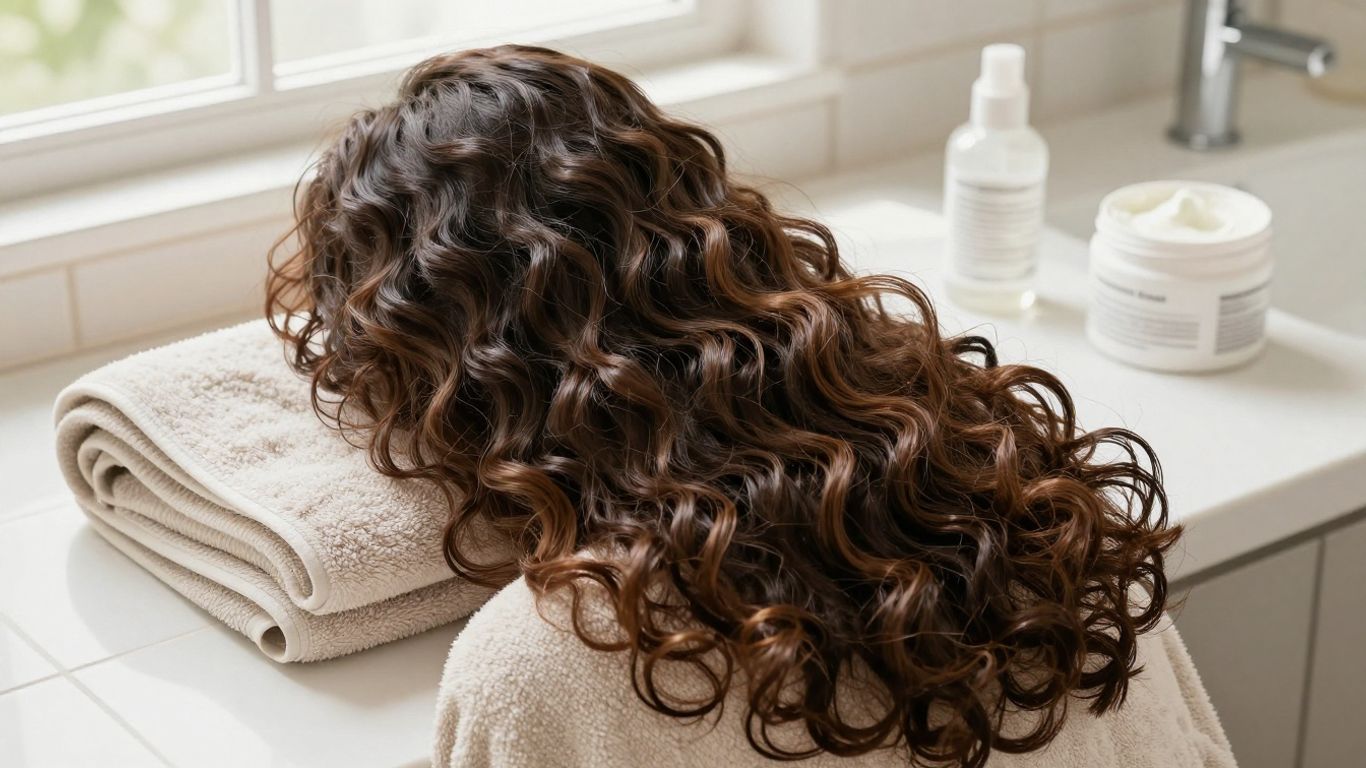
Plopping works best when the towel is large enough to close comfortably but not so oversized that the fabric becomes heavy. If your curls look flattened afterward, shorten the plopping time or loosen the wrap. A useful companion read on plopping and gentle drying can help you compare this approach with other low-friction methods.
3. Best scrunching towel for enhancing curl definition
A small square microfiber towel is often the easiest choice for scrunching. It gives you more control than a full wrap, especially when you want to remove water from the ends while keeping the roots untouched. The fabric should be soft enough to squeeze around the curls without catching or roughing up the surface.
Scrunch upward with an open hand and let the towel follow the shape of the curl. Avoid squeezing the same section repeatedly, since too much handling can disturb clumps and create halo frizz. Work around the head gradually, paying extra attention to areas that remain dripping after styling.
The Jessicurl Microfiber Scrunching Towel is described as an ultra-soft towel for gently absorbing excess water and scrunching, with a 16-by-16-inch size. That format illustrates why a compact towel can be useful when definition, rather than hands-free drying, is the main priority.
4. Best microfiber towel for thick or long curly hair
Thick or long curls need a towel with generous coverage and enough absorbency to handle the hair in sections. A small wrap may leave the lengths hanging out or force you to twist the hair tightly. A wide, flexible towel is usually more comfortable because it lets you gather the hair without compressing the curl pattern.
Long hair can also become surprisingly heavy when saturated. Instead of flipping it sharply or piling it high, support the lengths with both hands before placing them in the towel. This reduces tugging at the roots and makes the drying process feel less rushed.
A larger towel is especially useful when you prefer to blot first and plop afterward. Divide very dense hair into two loose sections if the fabric becomes saturated quickly. The thick-curly-hair diffuser guide offers another drying perspective for people who need to manage a lot of wet hair without relying on prolonged, high-friction handling.
5. Best lightweight microfiber towel for fine curls
Fine curls usually benefit from a thin, lightweight towel that removes surface water without absorbing every bit of moisture or weighing down the roots. A bulky wrap may stretch delicate curls or leave them looking limp. Choose a fabric that feels smooth and flexible rather than thick and plush.
Blot the ends first, then lightly scrunch upward. Fine hair often dries quickly once it is no longer dripping, so a short towel session may be enough. If your curls lose volume, leave the roots uncovered and use the towel only on the mid-lengths and ends.
Lightweight drying also makes styling easier because less product is disturbed. If dryness is part of the problem, read about protein-free curl products before changing several parts of your routine at once. The towel cannot compensate for a moisture imbalance, but it can prevent rough handling from adding to it.
6. Best microfiber hair towel for reducing frizz
The best microfiber hair towel for reducing frizz has a smooth surface, a comfortable size, and enough absorbency to shorten the dripping stage without requiring vigorous rubbing. Frizz is not caused by one single habit, but rough fabric and repeated friction can make a difficult wash day harder. A towel should support your styling routine rather than undo it.
Press and squeeze instead of scrubbing. Keep the hair gathered in its natural curl groups, and avoid twisting a heavy wet bundle into a tight rope. These small changes can preserve more definition while the towel removes excess water.
Mixed Nature’s guidance on frizz-free curls is a useful reminder that drying is only one part of the picture; moisture, products, and consistency matter too. For some people, a towel that reduces friction will make the biggest visible difference, while others will need to adjust cleansing or conditioning as well.
7. Best budget-friendly microfiber towel for curly hair
A budget-friendly towel does not need an elaborate shape or expensive finish. Prioritize a smooth texture, a size that fits your hair, and care instructions you will actually follow. A basic rectangular towel can work well for blotting and scrunching when used with a light touch.
Before buying, check whether the towel sheds lint, feels rough when dry, or becomes too heavy when wet. You may also want two inexpensive towels so one can dry fully while the other is in use. The most affordable option is the one that fits your routine and lasts through regular washing.
Mixed Nature’s affordable curly hair care guide places microfiber towels alongside other practical ways to manage costs. You do not need to rebuild your whole wash day to improve drying; changing the fabric and reducing friction can be a sensible first step.
8. Best premium microfiber towel for gentle drying
A premium towel is worthwhile when its construction makes your routine noticeably easier, not simply because it costs more. Look for a soft finish, reliable stitching, a comfortable shape, and fabric that remains pleasant after washing. A refined towel should feel gentle without becoming delicate or difficult to maintain.
The main advantage is often consistency. When a towel absorbs evenly and stays in place, you can spend less time rearranging wet hair and more time allowing curls to settle. Still, no premium fabric replaces a careful technique or guarantees a particular result.
Several details are useful to compare before purchase, especially if you are choosing between a flat towel and a wrap.
| Feature | Why it matters | Best suited to |
|---|---|---|
| Smooth surface | Limits unnecessary friction | Frizz-prone curls |
| Flexible construction | Folds without tight twisting | Plopping |
| Medium absorbency | Removes water without over-drying | Most curl patterns |
| Secure shape | Stays in place comfortably | Hands-free routines |
These features help separate meaningful quality from decorative extras. A premium towel should earn its place by making gentle drying simpler and more repeatable.
9. Best microfiber hair wrap for hands-free drying
A microfiber hair wrap is useful when you want to get dressed, moisturize, or tidy up while your hair stops dripping. The best wrap feels secure without pulling at the edges or pressing the curls flat against the scalp. A button, loop, or other closure can help, but comfort should come before a complicated design.
Place the hair inside loosely and keep the twist shallow. If the wrap feels tight, remove it and reset rather than accepting tension around the hairline. Hands-free drying should give you freedom, not create a new source of stress.
A wrap can also be helpful for mixed textures when one area dries faster than another. Mixed Nature’s wash day routine covers the broader preparation that happens before drying, including gentle detangling and conditioning. Once the wrap is removed, let the curls finish drying without repeatedly reshaping them.
10. Best microfiber towel for wavy, curly, and coily hair
Wavy, curly, and coily hair can all benefit from a low-friction towel, but the best size and technique may differ. Waves often need a light blot so they do not lose movement, while dense curls and coils may need more time or a larger towel to remove surface water. Treat texture as a starting point, not a strict set of rules.
For a shared household towel, choose a smooth, medium-to-large design that can be folded for finer hair and opened fully for denser hair. Avoid assuming that more absorbency is always better. The right balance leaves enough moisture for styling while making the hair comfortable to handle.
A simple routine can keep the process consistent:
- Squeeze out excess water with your hands before reaching for the towel.
- Blot or scrunch in sections instead of rubbing the whole head.
- Keep the towel on only until the hair is no longer dripping.
- Let curls finish drying naturally or use a suitable low-friction method.
This approach is flexible across patterns and helps you notice what your own hair responds to. The wider curly hair care collection can provide more texture-specific context when towel choice is only one part of a larger routine.
Mixed Nature also supports an inclusive approach to textured hair care: the best microfiber towel for curly hair is the one that respects your pattern, density, and comfort rather than forcing every head of hair into the same routine. For broader practical comparisons, the microfiber towel guide discusses why gentler drying can be preferable to rough terry cloth. Small adjustments, repeated consistently, usually matter more than chasing a perfect product.
Conclusion
A good microfiber towel should make curly hair easier to handle, not change its natural character. Choose the size and weight that suit your density, blot or scrunch gently, and adjust the drying time to your pattern. With less friction and a little patience, plopping and post-wash drying can become a calmer part of your curl routine.
Frequently Asked Questions
Is microfiber better than a regular bath towel for curly hair?
Microfiber is often smoother and lighter than traditional terry cloth, which can make it a gentler choice for wet curls. The way you use it still matters, so avoid rubbing or tightly twisting the hair.
How long should I plop curly hair?
Many people start with a short session and adjust based on how their curls respond. Remove the towel when the hair is no longer dripping, especially if longer plopping leaves the roots flat or the curls misshapen.
Can I use a microfiber towel on coily hair?
Yes. Use it to gently squeeze out excess water and avoid pulling the hair into a tight bundle. Coily hair may benefit from working in sections and keeping enough moisture for styling.
Should I scrunch my hair with a towel or my hands?
Either can work. A soft microfiber towel can remove more surface water, while your hands provide greater control; alternate them depending on how fragile or defined your curls feel.
Does a microfiber towel stop frizz completely?
No towel can guarantee a completely frizz-free result. A smoother fabric may reduce friction, but moisture balance, products, weather, handling, and drying time also influence frizz.
Is a hair wrap or flat towel better?
A wrap is convenient for hands-free drying, while a flat towel gives you more control for blotting, scrunching, or plopping. Choose the format that matches how you prefer to style and dry your hair.
How should I wash a microfiber hair towel?
Follow the care label and avoid products that leave a heavy coating on the fibers. Washing it regularly and allowing it to dry fully helps keep the fabric fresh and absorbent.