
Key Takeaways
Overnight moisture is less about adding lots of product and more about starting with hair that is comfortably damp, then protecting it from friction.
- Begin with clean or lightly damp hair rather than soaking it before bed.
- Choose a water-based leave-in and add richer layers only if your hair responds well.
- Use small sections and modest amounts to help products spread evenly.
- Protect your style with a comfortable bonnet or satin pillowcase and a loose style.
- Adjust one step at a time, using softness and flexibility to judge what is working.
Start with the right moisture foundation
A good nighttime routine starts with noticing what your hair needs, not automatically repeating every wash-day step. 4C hair varies from person to person, so the right amount of water and product depends on your style, porosity, and how your hair feels. If you’re figuring out how to keep 4c hair moisturized overnight, aim for a light refresh that leaves your hair supple, not dripping wet. A practical 4C moisture routine can also help you think through cleansing, detangling, and protective styling as parts of the same routine.
Check whether your hair needs water or a full wash
If your hair feels dry but your scalp is comfortable and your style is still in good shape, a small amount of water or leave-in may be enough. A full wash is more appropriate when your scalp feels uncomfortable or product and sweat have built up; piling fresh moisturizer over residue may leave hair feeling coated. Check a few areas rather than judging the whole head by one dry section. Keeping the refresh modest can help preserve a style that does not need to be rebuilt.
Apply products to clean or lightly damp hair
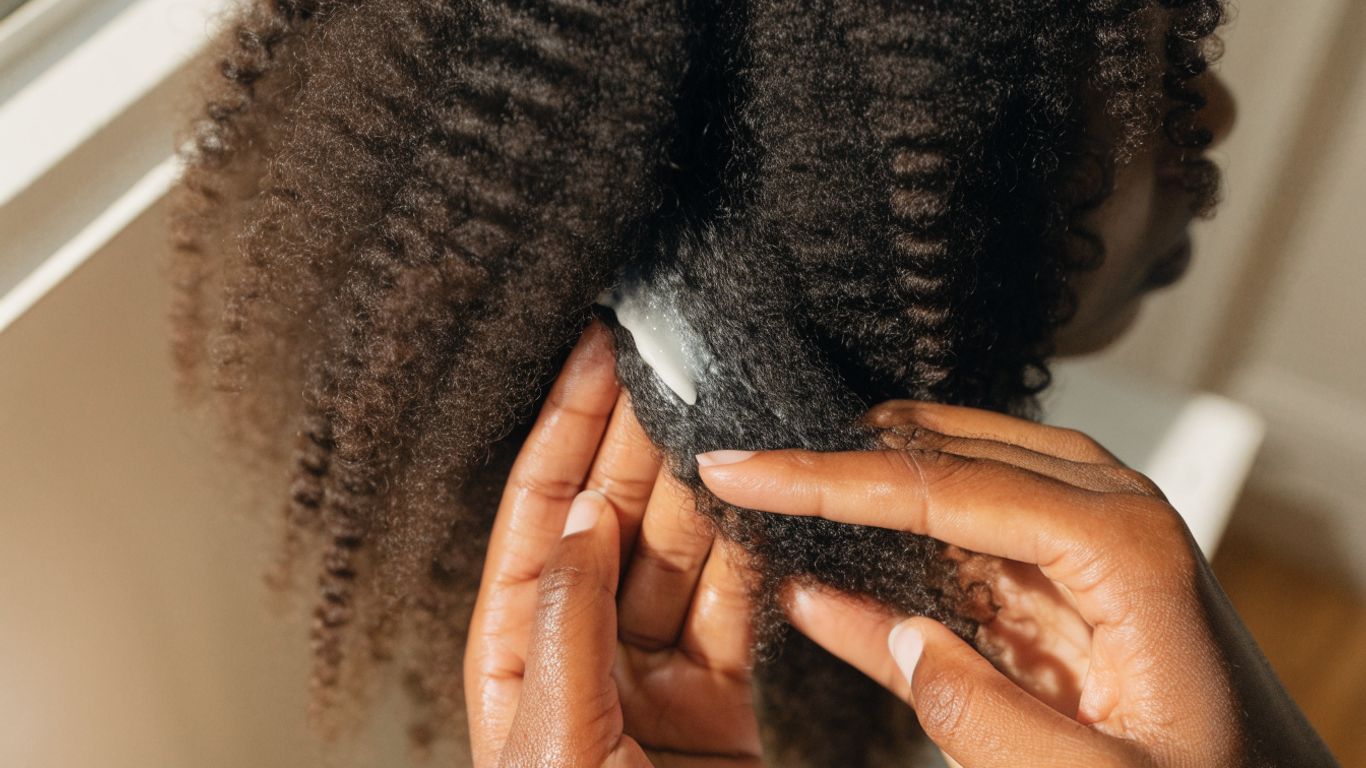
Moisturizers are easier to distribute when hair is clean or just slightly damp, but bedtime is not the moment to drench your whole head. Mist a section lightly or smooth product over it with damp hands, then give it a little time to settle before covering your hair. A simple order can keep the process from becoming a pile-on:
- Separate hair into manageable sections.
- Add a small amount of water or water-based leave-in.
- Smooth it through the lengths, paying attention to the ends.
- Add a richer layer only if your hair still feels like it needs one.
Afterward, feel the hair again and adjust only where it still seems dry. It should feel soft and pliable, rather than wet or sticky.
Work in small sections for even coverage
Dense coils can hide dry spots, especially around the nape and the ends tucked inside a style. Dividing hair into a few sections makes it easier to distribute a small amount of product without repeatedly coating the same surface. Use your fingers or a wide-tooth tool gently, and avoid pulling through knots just to make every strand look perfectly uniform. The goal is comfortable coverage, not a long detangling session at bedtime.
Avoid soaking your hair before bed
Hair that is very wet may stay damp for hours under a bonnet or inside a dense style, and that can make sleep uncomfortable. It can also leave twists or braids less defined by morning. If you have used water to refresh your hair, allow it to air-dry until it feels only lightly damp before covering it. A brief, gentle refresh is usually easier to manage than trying to dry a saturated style overnight.
Choose products that suit your hair
There is no single moisturizer that works for every head of 4C hair. Start with a water-based leave-in, then consider whether a cream or a small amount of oil helps your hair stay soft between wash days. The best routine is one you can repeat without leaving the roots congested or the lengths greasy. Pay attention to how your hair feels the next morning, not only how it looks immediately after application.
Use a water-based leave-in conditioner
A water-based leave-in is a useful first layer when hair needs a light refresh. Apply a little at a time to clean or lightly damp lengths, smoothing it over the section rather than spraying until the hair is wet through. If the product leaves a tacky feeling or your hair seems coated, use less next time or apply it less often. Your hair’s response matters more than following a fixed number of pumps.
Add a cream or moisturizer for extra softness
A cream can help when a leave-in alone does not leave your hair feeling soft for long. Warm a small amount between your palms and work it through the mid-lengths and ends, where dryness may be more noticeable. If you already have a lot of product in your hair, adding another layer may make it feel heavy instead of moisturized. Start with less than you think you need; you can always add a little more to a dry section.
Seal with oil or butter when it works for your hair
Oil or butter can be a finishing layer for some routines, but it is optional rather than a required step. Try a small amount on the ends after applying a water-based product, then notice whether your hair feels softer by morning or simply coated. If you prefer a lighter finish, skip this layer or reserve it for the driest areas. The point is to support your own routine, not to use every product category at once.
Adjust your routine for low-porosity hair
If products tend to sit on your hair, use lighter amounts and allow water-based products to spread before adding anything richer. Avoid layering several creams and oils in one session, since residue can make it difficult to tell what your hair actually needs. These starting points can help you choose a lighter approach:
| What you notice | A gentle adjustment | What to check next morning |
|---|---|---|
| Product sits on the surface | Use less product on lightly damp hair | Does the hair feel softer without a film? |
| Hair feels weighed down | Skip the oil or butter layer | Does the style feel lighter? |
| Ends feel dry but roots feel coated | Apply moisturizer only to the ends | Do the ends feel more flexible? |
Treat these as observations, not fixed rules. If a small change helps, keep it; if not, return to your previous routine and test a different adjustment later.
Layer products without weighing hair down
Layering can be useful, but more steps do not automatically mean more lasting softness. The LOC and LCO approaches are simply different ways to order liquid, oil, and cream; neither has to be followed if it leaves your hair feeling heavy. A guide to the LOC and LCO sequence can provide another perspective, while your own results should determine which order you keep. Start with a few products you understand and make the routine easy to repeat.
Try the LOC method for a liquid, oil, and cream sequence
LOC means liquid, oil, then cream. You might use a little water or leave-in as the liquid step, smooth a small amount of oil over the lengths, and finish with cream. This order is worth testing if your hair seems to benefit from an oil layer before a cream. Use a light hand at night, especially if your style is already holding product from earlier in the day.
Try the LCO method when cream works better before oil
LCO places cream before oil, which some people prefer when cream spreads more easily over freshly damp hair. Apply the liquid first, smooth in a modest amount of cream, then use a touch of oil on the ends if needed. Keep the layers thin enough that your hair can still move naturally. If you cannot tell whether the oil adds anything, leave it out for a few nights and compare how your hair feels.
Use small amounts and watch how your hair responds
The most helpful test is how your hair feels after the routine has had time to settle. Rather than changing the order, amount, and product type all at once, keep most of the routine steady and adjust one layer. Note whether the ends feel flexible, whether the roots feel clean, and whether the style remains comfortable. A little patience makes it easier to tell which step is useful and which is simply extra.
Keep heavy products away from buildup-prone roots
If your scalp or roots tend to feel coated, concentrate richer products on the lengths and ends instead. There is no need to massage oil or butter into the scalp as part of an overnight moisture routine unless that is already a comfortable part of your care. Keep your fingers gentle, and avoid scraping at flakes or residue. If scalp discomfort persists, consider getting advice from a qualified hair or scalp professional.
Protect your hair while you sleep
Moisture can be lost through friction as hair rubs against bedding, and a protective covering can make the night easier on your style. Choose a method that stays comfortable while you move, rather than one that feels tight or hot. The covering should complement a light moisture routine, not trap hair that is still soaking wet. A few small adjustments to fit and placement can make protection more consistent.

Cover your hair with a satin or silk bonnet
A satin or silk bonnet can reduce direct rubbing against a cotton pillowcase and help keep a style gathered overnight. Choose a size that holds your hair without compressing it, and check that the band sits comfortably. If it slips off, try adjusting the way you tuck in the hair rather than tightening the band until it pulls. A bonnet that feels easy to wear is more useful than one that stays on at the cost of comfort.
Use a satin or silk pillowcase as a backup
A satin or silk pillowcase is a practical backup if you do not like wearing a bonnet or it comes off during sleep. It can also give your hair a smoother surface if you use both. Keep the pillowcase clean and make sure it does not replace any style support your hair needs. For more on choosing a covering that stays put, see this guide to bonnets for long curls.
Choose a loose protective style that avoids tension
Loose twists, a few gentle braids, or a soft pineapple can gather hair without stressing the roots. Pick a style that suits your current look and does not require forceful brushing or tight bands. If the style pulls when you lie down, loosen it before sleep; tension is not a useful trade-off for keeping hair tucked away. Let comfort be part of the routine, not an afterthought.
Keep edges and the hairline comfortable
The bonnet edge, scarf, or hair tie should not press hard against your hairline. If you notice soreness or a pulling sensation, shift the band or choose a different way to secure the style. Smooth edges are not a requirement for protecting hair overnight. Leave the hairline alone rather than adding layers of product or tightening a wrap to keep every strand in place.
Adapt the routine to your hairstyle
The same moisture routine can look different depending on whether your hair is in twists, braids, a wash-and-go, or a stretched style. Think about which parts are exposed and most likely to rub against your bedding, then put the effort there. A routine should preserve the style you already have, rather than make bedtime feel like another wash day. Keep the refresh small enough that your hair can dry and settle before sleep.
Preserve twists, braids, or a wash-and-go overnight
For twists or braids, lightly smooth moisturizer over exposed lengths and ends rather than repeatedly coating each part. A wash-and-go may need a gentle gather or a loose pineapple so curls are not flattened against the pillow. Avoid pulling apart the style to reach every strand if it is already comfortable and soft. Once the hair is protected, leave it alone for the night.
Refresh exposed ends without rewetting all your hair
Ends often need attention first because they are older and receive more rubbing, but that does not mean the entire head needs another misting. Dampen your palms or use a small amount of leave-in on just the exposed ends. Smooth gently, then give those areas time to settle before covering them. This keeps the roots and the rest of your style from becoming wetter than necessary.
Protect stretched styles from friction and tangling
Stretched hair can tangle where it rubs against the pillow or where loose ends catch on one another. Gather it into a few loose sections or wrap it gently, using a covering that does not pull. Avoid tight bands that leave indentations or concentrate tension at one point. In the morning, take the style down carefully instead of rushing through knots with a brush.
Adjust product placement for your hair’s thickness
If your hair is especially dense, work through a few broad sections so product reaches the lengths without excessive handling. Finer or less dense areas may need smaller amounts, especially near the roots. You do not have to make every section look equally glossy; focus on the areas that feel dry to the touch. Over a few nights, you can learn where a little product helps and where it only adds weight.
Check results and troubleshoot dryness
A routine is working when your hair feels comfortable and manageable, not merely when it looks freshly styled. Check how the lengths feel in the morning and whether your scalp and hairline are at ease. Changes in weather, washing frequency, and hairstyle can all affect how often a refresh feels useful. Make small adjustments and give them a little time before deciding the whole routine needs replacing.
Look for softness, flexibility, and reduced breakage
Softness and flexibility are useful signs that your hair is not feeling overly dry or stiff. Notice whether it bends and moves comfortably when you handle it, and whether your usual styling causes less snagging. No single morning is a perfect measure, so look for a pattern over several nights. Keep the parts of the routine that make hair feel easier to manage without leaving residue.
Add moisture when hair feels rough or brittle
If the lengths feel rough, begin with a light water-based refresh on the areas that need it. Smooth gently and follow with a small amount of cream only if the hair still feels dry. Brittle-feeling hair may also need a gentler approach to detangling and styling, not simply more product. If the dryness is persistent or comes with scalp discomfort, seek guidance from a qualified professional.
Reduce product when hair feels coated or limp
A coated or limp feeling can mean the routine has become too heavy or too frequent for your hair. Skip one richer layer, use less leave-in, or apply product only to the ends and see how the next morning feels. If the hair still seems weighed down, consider whether it is time for your usual cleansing routine rather than adding another product. Make the change gradually so you can identify what helps.
Change one routine step at a time
Changing several things at once makes it hard to know whether the result came from the product, the amount, or the way you protected your style. Keep a simple mental note of what you used and how your hair felt when you woke up. Then adjust one detail, such as reducing the oil or using less water. Small experiments are usually easier to maintain than a complete routine overhaul.
Conclusion
Keeping 4C hair moisturized overnight is a matter of starting with a light, suitable foundation and protecting the hair without overloading it. Use the products and sleep style that feel comfortable for your hair, then let softness, flexibility, and manageability guide the next adjustment. A routine that is gentle and repeatable can fit naturally into the end of your day.
Frequently Asked Questions
Should I moisturize 4C hair every night?
Not necessarily. Refresh when your hair feels dry, and use a small amount so you do not build up layers that leave it coated.
Should my hair be wet before I go to bed?
It is usually more comfortable to go to bed with hair that is lightly damp or mostly dry rather than soaked. Give a refresh time to settle before covering your hair.
Is the LOC method better than the LCO method?
Neither order is best for everyone. Try one at a time and keep the sequence that leaves your hair feeling soft without heaviness.
Can I use oil on 4C hair overnight?
You can use a small amount if it works for your hair, often on the ends after a water-based product. Skip it if it leaves your hair feeling greasy or coated.
How can I protect my hair if I do not like bonnets?
A satin or silk pillowcase is an alternative. A loose protective style can also help reduce tangling and friction while you sleep.
Why does my hair still feel dry after moisturizing?
You may be using too little water-based product, applying it unevenly, or adding layers that leave residue. Try one small adjustment at a time and check how the hair feels the next morning.
Should I put moisturizer on my scalp?
A nighttime routine can focus on the lengths and ends, especially if your roots tend to feel coated. If you have ongoing scalp discomfort, seek advice from a qualified professional.