Key Takeaways
A hyaluronic acid serum can fit into a simple routine without complicated timing. A few small adjustments to application and layering can make it feel more comfortable on your skin.
- Apply the serum after cleansing, while skin is slightly damp.
- Use a small amount and spread it gently rather than rubbing vigorously.
- Follow with moisturizer; in the morning, finish with sunscreen.
- Place the serum according to its texture and the other products in your routine.
- If dryness, pilling, or irritation continues, simplify your routine and reassess.
Where hyaluronic acid serum fits in your routine
The best place for a hyaluronic acid serum depends partly on its texture and on what else you use. In most routines, it goes after cleansing and before moisturizer, but a toner or treatment may come first. Think of the order as a practical way to apply thinner products before thicker ones, not as a test with only one right answer. For more skin hydration tips, keep the routine simple enough to notice how your skin responds.
What hyaluronic acid does for skin
Hyaluronic acid is a humectant, which means it helps attract and hold water in the outer layers of skin. In a serum, it can add a light layer of hydration, but it does not replace a moisturizer that helps reduce water loss. The result can feel more comfortable when the rest of the routine supports that hydration, too. Hydration works best in a routine that suits your skin rather than in a long stack of products.
How serum texture affects product order
A useful starting point is to apply products from thinner to thicker textures, while following the instructions on each label. The table below gives a flexible order for common routine steps; a product’s consistency or directions may change where it belongs.
| Product type | Usual place in the routine | Practical note |
|---|---|---|
| Cleanser | First | Rinse or remove it as directed. |
| Watery toner or essence | After cleansing | Use only if it is part of your routine. |
| Hyaluronic acid serum | Before moisturizer | Apply to slightly damp skin when comfortable. |
| Moisturizer | After serum | Choose a texture that feels suitable to your skin. |
| Sunscreen | Last in the morning | Apply as directed on its label. |
Use this order as a guide, not a rule that overrides product directions. If two products have similar textures, apply the one with more specific instructions as directed and keep the rest of the routine uncomplicated.
When to apply it in a basic routine
For a basic routine, cleanse, apply the serum, and follow with moisturizer. In the morning, sunscreen is the final skincare step; in the evening, you can use the serum before your usual moisturizer. If you use a prescribed treatment, follow its directions rather than changing its placement based on a general layering tip. This sequence is a practical starting point for learning how to use hyaluronic acid in a routine.
How to apply the serum
Application can be straightforward: cleanse, leave a little moisture on the skin, and spread a small amount of serum over the area you want to hydrate. There is no need to scrub it in or apply repeated layers just because the formula feels light. Give your skin a moment to settle, then continue with moisturizer. The aim is comfortable, even coverage—not a particular finish.
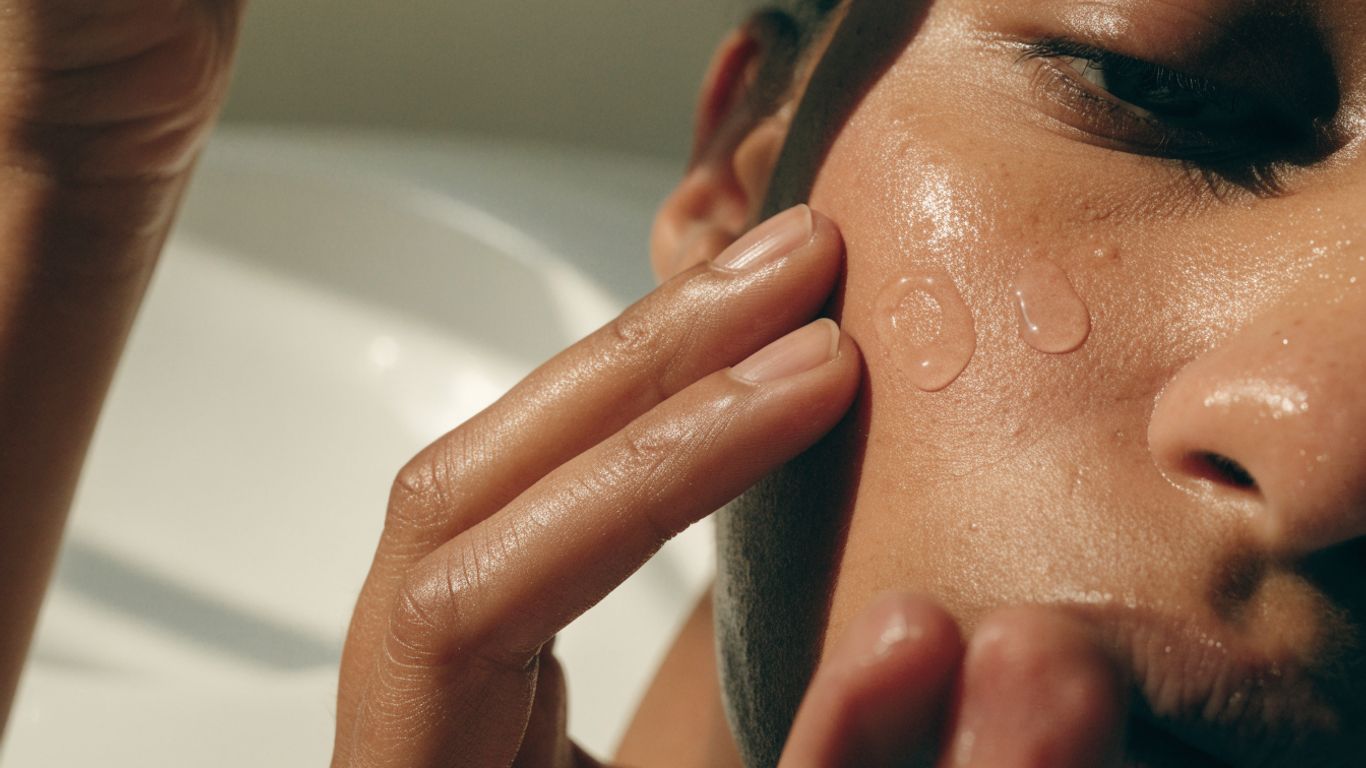
Start with clean, slightly damp skin
After cleansing, gently pat your face so it is no longer dripping but still feels a little damp. Applying a humectant serum at this point can help it sit alongside water on the skin’s surface. If your face has fully dried, dampen your hands and press a little water onto the skin first; avoid applying the serum over wet, running water. Choose the approach that feels comfortable rather than trying to keep the skin perfectly wet.
Use a small amount and spread it gently
Start with the amount recommended on the product label, since formulas and dispensers vary. Press or glide it across the skin without tugging, and use less if the serum leaves a sticky film. A short routine can make the process easier to repeat consistently, especially when you are introducing a new product. For example:
- Dispense a small amount into clean hands.
- Smooth or press it gently over the face, avoiding the eyes unless the label says otherwise.
- Let the surface settle before moving on to the next step.
You can adjust the amount after seeing how it feels under moisturizer. More serum is not necessarily more comfortable, and applying extra layers may make products feel tacky or contribute to pilling.
Follow with moisturizer to help seal in hydration
Once the serum has settled, apply moisturizer to help support the skin’s moisture barrier and reduce water loss. Choose a texture that feels comfortable; a richer cream may suit some routines, while a lighter lotion may feel better to others. If the serum leaves your skin tight or sticky, try using less and applying moisturizer sooner. Comfort is a better guide than chasing a dewy finish.
How to layer it in the morning and evening
The serum can fit into either a morning or evening routine, and you do not have to use it twice daily if one application feels sufficient. Keep the order familiar: cleanse, apply treatments and serums, moisturize, then add sunscreen in the morning. In the evening, use it before moisturizer and follow any specific directions for other treatments. Consistency matters more than adding extra steps.
Build a simple morning routine with sunscreen
In the morning, apply the serum after cleansing and before moisturizer, then finish with sunscreen according to its label. Let each layer settle enough to apply the next without rubbing or dragging. If you wear makeup, give sunscreen time to form an even layer before applying it. For a fresh makeup look, these dewy makeup prep tips offer a related approach to hydrating skin prep and thin layers.
Fit the serum into an evening routine
At night, use the serum after cleansing and before moisturizer. If your routine includes a targeted treatment, follow its label or a clinician’s instructions about when to apply it; there is no universal order that suits every formula. You can keep the rest of the evening routine minimal while you learn how your skin responds. If you already use a moisturizer comfortably, there is no need to replace it just to add a serum.
Decide whether to wait between skincare steps
A long pause between ordinary skincare steps usually is not needed. Give a layer enough time to stop feeling very wet or slippery so the next product spreads without being displaced. Some formulas may have specific directions, so check the label when in doubt. If your products begin to pill, try using less, letting each layer settle briefly, or simplifying the combination.
How to combine it with other skincare ingredients
Hyaluronic acid is often used alongside other skincare ingredients, but the whole formula and your skin’s tolerance matter more than ingredient names alone. Add new products one at a time so you can tell what is working or causing discomfort. Keep the sequence simple and follow product directions, especially for treatments that may irritate skin. A serum is an optional hydrating step, not a requirement to pair with every active ingredient.
Layer it with vitamin C or niacinamide
A hyaluronic acid serum can generally sit in a routine that also includes vitamin C or niacinamide, provided the products’ directions are compatible and your skin tolerates them. Apply thinner textures first, then follow with moisturizer. If you are introducing more than one new product, stagger the changes rather than adding them all at once. That makes it easier to identify which formula might be behind any reaction.
Use it alongside retinoids
If you use a retinoid, follow its label or your clinician’s directions for application and frequency. A hydrating serum may be part of the same broader routine, but it does not prevent irritation or replace moisturizer. Start with the retinoid schedule recommended for you, and avoid increasing use simply because the serum feels soothing. Persistent discomfort is a reason to pause and seek professional advice.
Take care when using exfoliating acids
Exfoliating acids can be irritating for some people, particularly when several new products are introduced at once. Keep to the directions for each formula, and do not assume that adding a hydrating serum makes an exfoliant suitable for more frequent use. If your skin feels sore, unusually dry, or persistently red, simplify the routine and stop products that seem to worsen the reaction. Seek advice from a dermatologist if the problem does not settle.
How to adjust layering for your skin and surroundings
There is no single routine for every skin type, and the same person’s preferences can change with the season. Consider how your skin feels after cleansing, how it responds to moisturizer, and whether a particular texture is comfortable during the day. Adjust one part of the routine at a time so you can tell what made a difference. For broader routine ideas, explore skincare steps for combination skin without assuming that everyone with combination skin needs the same products.
Choose a routine for dry or dehydrated skin
If your skin often feels dry or tight, try applying the serum to slightly damp skin and following promptly with a moisturizer you already tolerate. A creamier moisturizer may feel more comfortable than a lightweight lotion, though preference and formula matter. Avoid piling on several serums in the hope of fixing persistent dryness. If tightness continues, consider whether cleansing or other products in the routine may be contributing.
Keep layers light for oily or acne-prone skin
If heavier products feel uncomfortable, try a smaller amount of serum and a lighter moisturizer rather than skipping moisturizer automatically. The serum’s texture and the rest of the formula matter, so pay attention to how the whole product feels on your skin. Introduce one change at a time, especially if you are managing breakouts with other treatments. For persistent or painful acne, a dermatologist can help you choose an appropriate routine.
Adjust application in dry or cold conditions
Cold weather, indoor heating, and low humidity can make skin feel drier, so your usual routine may need a comfort check. You might prefer a richer moisturizer or a little less cleansing if your current routine leaves your skin feeling stripped. Applying serum to slightly damp skin and following with moisturizer can be a simple adjustment. If the weather changes but your skin remains comfortable, there is no need to add more steps just because the season has changed.
How to troubleshoot common layering problems
A serum that does not feel right does not automatically mean the ingredient is unsuitable. Amount, timing, the moisturizer on top, and the rest of the routine can all affect the result. Change one variable at a time and give the simpler routine a chance before adding another product. If symptoms are persistent or severe, get individualized advice rather than trying to troubleshoot indefinitely.
Address tightness or dryness after application
If skin feels tight after applying the serum, use it on slightly damp skin and follow with moisturizer without a long delay. You can also reduce the amount or pause other products that may be drying or irritating. A hydrating serum alone may not provide the lasting comfort your skin needs, particularly in dry conditions. If dryness continues despite simplifying your routine, consult a dermatologist.
Prevent pilling under moisturizer or makeup
Pilling can happen when several layers do not sit smoothly together, or when too much product is used. Try reducing the serum amount, smoothing rather than repeatedly rubbing, and allowing the layer to settle before adding moisturizer. If makeup is the issue, keep the morning routine lean and apply each product with a light touch. Test any revised order on a small area before changing your whole routine.
Simplify your routine if irritation develops
If stinging or irritation begins, pause the newest product and avoid adding more active ingredients while your skin settles. Return to familiar, gentle steps that you already tolerate, and follow the directions on any prescribed treatment. Do not try to mask ongoing irritation with extra serum or exfoliation. Seek medical advice if symptoms are severe, persistent, or worsening.
Conclusion
To layer hyaluronic acid serum correctly, apply a modest amount after cleansing while skin is slightly damp, then follow with moisturizer. Place it according to its texture and the directions for the other products you use, and finish a morning routine with sunscreen. Keep the routine comfortable and make changes gradually; there is no need to build more steps than your skin needs.
Frequently Asked Questions
Should hyaluronic acid serum go on wet or dry skin?
Slightly damp skin is a useful starting point. It should not be dripping wet, and you can follow the serum with moisturizer once it settles.
Do I need to use hyaluronic acid serum every day?
Not necessarily. Follow the product directions and use it as often as feels comfortable in your routine.
Should I apply moisturizer after hyaluronic acid serum?
Moisturizer can help support hydration and reduce water loss. Choose a formula that feels comfortable for your skin.
Can I use hyaluronic acid serum in the morning and at night?
Many people include it in either routine, but twice-daily use is not required. Follow the label and adjust based on how your skin feels.
Can I layer hyaluronic acid with vitamin C or niacinamide?
They can often be used in the same routine if the product directions are compatible and your skin tolerates them. Introduce new products gradually.
How long should I wait before applying moisturizer?
A long wait is generally unnecessary. Let the serum settle enough that the next layer spreads comfortably, unless the product label gives different directions.
What should I do if the serum makes my skin sting?
Pause the product and simplify your routine with familiar steps you tolerate. If the irritation is severe or does not settle, seek advice from a dermatologist.