Key Takeaways
A good tranexamic-acid serum is less about chasing the highest percentage and more about finding a formula your skin can use consistently. Concentration, supporting ingredients, texture, packaging, testing, and daily sun protection all shape the experience.
- Look for a clearly disclosed tranexamic acid concentration and a sensible supporting formula.
- Choose ingredients that suit your pigmentation pattern, skin type, and tolerance.
- Treat melasma and post-inflammatory hyperpigmentation patiently, since fading takes time.
- Prioritize comfortable texture, stable packaging, and transparent product information.
- Use sunscreen every morning and introduce active ingredients gradually.
1. Tranexamic acid concentration and formulation
When comparing the best tranexamic acid serum for hyperpigmentation, start with the ingredient list rather than the front label. Tranexamic acid is a topical brightening ingredient used to improve the appearance of uneven tone, dark spots, and melasma. A disclosed percentage helps you compare products more meaningfully, although a higher number is not automatically better for every complexion.
A concentration around 2% to 5% is commonly discussed for topical serums, but the rest of the formula matters just as much. Humectants, soothing ingredients, and a well-balanced vehicle can make an active serum easier to use regularly. If the product does not disclose its percentage, look for other signs of clarity, such as a complete ingredient list and straightforward directions.
This quick comparison can help you read a product label without treating the numbers as a promise of results:
| Label detail | What it can tell you | What it cannot tell you |
|---|---|---|
| Tranexamic acid percentage | How much of the featured ingredient is disclosed | Whether your skin will tolerate it |
| Supporting ingredients | How the formula may address hydration or comfort | Whether every ingredient is necessary |
| Full ingredient list | The broader composition of the serum | How the product performs on your skin |
| Directions for use | How often the maker expects it to be applied | Whether you should skip patch testing |
The best choice is usually the one that fits your routine and can be used without persistent stinging or dryness. For broader background, tranexamic acid serum research offers another way to understand how concentration and product format are discussed when comparing topical options.
2. Supporting brightening ingredients
Tranexamic acid does not have to work alone. Many formulas pair it with ingredients such as niacinamide, kojic acid, licorice root extract, vitamin C, or gentle hydrators. These additions can make a serum more appealing, but they also make the full ingredient list more relevant to your skin’s needs.
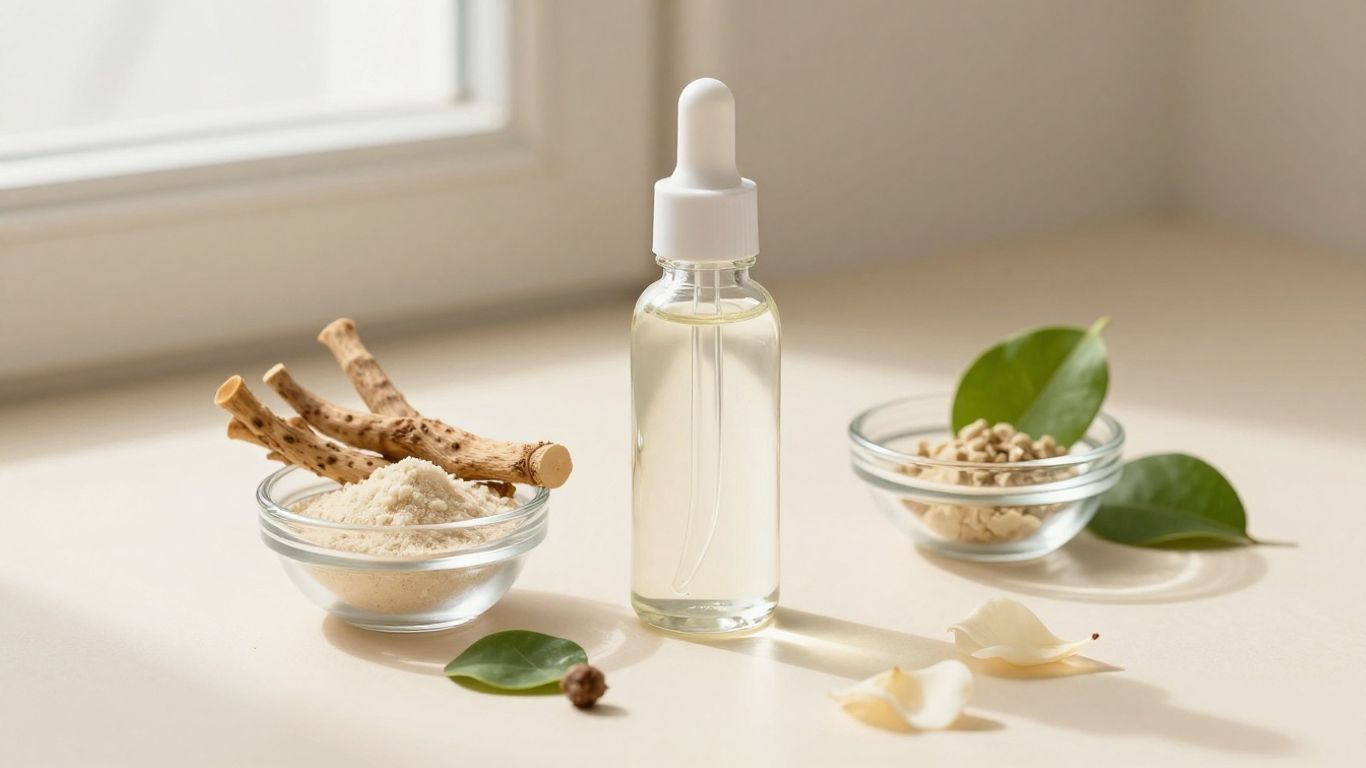
A blend should feel purposeful rather than crowded. Niacinamide may be useful when uneven tone appears alongside barrier stress, while licorice root extract and soothing ingredients can complement a routine focused on calm, consistent care. If you already use several exfoliants or retinoids, adding a serum with multiple strong brighteners may be more than your skin needs.
Tranexamic Topical Acid 5% is documented as combining 5% tranexamic acid with kojic acid, niacinamide, and licorice root extract. Its product information also describes panthenol, glycerin, and sodium hyaluronate in the ingredient list. That combination gives shoppers concrete details to assess instead of relying only on a general claim about brightening.
3. Ingredients for melasma and post-inflammatory hyperpigmentation
Melasma and post-inflammatory hyperpigmentation can look similar at a glance, but they do not always behave the same way. Melasma is often influenced by sun exposure, heat, and hormonal changes, while post-inflammatory marks may follow acne, irritation, bites, or a rash. A serum can support a routine, but it cannot identify the cause of a patch or replace a professional assessment.
For melasma, daily light protection is central because visible discoloration can deepen with ongoing exposure. For post-inflammatory marks, reducing new inflammation matters just as much as fading the existing color. The hyperpigmentation guidance for melanin-rich skin is useful when you want a broader discussion of triggers, ingredients, and when to seek dermatological advice.
Look for a formula that allows steady use while keeping the rest of your routine gentle. Tranexamic acid may be paired with other brightening ingredients, but adding several new actives at once makes it difficult to know what is helping or causing irritation. Persistent, spreading, painful, or changing pigmentation deserves a clinician’s attention, particularly when it does not respond to a careful routine.
4. Compatibility with your skin type
Skin type should influence the serum you choose, but it should not be treated as a rigid label. Oily skin may prefer a light, fast-absorbing finish, while dry skin may need a serum that sits comfortably beneath moisturizer. Combination skin often does best with a formula that does not leave the T-zone greasy while still allowing dry areas to be supported.
Sensitive or redness-prone skin benefits from a slower introduction and fewer overlapping actives. Fragrance-free formulas may be easier for some people to tolerate, though “fragrance-free” does not guarantee that irritation is impossible. Patch testing remains useful, especially if you have reacted to brightening products before.
If your skin is both oily and dry in different areas, apply the serum evenly but adjust the surrounding moisturizer instead of layering multiple serums everywhere. A routine for mixed skin can help you think through cleansing, serum placement, moisturizing, and nighttime repair without assuming that every part of the face needs the same texture.
5. Potential irritants and sensitivities
Tranexamic acid is often considered a relatively gentle topical active, but the finished serum can still irritate skin. Acids, preservatives, essential oils, fragrance, and a high number of active ingredients may all affect comfort. Irritation can also come from using a new serum too frequently or combining it with several other treatments.
Read the entire ingredient list and pay attention to your own history. If you know that kojic acid, vitamin C, exfoliating acids, or particular preservatives cause trouble, a formula containing them may not be the right starting point. Burning, swelling, hives, or intense redness is a reason to stop and seek medical advice rather than push through.
Tranexamic Topical Acid 5% is described in its product information as fragrance-free, dermatologist tested, and suitable for sensitive skin, while its directions still advise patch testing and reducing frequency if mild sensitivity or redness occurs. Those details are a useful reminder that a suitability claim does not remove the need to observe your own skin.
6. Serum texture and layering ability
Texture is not a minor detail when a serum is meant to become part of a daily routine. A watery formula may disappear quickly under moisturizer, while a gel or lotion texture can offer a little more cushion for dry or reactive skin. The best option is the one that layers comfortably with the products you already use.
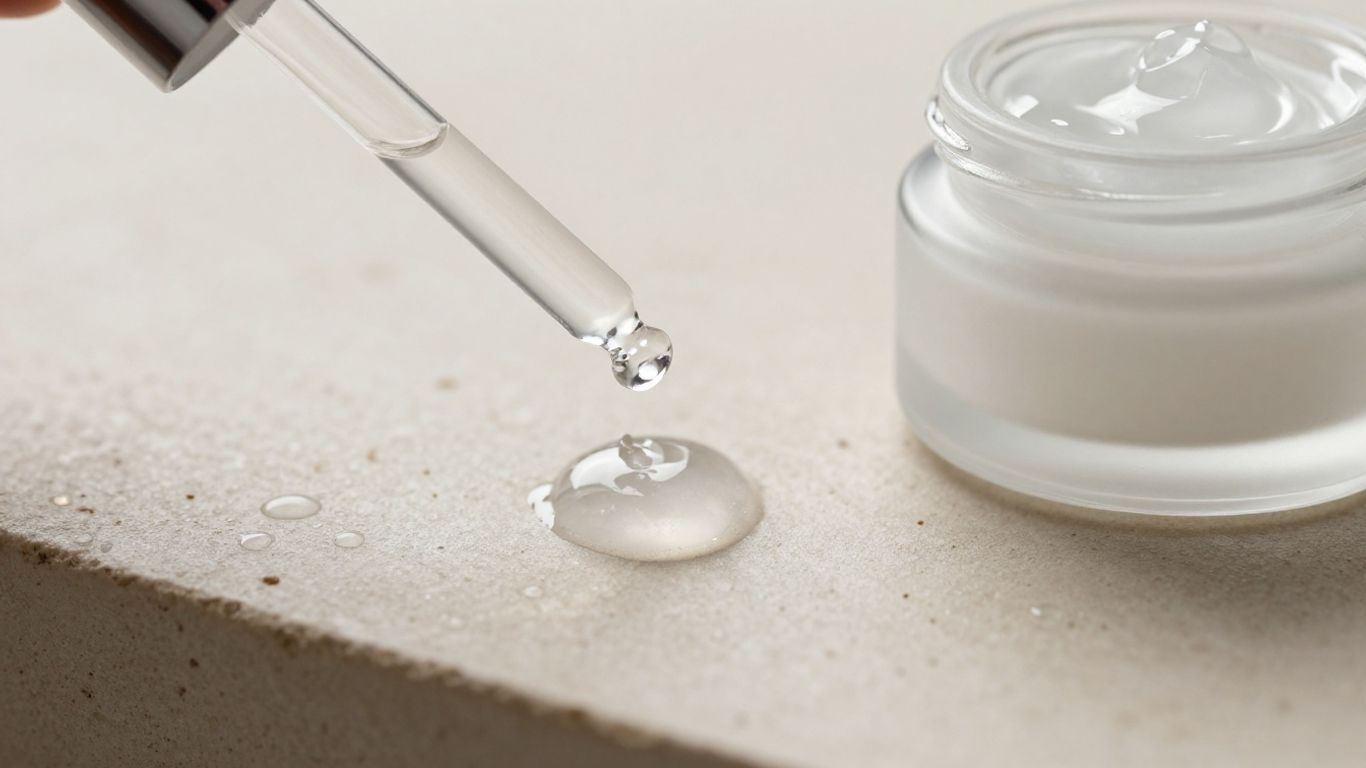
Apply skincare from thinner to thicker textures, allowing each layer a moment to settle if pilling becomes an issue. A serum that rolls under sunscreen or makeup may lead you to use less than intended, which defeats the point of buying an active product. Test the combination on one area of your face before committing to a full routine.
Tranexamic Topical Acid 5% is presented as a serum for application to the face, neck, and chest, followed by moisturizer. The practical value of that direction is simple: the product is meant to sit within a broader routine, not act as a replacement for hydration or daytime protection.
7. Packaging and product stability
Packaging affects how pleasant and reliable a serum feels over time. An opaque or well-sealed container can help limit exposure to light and air, depending on the ingredients and the design. A pump or narrow opening may also reduce repeated contact with the contents compared with a wide-mouth jar.
Check whether the bottle closes securely and whether the product changes in color, smell, or texture after opening. Keep it away from direct sunlight and excessive heat, and follow the storage directions on the package. A bathroom shelf may be convenient, but frequent steam and temperature swings are not ideal for every formula.
A transparent brand should make the size, directions, ingredient list, and any relevant shelf-life or storage information easy to find. Packaging cannot prove that a serum works, yet it can show whether the maker has considered everyday handling and has given customers enough information to use the product responsibly.
8. Evidence, testing, and brand transparency
Evidence should be read carefully. A clinical study can provide useful information about a particular formula, but its results depend on the study design, number of participants, duration, comparison group, and outcome being measured. “Clinically proven” is most helpful when the supporting details are available rather than left as a stand-alone phrase.
Look for a complete ingredient list, stated product size, usage directions, testing information, and a clear explanation of what the serum is intended to improve. The 5% tranexamic acid serum details list the concentration, supporting ingredients, 30 mL size, usage guidance, and an eight-week clinical study claim. Those are the kinds of specifics that make a product easier to evaluate.
The same product information describes representation across all skin types and self-perceived sensitive skin in that eight-week study, along with dermatologist testing. That is information about the documented study and product, not a guarantee that every person will see the same outcome. A sensible review keeps that distinction visible while still valuing clear reporting.
9. How to use tranexamic-acid serum safely
Start with clean, dry or lightly damp skin according to the product directions, then apply a modest amount of serum before moisturizer. New actives are easier to assess when introduced one at a time. If your skin is sensitive, begin a few nights per week rather than assuming daily use will produce faster results.
A simple introduction plan can keep the routine easier to troubleshoot:
- Patch test the serum on a small area before applying it broadly.
- Use it two or three times weekly at first if your skin is reactive.
- Avoid adding several new exfoliants or retinoids during the same week.
- Follow with moisturizer, especially if your skin feels tight.
- Apply broad-spectrum sunscreen each morning and reapply as directed.
After the first couple of weeks, increase frequency only if your skin remains comfortable. Tranexamic Topical Acid 5% directions advise applying an even layer to the face, neck, and chest, avoiding the eye area, following with moisturizer, and wearing SPF during the day. If redness or mild sensitivity appears, the listed guidance is to reduce frequency while the skin adjusts.
10. Price, size, and overall value
Price becomes easier to judge when you compare the amount of product, the ingredient disclosure, the formula, and how often you expect to use it. A low-cost serum that sits unused because it stings is not good value, while a more expensive product may be reasonable if its texture and routine compatibility support consistent use. Size also matters when a product is used on the face, neck, or chest.
Consider whether the formula includes ingredients you would otherwise buy separately, but do not pay for a crowded ingredient list simply because it sounds advanced. Clear directions, suitable packaging, and a realistic usage period can matter more than a long list of claims. For readers managing discoloration across different undertones, skincare for melanin-rich skin adds useful context about moisture, brightening ingredients, SPF, and barrier care.
Tranexamic Topical Acid 5% is documented in a standard 30 mL size and a larger Jumbo Size, with the product information describing extra savings for the larger option. That can make the bigger format worth considering for someone who already knows the formula suits them. New users may prefer starting with the standard size so they can assess comfort and consistency first.
Conclusion
Choosing a tranexamic-acid serum is a process of matching a clearly described formula to your skin, routine, and patience. Focus on tolerability, transparent testing, practical texture, and daily sun protection, then give a consistent routine enough time to show whether it is helping.
Frequently Asked Questions
What does tranexamic acid do for hyperpigmentation?
Topical tranexamic acid is used to help improve the appearance of dark spots and uneven tone. It may support routines for melasma and post-inflammatory hyperpigmentation, but results vary and the underlying trigger still matters.
How long does tranexamic acid take to work?
Visible change usually requires consistent use over several weeks, and more gradual improvement may continue over a few months. Sun exposure, inflammation, the cause of the pigmentation, and routine consistency can all affect the timeline.
Can tranexamic acid be used every day?
Some people can use it daily when the product directions allow, while others need to begin two or three times weekly. Increase gradually and reduce use if persistent dryness, burning, or redness develops.
Can tranexamic acid be used with niacinamide?
These ingredients are commonly combined in brightening routines and may be compatible for many people. Introduce the finished formula carefully, especially if you already use exfoliating acids or retinoids.
Is tranexamic acid suitable for sensitive skin?
It may be suitable for some sensitive skin, but the full formula determines comfort. Patch testing, gradual use, moisturizer, and a fragrance-free option may help, though none guarantees that irritation will not occur.
Should sunscreen be used with tranexamic acid?
Yes. Daily broad-spectrum sunscreen helps reduce the exposure that can worsen discoloration and supports the work of a brightening routine. Apply enough for even coverage and reapply as directed.
When should someone see a dermatologist about dark spots?
Seek professional advice for rapidly changing, painful, itchy, spreading, or unusual pigmentation, or when marks do not improve with gentle care. A dermatologist can help identify the cause and discuss treatment options safely.