
Thinking about making a positive impact with your wardrobe? Fair Trade Clothing is the way to go. It’s not just about fashion; it’s about doing good for people and the planet. In 2025, choosing Fair Trade means supporting ethical practices, reducing waste, and promoting sustainability. Let’s dive into why Fair Trade Clothing is a smart choice for a better future.
Key Takeaways
- Fair Trade Clothing supports ethical labor practices, ensuring fair wages and safe working environments.
- Choosing Fair Trade helps reduce environmental impact through sustainable materials and practices.
- Fair Trade empowers local communities by providing better economic opportunities.
- Consumers are increasingly demanding transparency in the fashion supply chain, pushing more brands to adopt Fair Trade practices.
- The future of fashion in 2025 sees Fair Trade Clothing as a competitive advantage, aligning with global sustainability trends.

Understanding Fair Trade Clothing
Defining Fair Trade in Fashion
Fair Trade clothing is like the golden rule of fashion—treating everyone fairly. It’s about making sure the folks who sew, stitch, and create our clothes are paid well and work in safe conditions. Plus, it’s environmentally friendly, using eco-friendly methods to reduce harm to our planet. Imagine buying a shirt that not only looks good but does good too!
The Difference Between Fair Trade and Fairtrade
Here’s where it gets a bit tricky. Fair Trade with two words is a broad term that covers a lot of ethical trade concepts. Companies can call their products “fair trade” even without third-party certification. On the flip side, Fairtrade is a specific certification given to products that meet strict standards. Look for the blue and green Fairtrade mark on packaging to be sure.
Key Principles of Fair Trade Clothing
Fair Trade follows ten essential principles that keep the fashion world fair and ethical. Some of these include:
- Creating Opportunities for Economically Disadvantaged Producers: It’s about opening doors for those who need it most, like teaching sewing skills to women for independence.
- Transparency and Accountability: Fair Trade is like switching on a big spotlight—everyone knows what’s happening behind the scenes.
- Fair Trading Practices: Everyone plays by the rules, ensuring fair treatment for all.
- Payment of a Fair Price: Workers get paid what they deserve, which helps improve their lives and communities.
- Ensuring No Child or Forced Labor: A big “no” to child labor—kids should be in school, not factories.
Fair Trade practices safeguard against child labor, forced labor, and unfair wages. Opting for Fair Trade clothing is a commitment to ethical consumption and social responsibility. Learn more about Fair Trade practices.

The Environmental Impact of Fair Trade Clothing
Reducing Textile Waste Through Fair Trade
Fast fashion is notorious for its massive waste, with clothing often ending up in landfills after just a few wears. Fair trade clothing, however, aims to counter this by promoting quality over quantity. By focusing on durable materials and ethical production methods, fair trade brands encourage consumers to buy less and choose better. This approach not only reduces waste but also fosters a culture of mindful consumption.
Eco-Friendly Materials in Fair Trade Fashion
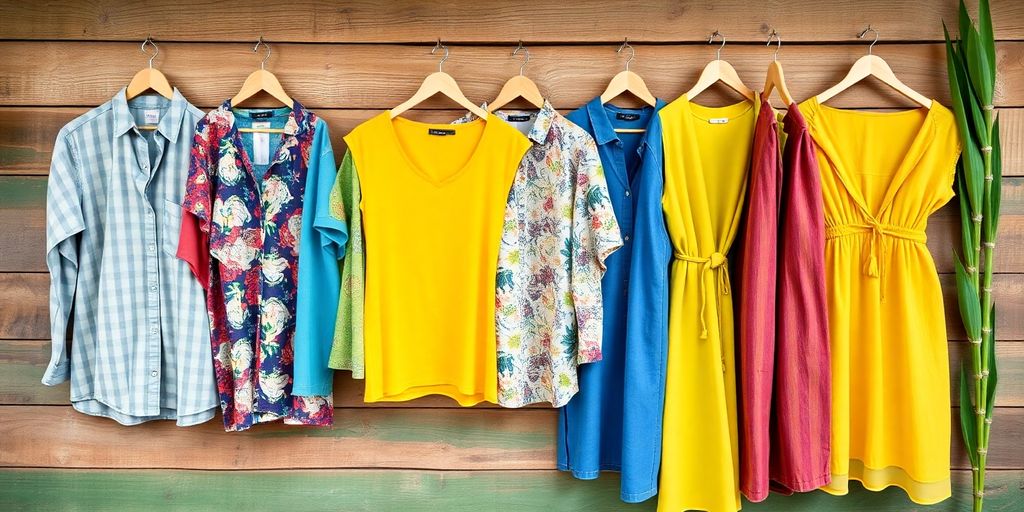
One of the standout features of fair trade clothing is its commitment to using eco-friendly materials. Natural fibers like organic cotton and hemp are commonly used, which are grown with minimal pesticides and water. This reduces the harmful environmental impact often associated with conventional fabric production. Moreover, fair trade brands often employ low-impact dyes, ensuring that the manufacturing process remains as green as possible.
Energy Conservation and Green Practices
Fair trade clothing manufacturers often lead the way in adopting energy-saving practices. They prioritize renewable energy sources and implement techniques that minimize energy consumption during production. This not only cuts down on greenhouse gas emissions but also sets a standard for sustainability in the fashion industry. By choosing fair trade, consumers support a system that values the planet as much as it does profit.
Choosing fair trade clothing is not just a fashion statement; it’s a commitment to a healthier planet. By supporting brands that prioritize sustainability, you’re taking a stand against the environmental damage caused by fast fashion. Every purchase is a vote for a greener, more responsible industry.
Economic Benefits of Fair Trade Clothing
Supporting Fair Wages and Safe Working Conditions
Fair trade clothing is a game-changer in the fashion world, especially when it comes to fair wages and safe working conditions. It ensures that workers are paid fairly for their labor, which is a big deal in an industry notorious for low wages. By guaranteeing fair pay and decent working environments, fair trade clothing helps to lift workers out of poverty and improve their quality of life. This approach not only benefits the workers but also fosters a sense of dignity and respect in the workplace.
Empowering Local Communities
Fair trade clothing goes beyond just paying fair wages; it empowers local communities. By supporting small producers and artisans, fair trade initiatives help to create jobs and stimulate local economies. This empowerment often leads to improved education and healthcare in these communities, as families have more resources to invest in their future.
- Fair trade initiatives create job opportunities.
- They support local artisans and producers.
- More income leads to better education and healthcare.
Fair Trade as a Competitive Advantage
In a world where consumers are becoming more conscious of their purchasing decisions, fair trade clothing offers a competitive edge. Brands that embrace fair trade principles are often seen as more ethical and sustainable, which can attract a loyal customer base. This ethical branding not only boosts sales but also enhances a company’s reputation in the market.
Fair trade clothing isn’t just about making a profit; it’s about making a difference. By choosing fair trade, companies can stand out in a crowded market and show that they care about more than just the bottom line.

Challenges in the Fair Trade Clothing Industry
Regulating Fair Trade Practices
Fair trade clothing sounds awesome, but making sure everyone plays by the rules? That’s a whole other story. Tracking compliance at every step of the supply chain is like herding cats. Different regions have their own rules and cultural quirks, which makes it tough. Fair trade organizations are on it, though, with regular audits and training sessions to keep things on track.
Overcoming Market Accessibility Issues
Fair trade clothes can be pricey, which means not everyone can afford them. This is a big deal because it limits who can buy these clothes, making it hard for fair trade brands to compete with big-name fast fashion. To tackle this, fair trade groups are teaming up with major brands to make their products more affordable and accessible.
Ensuring Compliance Across Cultures
When you’re dealing with a global market, ensuring compliance across different cultures is a real headache. Each culture has its own way of doing things, and what works in one place might not fly in another. Fair trade organizations are working hard to bridge these gaps, but it’s a long road ahead.
Fair trade clothing is a journey, not a destination. It’s about making the fashion industry fair for everyone involved, from the cotton farmers to the folks sewing your clothes. It’s not easy, but it’s worth it.
Consumer Trends and Fair Trade Clothing

Growing Demand for Ethical Fashion
In recent years, there’s been a noticeable shift in consumer preferences towards ethical fashion. More people are choosing brands that prioritize fair trade practices, which means supporting fair wages and safe working conditions for workers. This trend is not just a passing fad; it’s a response to growing awareness about the impact of our choices on both people and the planet. As more consumers demand transparency and ethical standards, brands are starting to realize that embracing fair trade is not just good for public relations—it’s essential for staying relevant in today’s market.
Transparency and Supply Chain Visibility
Transparency has become a significant factor for consumers when deciding which brands to support. People want to know where their clothes come from and under what conditions they were made. This demand for visibility is pushing companies to open up their supply chains and ensure that every step of the process meets fair trade standards. By doing so, brands can build trust with their customers, which is increasingly important in a world where skepticism about corporate practices is rampant.
The Role of Technology in Fair Trade Fashion
Technology is playing a crucial role in transforming the fair trade fashion industry. With advancements in blockchain and other digital tools, companies can now provide detailed information about their supply chains, making it easier for consumers to verify the authenticity of fair trade claims. This technological integration not only enhances transparency but also helps brands streamline their operations and reduce costs. As we move further into 2025, it’s likely that we’ll see even more innovative uses of technology to support fair trade practices.
The shift towards fair trade clothing reflects a broader change in consumer values, where ethical considerations are becoming as important as style and price. This movement is not just about buying clothes; it’s about making choices that align with a more sustainable and equitable world.
Future of Fair Trade Clothing in 2025
Innovations in Fair Trade Fashion
In 2025, fair trade clothing is set to embrace a wave of innovation. Smart textiles, which integrate technology into garments, are becoming more common, offering both functionality and sustainability. For instance, fabrics that adjust to temperature changes can enhance comfort while reducing energy needs for heating and cooling. Meanwhile, the use of blockchain is enhancing transparency, allowing consumers to trace the journey of their clothes from raw material to finished product. This tech-driven transparency builds trust and aligns with the values of conscious consumers.
Collaboration with Major Brands
Major fashion brands are increasingly collaborating with fair trade initiatives to meet the growing demand for ethical fashion. These partnerships not only help brands improve their image but also expand the reach of fair trade principles. By working together, they can leverage larger supply chains to ensure fair wages and safe working conditions for workers globally. This collaboration is crucial for scaling ethical practices across the industry.
Sustainability as a Norm in Fashion
Sustainability is no longer just a trend; it has become a norm in the fashion industry. Consumers are demanding more eco-friendly options, and brands are responding by integrating sustainable practices into every aspect of their operations. From using recycled materials to adopting circular fashion models, the industry is shifting towards a more sustainable future. This change is not just about reducing environmental impact; it’s also about creating a fairer, more equitable industry for everyone involved.
The future of fashion is not just about looking good but doing good. As we move forward, the focus is on creating a fashion industry that respects both people and the planet.

Conclusion
So, here we are, wrapping up our chat about fair trade clothing. It’s not just a trend; it’s a movement towards a better tomorrow. Choosing fair trade means you’re not just buying clothes; you’re supporting a system that values people and the planet. It’s about making sure everyone in the supply chain gets a fair deal and that the environment doesn’t pay the price for our fashion choices. As we look to 2025, let’s keep pushing for more brands to hop on the fair trade train. It’s a win-win for everyone involved. So next time you’re shopping, think about where your clothes come from and the impact they have. Together, we can make a difference, one fair trade purchase at a time.
Frequently Asked Questions
What is Fair Trade clothing?
Fair Trade clothing is made under guidelines that ensure fair wages and safe working conditions for workers. It also focuses on using materials and methods that are kind to the environment.
How does Fair Trade differ from Fairtrade?
Fair Trade is a general term for ethical practices, while Fairtrade is a specific certification given to products that meet certain standards set by Fairtrade International.
Why is Fair Trade clothing better for the environment?
Fair Trade clothing often uses eco-friendly materials and processes that produce less waste and pollution, helping to protect our planet.
What are the benefits of buying Fair Trade clothing?
Buying Fair Trade clothing supports fair wages and safe conditions for workers, helps the environment, and empowers communities by providing them with better opportunities.
What challenges does the Fair Trade clothing industry face?
The industry faces challenges like ensuring all parts of the supply chain follow Fair Trade principles and making Fair Trade clothing affordable and accessible to more people.
Is Fair Trade clothing more expensive?
Fair Trade clothing can be more expensive because it ensures fair pay and safe working conditions for workers. However, many people find the benefits to workers and the environment worth the cost.


Your article helped me a lot, is there any more related content? Thanks!
Thank you for your sharing. I am worried that I lack creative ideas. It is your article that makes me full of hope. Thank you. But, I have a question, can you help me?
Can you be more specific about the content of your article? After reading it, I still have some doubts. Hope you can help me.
Hi there just wanted to give you a quick heads up. The words in your article seem to be running off the screen in Chrome. I’m not sure if this is a formatting issue or something to do with web browser compatibility but I thought I’d post to let you know. The layout look great though! Hope you get the problem resolved soon. Thanks
I really appreciate this post. I have been looking all over for this! Thank goodness I found it on Bing. You’ve made my day! Thanks again
Very interesting info !Perfect just what I was searching for!
Woh I like your content, bookmarked! .
I don’t think the title of your article matches the content lol. Just kidding, mainly because I had some doubts after reading the article.
Some genuinely howling work on behalf of the owner of this web site, absolutely great subject matter.
A person essentially help to make seriously posts I would state. This is the first time I frequented your website page and thus far? I amazed with the research you made to create this particular publish amazing. Wonderful job!
Youre so cool! I dont suppose Ive learn something like this before. So good to search out anyone with some unique ideas on this subject. realy thank you for starting this up. this web site is one thing that’s wanted on the internet, somebody with somewhat originality. helpful job for bringing something new to the internet!
Thank you for your sharing. I am worried that I lack creative ideas. It is your article that makes me full of hope. Thank you. But, I have a question, can you help me?
I don’t think the title of your article matches the content lol. Just kidding, mainly because I had some doubts after reading the article.
Thank you for sharing excellent informations. Your web-site is very cool. I’m impressed by the details that you’ve on this website. It reveals how nicely you understand this subject. Bookmarked this website page, will come back for extra articles. You, my friend, ROCK! I found just the info I already searched all over the place and simply could not come across. What an ideal web-site.
Can you be more specific about the content of your article? After reading it, I still have some doubts. Hope you can help me.
I believe this site has very superb composed written content content.
australia american casinos no deposit bonus (https://goplayslots.net) deposit online casino,
best paying pokies united kingdom and online slots australia ipad,
or bingo cash free uk
Howdy! Someone in my Myspace group shared this website with us so I came to check it out. I’m definitely enjoying the information. I’m bookmarking and will be tweeting this to my followers! Excellent blog and superb style and design.
certainly like your web site but you need to check the spelling on several of your posts. Several of them are rife with spelling issues and I find it very troublesome to tell the truth nevertheless I will surely come back again.
Thanks for sharing. I read many of your blog posts, cool, your blog is very good. “oppna ett binance-konto
I am happy that I detected this site, exactly the right information that I was looking for! .
I like this site its a master peace ! Glad I detected this on google .
This is very attention-grabbing, You’re an excessively professional blogger. I have joined your feed and look forward to looking for more of your wonderful post. Also, I have shared your web site in my social networks!
Your article helped me a lot, is there any more related content? Thanks!
Can you be more specific about the content of your article? After reading it, I still have some doubts. Hope you can help me.
F*ckin¦ amazing things here. I¦m very happy to look your post. Thank you a lot and i’m looking forward to touch you. Will you please drop me a e-mail?
I’ve been absent for some time, but now I remember why I used to love this site. Thanks , I’ll try and check back more frequently. How frequently you update your web site?
I do love the way you have framed this particular issue plus it does present me personally a lot of fodder for consideration. On the other hand, because of what I have witnessed, I just simply trust when the commentary stack on that folks stay on point and in no way get started upon a tirade associated with some other news du jour. Yet, thank you for this fantastic point and while I can not really agree with the idea in totality, I respect your viewpoint.
Can you be more specific about the content of your article? After reading it, I still have some doubts. Hope you can help me.
You made some respectable points there. I regarded on the internet for the difficulty and found most individuals will go together with together with your website.
Glad to be one of the visitants on this awing internet site : D.
Very interesting information!Perfect just what I was looking for!
Simply wanna tell that this is invaluable, Thanks for taking your time to write this.
Whats Going down i’m new to this, I stumbled upon this I have discovered It absolutely helpful and it has helped me out loads. I am hoping to give a contribution & aid other users like its helped me. Good job.
Wohh exactly what I was looking for, regards for putting up.
Hey! Would you mind if I share your blog with my zynga group? There’s a lot of people that I think would really appreciate your content. Please let me know. Thank you
I got what you mean ,bookmarked, very decent web site.
I don’t usually comment but I gotta tell regards for the post on this great one : D.
Thanks a lot for sharing this with all folks you actually recognise what you are talking approximately!
Bookmarked. Please additionally seek advice from my web site =).
We will have a hyperlink trade agreement between us
Quality articles or reviews is the key to be a focus for the
visitors to pay a quick visit the site, that’s what this web site is providing.
Great blog here! Also your website loads up very fast! What host are you using? Can I get your affiliate link to your host? I wish my site loaded up as quickly as yours lol
Mọi thắc mắc của bạn tại xn88 google play đều được giải quyết ngay lập tức nhờ đội ngũ CSKH nhiệt tình, am hiểu chuyên môn. TONY02-03
whoah this weblog is magnificent i love reading your articles.
Keep up the great work! You understand, a lot of people
are searching round for this information, you can aid them greatly.
I very glad to find this website on bing, just what I was looking for : D too saved to my bookmarks.
I am genuinely thankful to the owner of this site who has shared this fantastic post at at this time.
Hi there, I desire to subscribe for this blog to
get most recent updates, therefore where can i do it please help.
Touche. Outstanding arguments. Keep up the great effort.
I’m extremely impressed with your writing skills and also with the structure to your weblog.
Is this a paid topic or did you modify it your self? Either way
keep up the nice quality writing, it is uncommon to peer
a great weblog like this one today..
Hi i am kavin, its my first time to commenting anywhere, when i read this paragraph i thought i
could also create comment due to this brilliant article.
Fabulous, what a webpage it is! This website provides helpful
facts to us, keep it up.