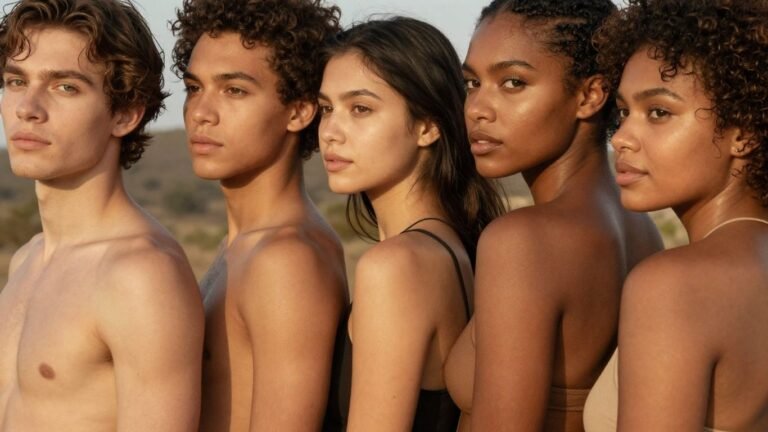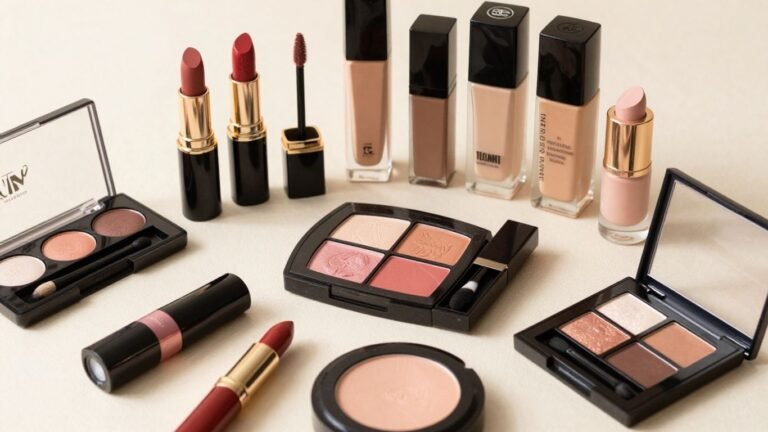
So, you’re trying to figure out what colors really make you pop, especially when you’ve got a mix of heritages? It can feel a bit confusing sometimes, right? Like, what’s your actual skin tone hiding underneath? This whole idea of finding your undertone as a mixed person is key. It’s not just about where you come from, but about what looks good on *you*, right now. We’re going to break down how to get to the bottom of it, so you can stop guessing and start shining.
Key Takeaways
- Color analysis isn’t just for one type of look; it’s about how your unique features work together, no matter your background.
- Your skin’s undertone is the real secret sauce, and it doesn’t always match what you might expect based on your family tree.
- Forget old rules that say you can’t be a certain ‘season’ – the newer systems are way more inclusive and can pinpoint your best colors.
- Learning to identify your undertone helps you pick clothes and makeup that make you look your best, effortlessly.
- Finding your true colors is a confidence booster, making shopping and getting dressed way easier and more fun.
Understanding Your Unique Undertones
The Science Behind Color Harmony
Color harmony is all about how colors work together, and it’s something we see everywhere in nature. Your own natural coloring – your skin, eyes, and hair – is already a perfect harmony. But not every color out there will look as good on you as others. When the colors you wear actually match your natural coloring, amazing things happen. Your skin looks brighter, your hair seems to have more shine, your eyes pop, and your smile looks better. It’s like your natural beauty just shines through, instead of being hidden by colors that are the wrong shade or tone. Understanding this is the first step to figuring out what works best for you.
Beyond Dominant Heritage: True Coloring
When we talk about identifying skin undertone for multiracial individuals, it’s easy to think about ancestry. But color analysis isn’t really about where your family comes from; it’s about what you see right now in the mirror. Your actual coloring is what matters. Sometimes, people assume that if they have a certain heritage, they must fit into a specific color category. That’s just not true. Your unique mix of features creates a coloring that’s all your own. It’s about your personal color signature, not just your background.
There are three main undertones to consider:
- Cool: Your skin might have hints of pink, red, or blue. Veins on your wrist might look blue or purple.
- Warm: Your skin might have yellow, golden, or peachy tones. Veins on your wrist might look green.
- Neutral: You might see a mix of both cool and warm tones, or neither stands out strongly. Veins on your wrist might look blue-green.
Figuring out your undertone is key to choosing colors that make you look your best. It’s the subtle hue beneath your surface color that influences how clothing and makeup shades appear on you. Getting this right means the difference between a color that washes you out and one that makes you glow.
Undertone Shifts and Adaptive Palettes
One of the interesting things about understanding your skin’s undertone, especially for those with mixed heritage, is that it can sometimes shift. Think about tanning – your skin might get darker, and the undertone can appear to change slightly. This is totally normal! It means that a single set of colors might not always be the most flattering year-round. This is where the idea of adaptive palettes comes in. It’s about having a flexible approach to color, recognizing that your best shades might change a bit with the seasons or how your skin tans. This is super helpful for finding makeup shades for diverse skin tones too, as you might need slightly different foundations or concealers depending on the time of year. Learning about identifying skin undertone for multiracial individuals can help you build a wardrobe and makeup collection that works for you in all your phases.
Navigating Color Analysis for Mixed Heritage
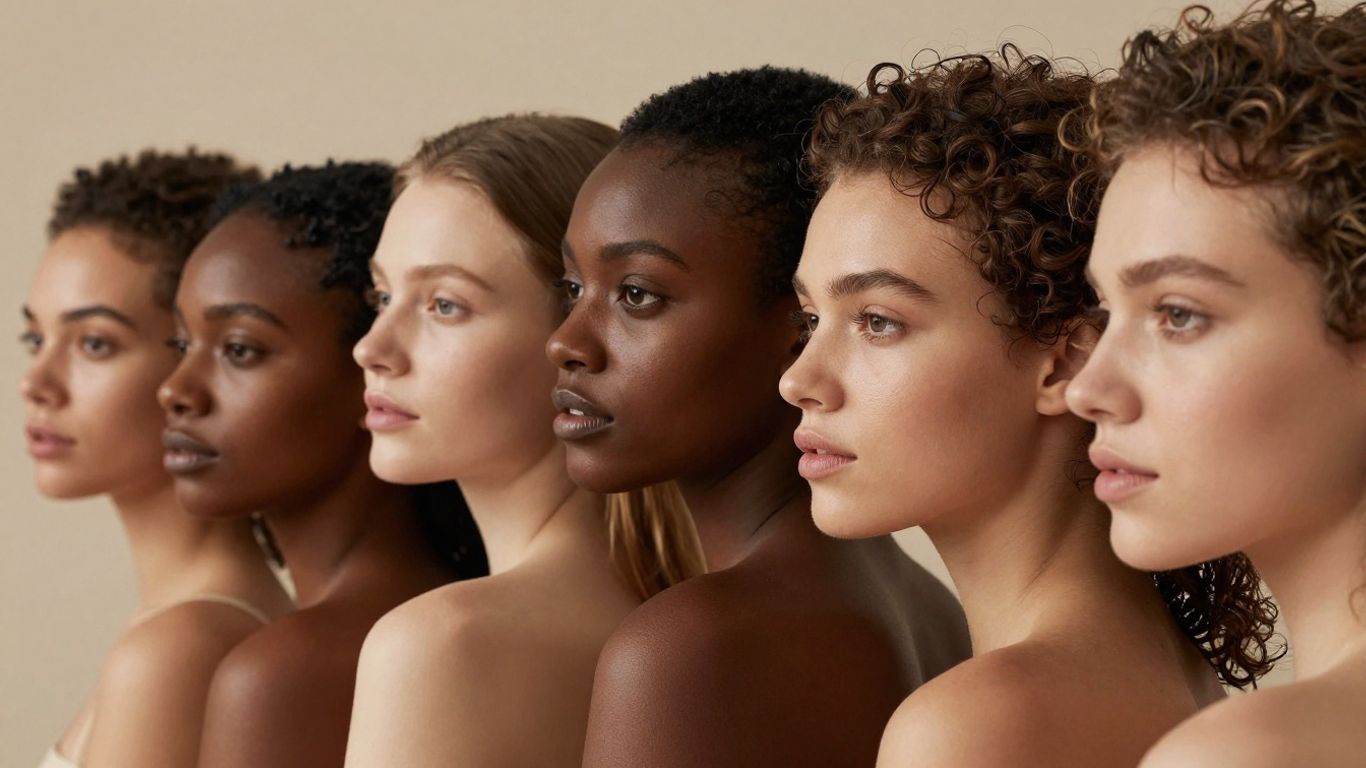
Color analysis, when it first became popular, was mostly designed with lighter skin tones in mind. This meant that terms like ‘warm’ often referred to peachy or golden hues, and ‘cool’ meant pink or rosy. It didn’t really account for the wide range of undertones found in people of color, like olive, golden-brown, or deep ebony. This can make it tricky for mixed-race individuals to find their place in the traditional systems. It’s important to remember that your heritage doesn’t dictate your color season; your actual coloring does.
Dispelling Myths: You Can Be Any Season
One of the biggest myths is that mixed-race people always fall ‘in between’ seasons or have to pick a season based on their dominant heritage. That’s just not true. The 12-season system, and even more so the 16-season system, is detailed enough to accurately type anyone. Your coloring is unique, and it can fit into any of the established seasons. Don’t let outdated ideas box you in. For example, someone with Indian skin tones, which can range from warm golden to cool blue-black, might have undertones that don’t fit neatly into Western or Korean color analysis models, but they absolutely still belong to a season. The key is looking at your specific features, not just your background.
The 16-Season System: A More Inclusive Approach
As color analysis evolved, the 16-season system was developed to be more inclusive. It adds ‘bridge’ palettes that better capture the subtle variations in undertone and chroma across all complexions. This isn’t about creating more categories just for the sake of it; it’s about offering greater accuracy and variety so that everyone can find colors that truly suit them. This system acknowledges that undertones can shift, especially with tanning, making adaptive palettes really useful. It helps create a more accurate picture of your personal coloring, moving beyond the limitations of older models.
Color Analysis Beyond Traditional Boundaries
When figuring out how to determine complexion for mixed heritage, it’s helpful to look at how different seasons can manifest. For instance:
- Spring/True Spring: Often suits those with peachy warmth and medium contrast.
- Soft Summer/Cool Summer: Appears in individuals with cool or neutral undertones and softer contrast.
- Soft Autumn: Common for mixed individuals blending warm and neutral tones, often with warm olive or golden-brown undertones.
- Deep Winter/Bright Winter: Suits those with high contrast between features, like dark hair against lighter skin.
It’s also worth noting that finding the best foundation for mixed race skin can be a challenge, but understanding your undertones is the first step. Sometimes, a foundation might look perfect in the bottle but wrong on your skin because it doesn’t match your specific hue, value, and chroma. Remember that pale olive skin, which has greenish or neutral undertones, can be found across many ethnicities and needs careful shade matching.
Color analysis is about celebrating your unique beauty, not fitting into a pre-defined box. The goal is to find colors that make your natural features pop, creating a harmonious look that feels authentically you. It’s a tool for self-discovery and confidence, helping you make choices that truly flatter your individual coloring.
Here’s a quick look at how undertones can be perceived:
| Undertone Type | Characteristics |
|---|---|
| Warm | Yellow, golden, peachy |
| Cool | Pink, rosy, blue |
| Neutral | A balance of warm and cool |
| Olive | Greenish, sometimes with yellow or grey undertones |
Understanding these nuances is key to moving beyond traditional color analysis boundaries and finding a palette that truly works for your mixed heritage.
Discovering Your Seasonal Palette
So, you’ve started to get a handle on your undertones, which is awesome. But how do you actually figure out which season you belong to? It’s not as complicated as it sounds, even with mixed heritage. Forget those old ideas that said you could only be a certain season based on your background. That’s just not true anymore. The truth is, anyone can be any season. It all comes down to how your skin, eyes, and hair work together.
How Each Season Manifests Across Complexions
It’s easy to think of seasons like Spring or Winter as having a specific look, but that’s a bit of a myth. For example, a "Spring" isn’t just fair-skinned and freckled. You can have deep, rich skin and still be a Bright Spring if your coloring has that clear, warm, and bright quality. Think of Jennifer Hudson or Jada Pinkett-Smith; they absolutely glow in Spring colors. On the flip side, someone with very fair skin might be a Deep Winter if their features have that high contrast and cool depth, like Naomi Campbell. The key is looking at the overall harmony, not just one feature. Dark skin can be icy like a Winter, rosy like a Summer, golden like an Autumn, or bright like a Spring. It’s all about the undertone, value, and clarity. For those with olive undertones, colors that are a bit softened and not too bright often work best, like persimmon or deep magenta [1099].
The Lipstick Test for Undertone Identification
One of the simplest ways to get a clue about your season is the lipstick test. Lipsticks sit right on your face, so if a color is off, it’s going to be really obvious. Grab a few different shades – maybe a warm coral, a cool berry, a bright fuchsia, and a deep red. See which one makes your skin look clear, your eyes bright, and your whole face look alive. The one that makes you look a bit sallow, washed out, or emphasizes shadows? That’s probably not your best bet. This test is super helpful because it focuses right on your face, where undertones really show up. It’s a great way to start figuring out if you lean warm or cool, bright or muted. For those with darker skin tones, understanding how colors like tomato red or cobalt blue interact with your complexion is key [ff0d].
Celebrity Examples and Their Seasonal Matches
Looking at celebrities can be really helpful, but remember, most online assignments are educated guesses. Still, seeing how different people rock certain colors can give you ideas. For instance, Deepika Padukone and Yara Shahidi are often cited as Soft Springs, showing that this season isn’t just for lighter complexions. They look amazing in muted, gentle colors. On the other hand, Rebel Wilson and Solange Knowles are often pegged as Bright Springs, demonstrating that warmth and brightness can exist in deeper skin tones too. It really highlights how the 16-season system is so much more inclusive, moving beyond the old, limiting ideas. It acknowledges that diversity is the norm, not the exception, and that your unique coloring is what matters most.
Building Your Personalized Color Strategy
So, you’ve figured out your undertones and maybe even your season. That’s awesome! But now what? It’s time to actually use this info to make your wardrobe work for you. This isn’t about throwing out everything you own; it’s about making smart choices moving forward.
Creating Adaptive Color Palettes
Life isn’t static, and neither is your skin tone. Sun exposure, aging, even just how much sleep you got can subtly shift how colors look on you. For those with mixed heritage, these shifts can sometimes be more noticeable. The trick is to build a flexible color system. Think of it like having a main color palette and then a few accent pieces you can swap in. For example, if your skin tends to get a bit warmer in the summer, you might lean into warmer accent colors for a few months before returning to your cooler base. It’s about acknowledging these changes and having a plan.
- Document Undertone Shifts: Pay attention to how your skin looks in different lights and seasons. Does it get more golden or more rosy? Jotting this down helps you see patterns.
- Build Two Anchor Palettes: Create a primary palette and a secondary one that shares some core neutrals. This gives you options without overwhelming you.
- Introduce Accent Capsules: Have a few tops or accessories in colors that complement your secondary palette. These are easy to swap in and out.
Blending Cultural Motifs with Modern Style
Your heritage is a part of your story, and that can absolutely be reflected in your style. It’s about finding ways to weave those beautiful cultural elements into your everyday look without feeling like you’re wearing a costume. Maybe it’s a scarf with a print that reminds you of your grandmother’s textiles, paired with a simple, modern dress. Or perhaps it’s incorporating a specific color from a traditional garment into a new accessory. The goal is to honor your roots while feeling completely contemporary. You can find inspiration for cultural motifs that align with your palette.
Using Makeup to Bridge Undertone Shifts
Makeup is a fantastic tool for fine-tuning your look. If you notice your skin is looking a bit warmer one day, a touch of a warmer blush or a slightly different lipstick shade can make all the difference. It’s not about drastic changes, but subtle adjustments. For instance, if you have a cooler base season but your skin is tanned, you might opt for a slightly warmer foundation shade or a bronzer. Learning how to apply a quick, personalized makeup look can really tie everything together. You can even use makeup to bridge the gap between different undertones, like using a neutral base and then adding pops of color with lipstick or eyeshadow that lean either warm or cool, depending on your outfit and mood. This is where understanding how to determine your undertone really comes in handy for foundation matching.
This process is about creating a personal system that feels authentic and works for your unique life. It’s not about rigid rules, but about having a framework that gives you confidence and makes getting dressed a joy, not a chore.
The Benefits of Finding Your True Colors

So, you’ve been on this journey to figure out your undertones and what colors really make you pop. It might seem like a lot of effort, but honestly, the payoff is pretty huge. It’s not just about looking good; it’s about feeling good, too. When you know your colors, a lot of everyday decisions just get simpler.
Gaining Clarity and Confidence in Your Beauty
This is probably the biggest win. For so long, maybe you’ve felt a bit unsure about what suits you. You might have a closet full of clothes you rarely wear because, well, they just don’t feel quite right. Discovering your personal color palette brings a sense of clarity. It’s like finally getting the instruction manual for your own unique beauty. You start to understand why certain shades make your skin look brighter and your eyes sparkle, while others make you look a bit tired or washed out. This knowledge builds a quiet confidence that radiates outward. You begin to trust your own instincts more, and that’s a powerful thing.
Effortless Shopping and Wardrobe Building
Think about how much time and money you’ve spent on clothes that ended up being a mistake. Shopping can become a breeze once you know your colors. Instead of aimlessly wandering through stores or endlessly scrolling online, you can focus on what actually works for you. This means fewer impulse buys and more intentional purchases. You’ll build a wardrobe where pieces actually go together, making getting dressed in the morning way less of a chore. It’s about creating a collection of clothes you love and that love you back, making your daily routine smoother.
Enhancing Natural Radiance with Harmonious Colors
Your natural coloring – your skin, eyes, and hair – already has a beautiful harmony. The right colors don’t cover that up; they amplify it. When you wear shades that align with your undertone, something magical happens. Your skin appears clearer and more even-toned, your eyes look brighter, and your hair seems to have more shine. It’s not about changing yourself; it’s about highlighting the beauty that’s already there. It’s about choosing colors that work with you, not against you, making you look and feel your absolute best. Understanding your skin’s undertone is key to making informed decisions about makeup, jewelry, and even clothing choices. This knowledge can guide you in selecting the most flattering shades and styles.
Knowing your colors is more than just a trend; it’s a tool for self-expression and self-care. It simplifies choices, boosts confidence, and allows your natural beauty to shine through effortlessly. It’s about dressing in a way that honors who you are.
Embrace Your Unique Palette
So, figuring out your undertone might seem a little tricky at first, especially with all the different ways our coloring can show up. But honestly, it’s all about celebrating what makes you, you. Whether you’re leaning more warm, cool, or somewhere beautifully in between, knowing your true colors helps you pick clothes and makeup that just feel right. It’s not about fitting into a box, but about finding those shades that make your skin glow and your eyes pop. Think of it as a fun way to get to know yourself better and feel more confident every single day. Go ahead, experiment a little, and find those colors that truly let your authentic beauty shine through.
Frequently Asked Questions
What exactly is an undertone and why does it matter for my colors?
Think of undertone as the subtle color beneath your skin’s surface. It’s not about whether your skin is light or dark, but if it leans more towards yellow (warm), blue (cool), or a mix (neutral). Knowing your undertone is super important because it helps you pick colors that make your skin look amazing, your eyes pop, and your hair shine. When colors match your undertone, you just look more vibrant and healthy!
I’m mixed race. Does that mean I can’t be a specific color season like ‘Spring’ or ‘Autumn’?
Absolutely not! The idea that mixed-race people can only fit into certain seasons is a myth. Color analysis has gotten much better at understanding that people of all backgrounds can be any season. It’s not about your heritage, but about the actual colors of your skin, eyes, and hair. Your unique mix means you might have a really interesting and specific color combination that fits perfectly into one of the seasons, or even a more detailed season within a larger system.
My skin tone changes when I tan. How does this affect my color season?
That’s a common experience, especially for people with mixed heritage! When your skin tans, its undertone can sometimes shift or become more pronounced. This is why having an ‘adaptive’ color strategy is helpful. It means you might have a main color palette, but also ways to adjust it, perhaps by adding warmer or cooler accessories, or having slightly different makeup shades for different times of the year. It’s all about working with your natural changes.
What’s the difference between the 4-season and the 16-season color system?
The traditional 4-season system (Winter, Spring, Summer, Autumn) was a good start, but it was often too simple for everyone. The 16-season system is like an upgrade! It breaks down those four seasons into more specific shades and undertones. This means it can be way more accurate and inclusive, especially for people with diverse coloring, like those with mixed heritage, helping everyone find colors that truly harmonize with them.
How can I figure out my undertone if I’m not sure?
There are a few simple ways to test! One popular method is the ‘lipstick test.’ Try on lipsticks in different undertones (like a coral-pink vs. a berry-red). The one that makes your skin look smooth and your features pop is likely in your color family. Another way is to look at the veins on your wrist. If they look more blue or purple, you might be cool-toned. If they look more green, you might be warm-toned. If it’s a mix, you’re likely neutral.
Once I know my colors, how does that help me shop or build a wardrobe?
Knowing your best colors is like having a secret weapon for shopping! Instead of wandering aimlessly, you’ll know exactly which colors to look for and which ones to skip. This makes shopping way faster and less frustrating. You’ll end up with clothes you actually love and wear, creating a wardrobe that looks amazing on you without even trying. It saves time, money, and makes getting dressed in the morning a breeze!