
Ever wondered why that shampoo your friend swears by just doesn’t work for you? Well, the secret might be in your hair type, texture, and porosity. Figuring out these aspects of your hair can make a world of difference in how you care for it. Whether you’ve got straight, wavy, curly, or coily hair, each type has its own quirks and needs. And let’s not forget about porosity and density, which play big roles too. This guide is here to help you understand your hair better, so you can choose the right products and routines to keep it healthy and looking great.
Key Takeaways
- Identifying your hair type is the first step to better hair care. Whether straight, wavy, curly, or coily, each type needs different products and care routines.
- Hair texture—fine, medium, or coarse—also affects how your hair responds to styling and products.
- Understanding hair porosity helps in selecting the right moisturizers and conditioners. Low, medium, or high porosity hair absorbs moisture differently.
- Hair density, or how much hair you have, influences styling choices and product amounts.
- Conducting simple tests at home can reveal your hair’s characteristics, helping you tailor your hair care routine.
Understanding Hair Types

Straight Hair Characteristics
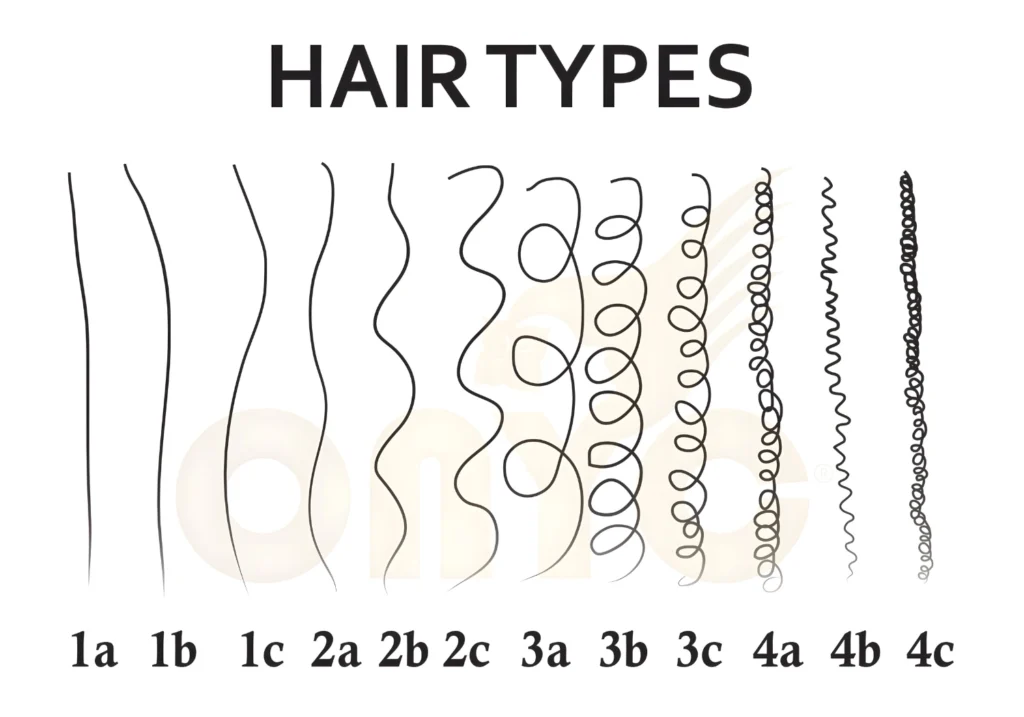
Straight hair, often known as Type 1, typically lies flat and smooth on the scalp. It reflects light easily, giving it a shiny appearance. The natural oils from the scalp can travel down the hair shaft more efficiently than other types, which can make it prone to looking greasy. Straight hair is divided into three subcategories:
- Type 1A: Very straight and fine, often seen in people of Asian descent.
- Type 1B: Still straight but with more volume than 1A.
- Type 1C: Straight but thicker and coarser.
Wavy Hair Features
Wavy hair, or Type 2, forms a gentle S-shape and is a mix between straight and curly. It can be fine or coarse, and tends to be more prone to frizz than straight hair. Here are the subcategories:
- Type 2A: Loose, barely-there waves that are easy to style.
- Type 2B: More defined waves with a bit of frizz.
- Type 2C: Thick, coarse waves that can be difficult to manage.
Curly Hair Traits
Curly hair (Type 3) is characterized by clearly defined curls that range from loose loops to tight corkscrews. This type of hair often has a lot of volumes but can also be prone to frizz and dryness. The subcategories include:
- Type 3A: Loose, shiny curls with a thick texture.
- Type 3B: Tighter curls that may have a combination of textures.
- Type 3C: Very tight curls or kinks.
Coily Hair Details
Coily hair, also known as Type 4, has very tight curls or coils. This hair type is often voluminous but can be fragile and prone to breakage. It generally has a coarse texture and requires careful handling. The subcategories are:
- Type 4A: Soft texture with tight, well-defined curls.
- Type 4B: Very tight curls that are less defined.
- Type 4C: Extremely tight coils that may not look curly.
Understanding your hair type is the first step in tailoring a hair care routine that enhances your natural texture. Each type has its unique challenges and beauty, and knowing where yours fits can help you choose the best products and techniques.
Exploring Hair Texture
Understanding your hair texture is key to finding the right care routine. Let’s break down the three main types of hair texture: fine, medium, and coarse.
Fine Hair Description
Fine hair is delicate and often feels soft to the touch. Each strand is thin, which means it can get oily fast and might struggle to hold styles. Because of its thinness, fine hair can be easily weighed down by heavy products and is more prone to breakage.
- Characteristics:
- Care Tips:
Medium Hair Qualities
Medium hair is pretty much the middle ground. It’s thicker than fine hair but not as thick as coarse hair. This type is quite common and versatile, making it easier to style and manage. Medium hair generally has more volume and isn’t as prone to oiliness or breakage as fine hair.
- Characteristics:
- Care Tips:
Coarse Hair Attributes
Coarse hair is the thickest of all textures. Each strand has a larger diameter, which means it’s stronger and more resilient. However, it can be prone to dryness and frizz, especially in humid conditions. Coarse hair often requires more moisture and takes longer to dry.
- Characteristics:
- Care Tips:
“Knowing your hair texture can transform your hair care routine, making it easier to choose the right products and techniques.”

Determining Hair Porosity
Understanding your hair’s porosity can make a big difference in how you care for it. Hair porosity refers to your hair’s ability to absorb and retain moisture. The cuticles on your hair play a key role here—they’re like tiny scales on the hair’s surface that open and close to let moisture in or keep it out. Let’s dive into the three main types of hair porosity and how to identify them.
Low Porosity Indicators
Low porosity hair has tightly closed cuticles, which means it can be tough for moisture to penetrate. This type of hair often looks shiny because it reflects light well. However, it might resist absorbing products, which can leave you feeling like nothing works. Here are some signs you might have low porosity hair:
- Products tend to sit on your hair rather than being absorbed.
- It takes a long time for your hair to get wet.
- Hair tends to dry slowly.
To care for low porosity hair, consider using lighter products and applying heat to help open up the cuticles.
Medium Porosity Signs
Medium porosity hair is often seen as the “happy medium.” The cuticles are slightly open, allowing for a good balance of moisture absorption and retention. Your hair likely feels healthy and requires minimal maintenance. Here are some characteristics of medium porosity hair:
- Hair holds styles well and is generally easy to manage.
- It takes a moderate amount of time to dry.
- Products absorb well without buildup.
With medium porosity, you can usually experiment with a wide range of products without much worry.
High Porosity Characteristics
High porosity hair has cuticles that are wide open, which means moisture can get in easily but also escape just as fast. This can make hair feel dry and frizzy. High porosity hair often results from damage from heat, chemicals, or environmental factors. Here are signs you might have high porosity hair:
- Hair tends to tangle easily.
- It dries quickly after washing.
- Absorbs products quickly but might feel dry soon after.
For high porosity hair, focus on deep conditioning and using heavier products to lock in moisture.
Understanding hair porosity is essential for effective hair care. Knowing whether your hair is low, medium, or high porosity can help you tailor your routine to keep your locks looking and feeling their best. Whether you’re using the Slip Test or the Water Droplet Test, these methods can guide you to the right hair care strategy.

Identifying Hair Density
Understanding your hair density is like finding the missing piece of the puzzle when it comes to hair care. Hair density isn’t about how thick or thin your hair strands are; it’s about how many strands you have on your head. This can affect everything from the styles that suit you to how much product you need.
Fine Density Hair
Fine density hair means you have fewer strands on your scalp. This can make your hair look thinner or even sparse. If you part your hair and see a lot of scalp, you probably fall into this category. The ponytail test is a handy trick: if your ponytail measures less than two inches in circumference, you have low density hair. People with fine density often struggle with volume and may find their hair gets oily quickly.
Medium Density Hair
Medium density is the happy middle ground. It’s the most common type and means you have a moderate amount of hair strands. When you part your hair, some scalp is visible, but not too much. A ponytail circumference between two to three inches usually indicates medium density. This hair type is versatile and works well with a variety of styles and products.
Coarse Density Hair
Coarse density hair means you have a lot of strands on your scalp, giving your hair a thick, full appearance. If your ponytail measures at least four inches around, you’re in the high-density club. This type often appears voluminous and can handle heavier products without looking greasy. However, it might require more effort to manage and style due to its fullness.
Knowing your hair density can help you select the right hair care products and techniques to enhance your natural beauty. It guides you in choosing styles that complement your density and ensures you’re using the right amount of product for your hair’s needs.
Matching Hair Care Products to Your Hair Type

Products for Straight Hair
Straight hair, often sleek and shiny, can sometimes lack volume and be prone to oiliness. Here’s what you should look for:
- Shampoos and Conditioners: Opt for lightweight, balancing formulas that cleanse without weighing down your hair. Products like GK Hair Balancing Shampoo and Conditioner are perfect for maintaining shine and sleekness.
- Styling Tips: Use a light finishing spray to keep any curls or styles intact. Avoid heavy oils that can make your hair look greasy.
- Dry Shampoo: A lifesaver for straight hair to refresh oily roots and add a bit of texture. Dry shampoo can be your go-to for a quick fix.
Products for Wavy Hair
Wavy hair falls between straight and curly, offering a natural bounce and texture. Here’s how to enhance it:
- Shampoos and Conditioners: Hydrating formulas like GK Hair Moisturizing Shampoo and Conditioner can help define your waves while keeping them smooth.
- Leave-In Conditioner: Use a leave-in conditioner to control frizz and enhance your natural wave pattern.
- Texture Sprays: Add volume and style to your waves with a texture spray, giving you that beachy look effortlessly.
Products for Curly Hair
Curly hair is all about volume and bounce but can be prone to dryness and frizz. Here’s what works best:
- Shampoos and Conditioners: Look for products that hydrate and define curls. GK Hair CurlsDefineHer is an excellent choice to reduce frizz and enhance curls.
- Deep Conditioning Masks: Regular use of deep conditioning masks can keep your curls hydrated and bouncy.
- Styling Creams: Use creams that provide hold and definition without crunchiness.
Products for Coily Hair
Coily hair is characterized by tight curls and requires lots of moisture to stay healthy. Here’s what to consider:
- Shampoos and Conditioners: Choose products that offer intense hydration and nourishment.
- Oils and Serums: Use oils like argan oil to add shine and reduce frizz. GK Hair Argan Oil Serum is perfect for this.
- Moisturizing Treatments: Regular moisturizing treatments can help maintain elasticity and prevent breakage.
Finding the right products for your hair type can transform your hair care routine. Embrace your natural texture and select items that enhance your hair’s unique beauty. With the right care, you can achieve healthy, beautiful hair that feels as good as it looks.
Conducting a Hair Porosity Test
The Water Test Method
The water test is a straightforward way to figure out your hair’s porosity. Here’s how you do it:
- Fill a glass or bowl with room-temperature water.
- Take a clean strand of your hair, free from any products, and place it in the water.
- Wait for about 2-4 minutes.
- Observe the strand:
- If it floats on top, your hair is likely low porosity.
- If it sinks to the bottom, you have high porosity hair.
- If it floats somewhere in the middle, that’s medium porosity.
This hair porosity test is simple and gives you a good idea of how your hair absorbs moisture.
The Strand Test Technique
For the strand test, all you need is a single hair and your fingers:
- Hold a strand of clean hair between your fingers.
- Run your fingers along the strand from end to root.
- Feel the texture:
- Smooth texture suggests low porosity.
- Bumpy or rough texture indicates high porosity.
This method isn’t as visual as the water test, but it helps you feel the differences in your hair’s structure.
Interpreting Test Results
Once you’ve done the tests, it’s time to understand what it all means.
- Low Porosity Hair: Your hair cuticles are tightly packed, making it hard for moisture to penetrate. You might need lighter products that won’t sit on top of your hair.
- Medium Porosity Hair: This type of hair is balanced and healthy, absorbing moisture well without losing it too quickly.
- High Porosity Hair: Your hair absorbs moisture fast but loses it just as quickly. Heavier products might help lock in moisture.
Knowing your hair’s porosity helps in choosing the right products and treatments to keep it healthy and manageable. Understanding how your hair interacts with moisture is key to maintaining its health and appearance.
Wrapping It Up
Figuring out your hair type, texture, and porosity might seem like a lot, but it’s totally worth it. Once you know what you’re working with, picking the right products and routines gets way easier. Whether your hair is straight, wavy, curly, or coily, understanding its needs helps you keep it looking its best. So, take some time to get to know your hair. Experiment a little, see what works, and don’t stress too much. Hair care is a journey, not a destination. Embrace the process, and soon enough, you’ll have a routine that makes your hair feel and look amazing.

Frequently Asked Questions
How can I find out my hair type?
To figure out your hair type, look at your hair’s curl pattern. Straight hair has no curls, wavy hair has loose curls, curly hair has tighter curls, and coily hair has very tight curls.
What is hair texture and why does it matter?
Hair texture refers to the thickness of each hair strand. It can be fine, medium, or coarse. Knowing your hair texture helps you choose the right products and styles for your hair.
How do I test my hair’s porosity?
You can test your hair’s porosity by placing a strand of hair in a glass of water. If it floats, you have low porosity. If it sinks, you have high porosity. If it stays in the middle, you have medium porosity.
Why is understanding hair porosity important?
Understanding hair porosity helps you know how well your hair absorbs and retains moisture. This can guide you in choosing the right hair care products to keep your hair healthy.
What are the signs of low porosity hair?
Low porosity hair often feels smooth and repels moisture. It might take longer to dry and can be resistant to hair treatments.
How can I improve my hair care routine based on my hair type?
Once you know your hair type, you can pick products that suit it best. For example, curly hair often benefits from moisturizing products, while straight hair might need lighter products to avoid weighing it down.
Thanks for sharing. I read many of your blog posts, cool, your blog is very good.
you’re really a good webmaster. The site loading speed is amazing. It seems that you are doing any unique trick. Also, The contents are masterpiece. you’ve done a great job on this topic!
I don’t think the title of your article matches the content lol. Just kidding, mainly because I had some doubts after reading the article.
I don’t think the title of your article matches the content lol. Just kidding, mainly because I had some doubts after reading the article.
Can you be more specific about the content of your article? After reading it, I still have some doubts. Hope you can help me.
Thank you for your sharing. I am worried that I lack creative ideas. It is your article that makes me full of hope. Thank you. But, I have a question, can you help me? gate注册奖金
Thanks for sharing. I read many of your blog posts, cool, your blog is very good.
I don’t think the title of your article matches the content lol. Just kidding, mainly because I had some doubts after reading the article.
Thanks for sharing. I read many of your blog posts, cool, your blog is very good.
Your article helped me a lot, is there any more related content? Thanks!
Your point of view caught my eye and was very interesting. Thanks. I have a question for you.
Can you be more specific about the content of your article? After reading it, I still have some doubts. Hope you can help me.
โพสต์นี้ อ่านแล้วเพลินและได้สาระ ค่ะ
ผม ไปเจอรายละเอียดของ ข้อมูลเพิ่มเติม
ดูต่อได้ที่ suck bet
เหมาะกับคนที่กำลังหาข้อมูลในด้านนี้
มีข้อมูลที่อ่านแล้วเข้าใจได้ทันที
ขอบคุณที่แชร์ ข้อมูลที่มีประโยชน์ นี้
หวังว่าจะมีการอัปเดตเนื้อหาเพิ่มเติมเร็วๆ
นี้
Your point of view caught my eye and was very interesting. Thanks. I have a question for you.
Một số dòng game nổi bật phải kể đến tại slot365 ios phải kể đến như baccarat, rồng hổ, xì dách, xóc đĩa, xì tố, poker,….đều có mặt. Các dealer nữ xinh đẹp, được đào tạo bài bản chuyên nghiệp, nóng bỏng luôn đồng hành và chắc chắn không làm anh em thất vọng. TONY01-29O